
Yu Sleep is a natural sleep-support supplement aimed at adults who have trouble falling asleep or staying asleep through the night. It’s a plant-based liquid taken under the tongue before bed, built around a deliberately low 0.9mg dose of melatonin plus calming amino acids and botanicals to support relaxation and a healthy sleep-wake rhythm. This is an honest, independent review: what’s actually inside, what the evidence does and doesn’t support, the side effects and interactions worth knowing, and who should skip it entirely. It is not medical advice, and Yu Sleep is a supplement — not a treatment for insomnia or any sleep disorder.
Quick answer: Yu Sleep is an evening sleep-support supplement for adults who want a non-prescription option for occasional poor sleep. Its 10 ingredients (a low 0.9mg melatonin dose, GABA, L-theanine, magnesium, 5-HTP and calming botanicals) have a real but modest evidence base, with the low-dose melatonin the best-supported and most sensible choice. Expect gradual improvement over one to three weeks of consistent use rather than an instant knockout — and expect results to vary a lot between people.
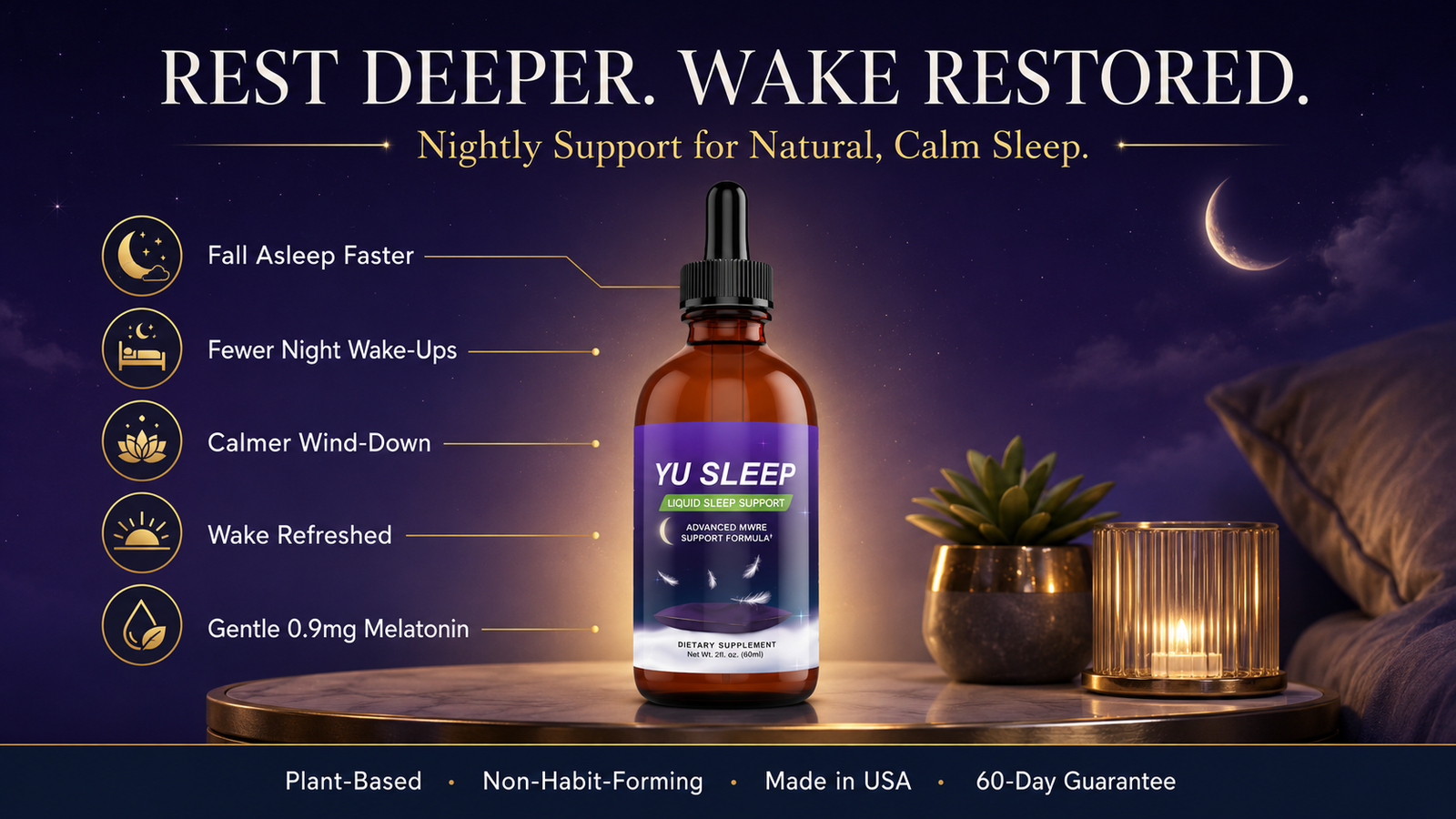
Yu Sleep — a plant-based liquid sleep formula. Two droppers under the tongue, 30 minutes before bed.
📄 In This Review
- What is Yu Sleep?
- Why sleep gets harder with age and stress
- How Yu Sleep works
- Ingredient-by-ingredient: what the evidence says
- Benefits you might reasonably expect
- Yu Sleep vs other sleep options
- Who it’s for — and who should skip it
- Side effects, safety and drug interactions
- What users tend to report
- How to take it & realistic timeline
- The part that matters most: sleep habits & CBT-I
- Common mistakes with sleep supplements
- Pricing, guarantee & where to buy
- Is Yu Sleep legitimate?
- FAQ
- Our editorial verdict
- References
What Is Yu Sleep?
Yu Sleep is a natural dietary supplement formulated to support healthy sleep in adults. It’s marketed to people who lie awake at night, wake repeatedly, or wake too early and can’t drift back off — the everyday sleep frustrations that get more common with age, stress, and irregular schedules. It’s taken in the evening and is built from botanical extracts and sleep-related nutrients rather than pharmaceutical sedatives.
It helps to be precise about the category, because the wording matters. A sleep-support supplement is designed to support the body’s own sleep processes. It is not a sedative-hypnotic drug, and it is not a treatment for a diagnosed condition such as chronic insomnia, restless legs syndrome, or obstructive sleep apnea. If your sleep problems are severe, have lasted months, or come with loud snoring, gasping, or crushing daytime fatigue, those are reasons to see a doctor — not reasons to reach for a supplement first.
Yu Sleep is sold primarily through its official online listing and, like most supplements in this space, is not typically stocked in retail pharmacies. It should be produced in an FDA-registered facility operating under Good Manufacturing Practice (GMP) standards. Treat these as claims to verify on the current listing rather than as guarantees — legitimate brands make them provable on request.
Why Sleep Gets Harder With Age and Stress
To judge whether Yu Sleep makes sense for you, it helps to understand what’s actually breaking down when sleep gets worse. Adult sleep problems are rarely one single fault — they’re usually a stack of small changes that add up. A supplement can only touch a few of those levers, so knowing which ones matter sets honest expectations.
Your circadian signal weakens
The body runs on a roughly 24-hour internal clock that tells you when to feel sleepy and when to feel alert. That signal is driven partly by melatonin, a hormone the brain releases as darkness falls. As people age, natural melatonin output tends to decline, and modern life makes it worse — bright evening screens suppress melatonin release, and irregular bed and wake times blur the signal further. The result is a clock that no longer says “it’s night, wind down” as clearly as it once did.
The “off switch” gets noisier
Falling asleep requires the nervous system to shift from an alert, sympathetic state into a calm, parasympathetic one. Chronic stress keeps the sympathetic system switched on, elevating cortisol and adrenaline at exactly the hours you’re trying to power down. This is the familiar experience of lying in bed exhausted but mentally racing. It’s a real physiological state, not a lack of willpower, and it’s one of the most common reasons otherwise-tired people can’t fall asleep.
Sleep architecture flattens
Even when older adults do sleep, the structure of that sleep changes. Deep slow-wave sleep — the most physically restorative stage — tends to shrink with age, and sleep becomes lighter and more easily interrupted. That’s why the same seven hours can feel less refreshing at 55 than it did at 25, and why brief awakenings turn into long ones.
Nutrient and lifestyle gaps
Several nutrients play supporting roles in the sleep and relaxation pathways — magnesium and certain amino acids among them — and intake is often marginal in typical diets. Add caffeine later in the day than people realize, alcohol (which fragments the back half of the night), and inconsistent schedules, and you have a system nudged in the wrong direction from several angles at once.
The honest takeaway: a supplement like Yu Sleep is aimed mainly at the first two levers — reinforcing the circadian “it’s night” signal and supporting the shift into a calmer pre-sleep state. It does little for sleep apnea, and it can’t out-muscle a heavy caffeine or alcohol habit or a chaotic schedule. That’s not a knock on the product; it’s just where supplements can and can’t help.
How Does Yu Sleep Work?
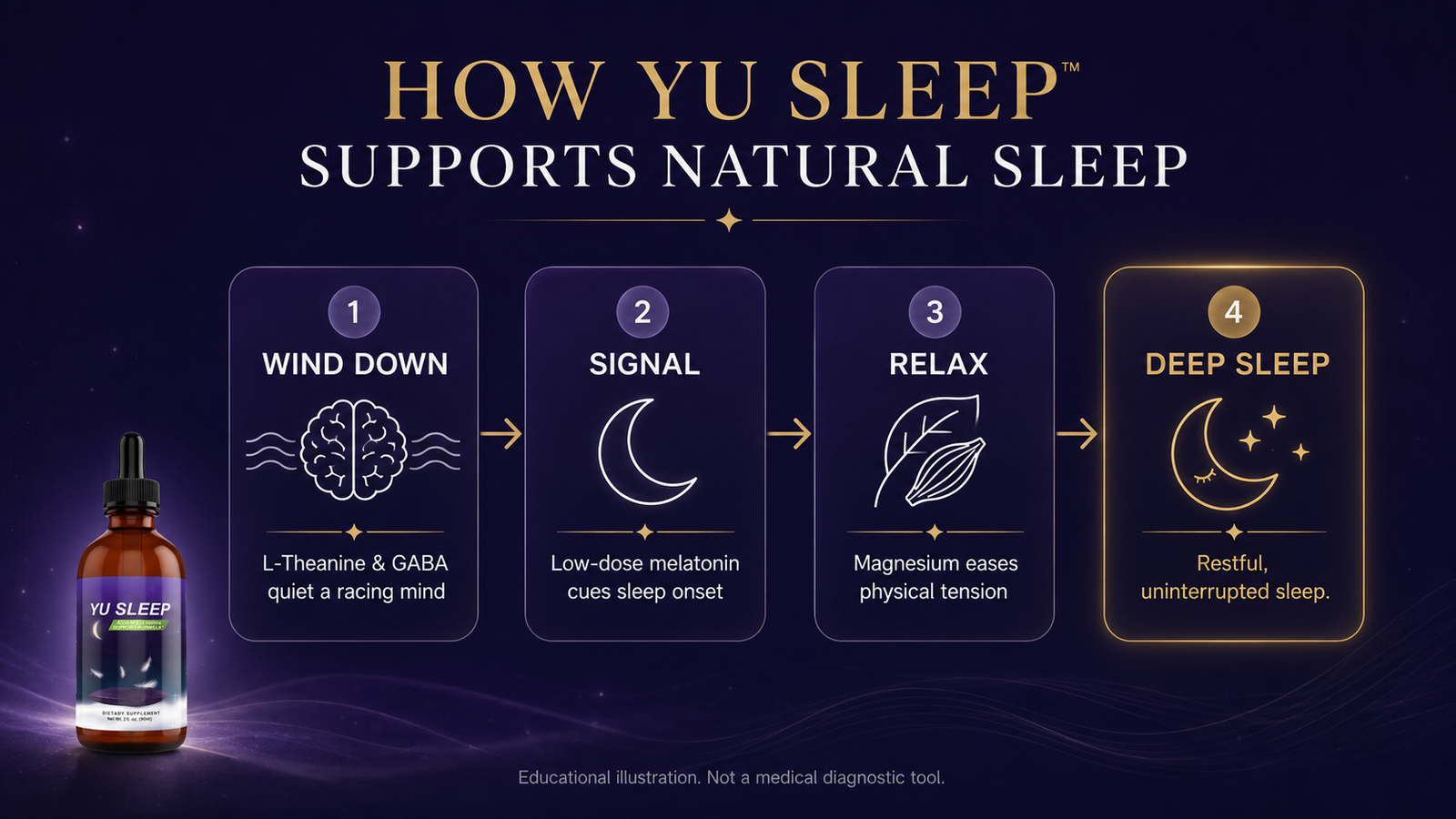
Yu Sleep works by supplying nutrients and plant compounds that support the body’s natural transition into sleep. Formulas in this category generally act on a few overlapping pathways rather than one strong sedating mechanism, which is why they tend to nudge sleep quality gradually rather than knocking you out on the first night.
The three pathways these formulas typically target:
- Circadian signaling. Melatonin reinforces the body’s “it’s time to wind down” message, which can help with falling asleep and with re-anchoring a schedule that’s drifted late.
- Relaxation and calm. Compounds such as L-theanine, magnesium, and certain calming herbs support a quieter pre-sleep state and take some of the edge off a racing mind.
- Neurotransmitter support. Amino acids like glycine are studied for supporting sleep quality and a smoother transition into deeper sleep.
Because these are supportive rather than pharmacological effects, the realistic expectation is a gradual improvement in how easily you fall asleep and how rested you feel, building over one to three weeks of consistent nightly use. People with the most disrupted routines often notice the clearest change; those who already sleep reasonably well may notice little.
Yu Sleep Ingredients: What the Evidence Actually Says
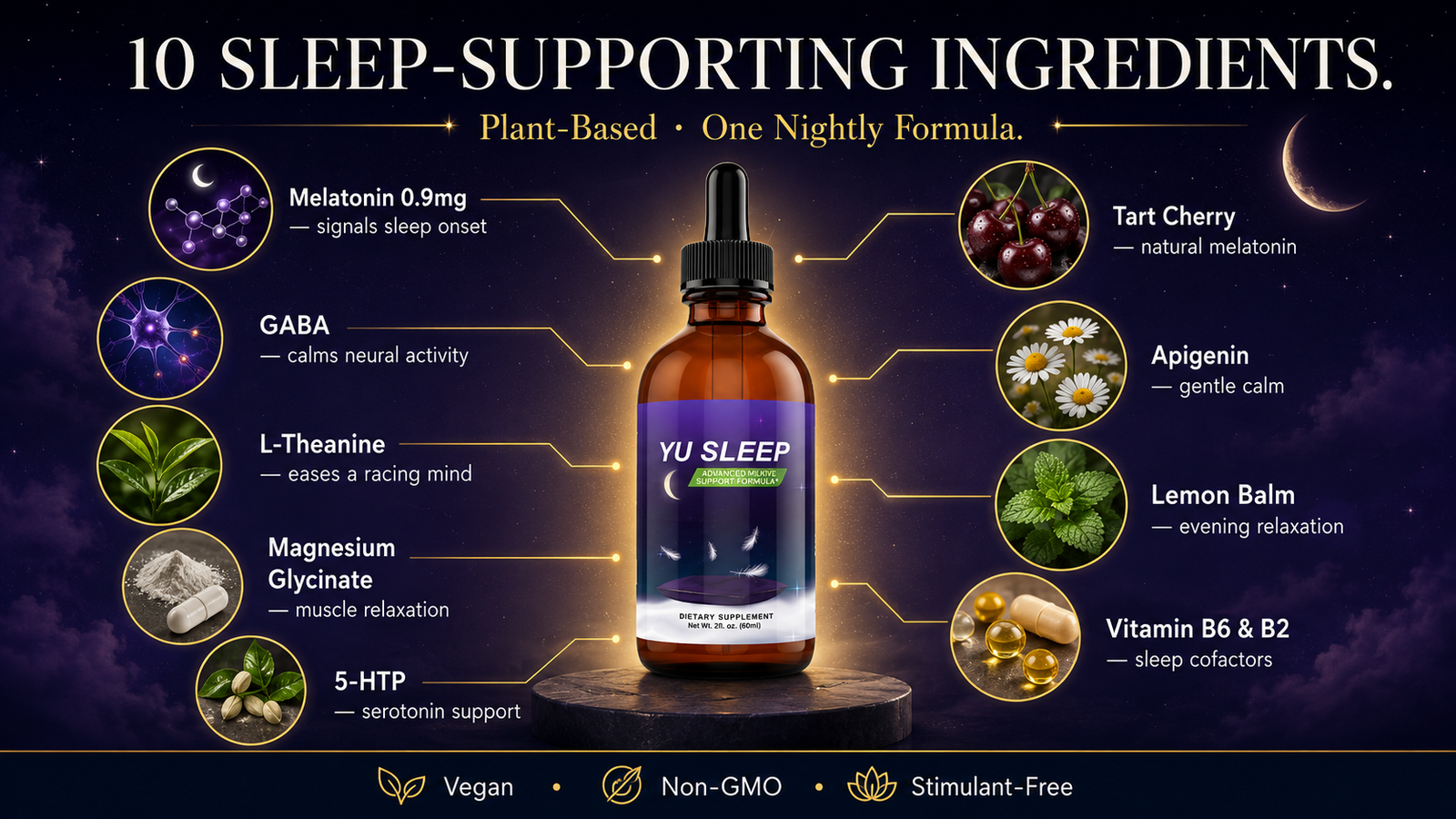
Below is a grounded look at the ingredients commonly found in sleep-support formulas, with an honest evidence grade for each. The grade reflects the strength of published research for the ingredient in general — not proof that Yu Sleep contains it at an effective dose, which depends entirely on the label.
Melatonin
Strongest evidence
GABA
Moderate / emerging evidence
L-Theanine
Moderate evidence
Magnesium Glycinate
Moderate evidence
5-HTP
Moderate evidence · caution
Tart Cherry Extract
Weak / preliminary evidence
Apigenin, Lemon Balm, Vitamins B6 & B2
Weak / supporting evidence
Bottom line on the formula: the standout is the sensibly low 0.9mg melatonin dose — a genuinely better choice than the 3–10mg most sleep aids use. L-theanine, GABA and magnesium are reasonable supporting players, and the rest (tart cherry, apigenin, lemon balm, B-vitamins) are lightly-evidenced extras. The main limitation is transparency: apart from melatonin, Yu Sleep doesn’t publish per-ingredient doses, so it’s impossible to know whether the magnesium or 5-HTP amounts reach researched levels. And the 5-HTP is a real interaction to take seriously if you’re on antidepressants.
Check the current Yu Sleep formula and price
Confirm the actual Supplement Facts panel, doses, price, and guarantee on the official listing before buying.
Benefits You Might Reasonably Expect
Based on the ingredient profile typical of this category, here’s what Yu Sleep is positioned to support — written in structure/function terms, because that’s what a supplement can honestly claim:
- Supports falling asleep faster by reinforcing the body’s natural wind-down signal.
- Supports staying asleep and a more consistent night with regular use.
- Promotes a calmer pre-sleep state, which can help a busy mind settle.
- Supports a more regular sleep-wake rhythm when taken at the same time each night.
- Offers a non-prescription, non-habit-forming approach — though “non-habit-forming” describes these ingredient types generally, not a guarantee for every person.
The realistic trade-off: these benefits are usually gradual and moderate. If your expectation is something that reliably puts you under within 20 minutes every night regardless of what else is going on, a supplement is the wrong tool — and honestly, so is chasing that expectation, since it often points to a sleep issue better handled with a clinician.
Yu Sleep vs Other Sleep Options
Here’s how a sleep-support supplement like Yu Sleep generally compares with the other common approaches. This is category-level context, not a claim that Yu Sleep beats any specific product.
| Option | Onset | Habit / tolerance risk | Best for |
|---|---|---|---|
| Yu Sleep-type supplement | Gradual (1–3 weeks) | Low | Mild, occasional trouble sleeping |
| Melatonin alone | Same night | Low | Jet lag / shifted schedule |
| OTC antihistamine sleep aids | Same night | Tolerance builds quickly | Very short-term use only |
| Prescription sleep drugs | Same night | Higher (varies by drug) | Diagnosed insomnia, under a doctor |
| Sleep hygiene / CBT-I | Weeks | None | Chronic insomnia (most durable fix) |
The most important row is the last one. For ongoing insomnia, cognitive behavioral therapy for insomnia (CBT-I) has the strongest long-term evidence of anything on this list — stronger than any supplement or, over time, most sleep drugs. A supplement can complement good habits; it doesn’t replace them.
Who Yu Sleep Is For — And Who Should Skip It
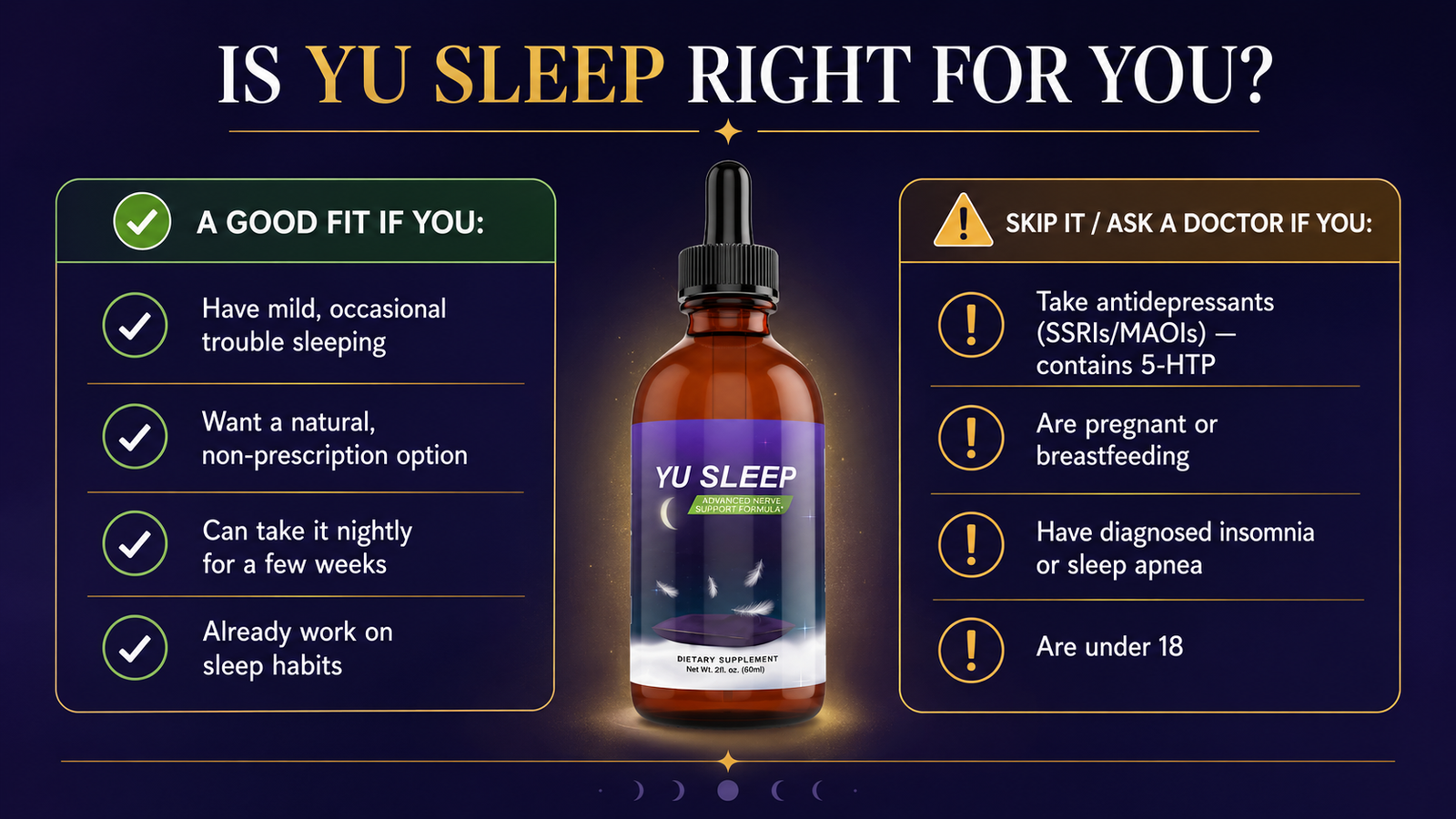
✓ Reasonable fit if you:
- Are an adult with mild, occasional trouble falling or staying asleep
- Prefer a natural, non-prescription option and have realistic expectations
- Can take it consistently every night for a few weeks to judge it
- Have already worked on the basics (screens, caffeine, a regular schedule)
- Want something gentle rather than a strong sedative effect
✗ Skip it (or ask a doctor first) if you:
- Have diagnosed insomnia, sleep apnea, or restless legs
- Are pregnant or breastfeeding
- Take sedatives, blood pressure meds, blood thinners, or other prescriptions
- Snore loudly, gasp, or have severe daytime fatigue (needs evaluation)
- Want a guaranteed same-night effect
- Are under 18 (melatonin in children should be doctor-guided)
Side Effects, Safety and Drug Interactions
Ingredients commonly used in sleep-support formulas are generally well-tolerated by healthy adults at typical doses. The effects people do report are usually mild:
- Morning grogginess or a “hangover” feeling — most associated with melatonin, especially at higher doses; usually improves with a lower dose or taking it earlier
- Vivid or unusual dreams
- Mild digestive upset or headache in the first few days
- Daytime drowsiness if taken too late or combined with other sedating substances
⚠ Important interaction warnings
Melatonin and several calming herbs can interact with medications. Talk to your doctor before using Yu Sleep if you take any of the following:
- Antidepressants (SSRIs, SNRIs, MAOIs) and migraine triptans — Yu Sleep contains 5-HTP, which raises serotonin and can, in combination, contribute to serotonin syndrome. This is the single most important interaction for this product — do not combine without a doctor’s guidance.
- Sedatives / sleep or anxiety medications — additive drowsiness
- Blood thinners (e.g., warfarin) — melatonin and some herbs may affect bleeding risk
- Blood pressure and diabetes medications — melatonin can influence both
- Immunosuppressants — melatonin can stimulate immune activity
- Anticonvulsants — possible interaction with melatonin
Also: don’t drive or operate machinery after taking a sleep supplement until you know how it affects you, and avoid combining it with alcohol.
Yu Sleep should be produced in an FDA-registered, GMP-certified facility — verify this on the listing, and prefer products that publish or will provide third-party testing, which confirms the label matches what’s in the bottle.
What Users Tend to Report
Rather than invent testimonials, here’s an honest summary of the themes that recur in feedback on sleep-support supplements in this category. These are general patterns, not verified individual results, and individual outcomes vary widely.
- Falling asleep a bit faster is the most commonly reported benefit, often noticed within the first week or two.
- Fewer or shorter night wakings is reported by some, though less consistently than faster onset.
- Feeling more rested in the morning — a quality-of-sleep improvement rather than more hours.
- Non-responders exist. A meaningful share of people notice little or nothing, which matches how these ingredients perform in research.
- Morning grogginess is the most common complaint, usually tied to melatonin dose and timing.
On reviews: We don’t publish invented or named testimonials. Where star ratings or quotes appear on retail pages, treat them cautiously — supplement reviews are frequently incentivized or filtered. The patterns above reflect commonly reported experiences, not verified individuals.
How to Take Yu Sleep & Realistic Timeline
Follow the label — but the general pattern for this category is a single evening serving taken 30–60 minutes before bed. [Confirm Yu Sleep’s exact directions and format.] A few principles help:
- Be consistent. Take it at roughly the same time nightly; the circadian benefit depends on regularity.
- Start low with melatonin-containing products. More is not better — low doses are often as effective and less likely to cause grogginess.
- Give it two to three weeks before deciding, unless you have side effects.
- Pair it with a wind-down routine, not with a phone in a bright room.
- Nights 1–3: Some people notice faster onset (mostly the melatonin); others feel nothing yet.
- Week 1–2: Sleep quality and consistency may start to improve.
- Week 2–3: The clearest read on whether it’s working for you.
- Beyond: Benefits, if present, tend to hold with continued use; the durable fix for chronic issues is still habits and underlying causes.
The Part That Matters Most: Sleep Habits & CBT-I
No honest sleep review is complete without this section, because for most people it moves the needle more than any supplement. If you only change one thing, change your routine before your supplement shelf.
Sleep hygiene basics that actually have evidence
- Fixed wake time. Anchoring the same wake time every day — including weekends — is one of the most powerful ways to stabilize the body clock.
- Cut caffeine after mid-day. Caffeine’s half-life is roughly five to six hours, so an afternoon coffee is still active at bedtime for many people.
- Watch alcohol. It can help you fall asleep but fragments the second half of the night and suppresses restorative stages.
- Dim light in the evening, bright light in the morning. This is the strongest natural lever on melatonin and the circadian clock.
- Cool, dark, quiet room. A slightly cool bedroom supports the drop in core body temperature that sleep requires.
- Get out of bed if you’re wide awake. Lying awake frustrated trains the brain to associate bed with wakefulness; a quiet, low-light activity until sleepy breaks that cycle.
CBT-I: the strongest option for chronic insomnia
If poor sleep has lasted months, cognitive behavioral therapy for insomnia (CBT-I) is the first-line, evidence-based treatment recommended by sleep-medicine bodies — and its benefits generally outlast sleeping pills. It’s a structured program (stimulus control, sleep restriction, and cognitive work around sleep anxiety) delivered by a therapist or through reputable apps and workbooks. No supplement matches its long-term track record. If Yu Sleep is something you’re considering because sleep has been bad for a long time, CBT-I deserves a look first or alongside it.
Framed simply: Yu Sleep and products like it work best as a small assist on top of solid fundamentals — not as a substitute for them.
Common Mistakes People Make With Sleep Supplements
A surprising number of people conclude a sleep supplement “doesn’t work” when the real issue is how they used it. Before you judge Yu Sleep — or any product like it — check that you’re not making one of these avoidable mistakes.
Taking too much melatonin
This is the single most common error. Melatonin is not a dose-more-get-more ingredient — it’s a signaling hormone. Studies repeatedly find that low doses can be as effective as high ones for shifting the clock, while higher doses raise the odds of next-morning grogginess and, for some people, actually disrupt sleep. If a product lets you scale the dose, starting low is usually smarter than starting high.
Taking it too late
A sleep supplement swallowed as you turn out the light hasn’t had time to do anything. Most are meant to be taken 30 to 60 minutes before bed. Taken at the wrong time, melatonin can even shift your clock in the direction you don’t want, leaving you groggy the next morning.
Judging it after two nights
Some effects (faster onset from melatonin) can show up quickly, but the sleep-quality and consistency benefits these formulas aim for build over one to three weeks. Quitting after two nights because nothing dramatic happened is the equivalent of abandoning a new exercise routine after one session.
Using it to paper over bad inputs
No supplement can overcome an afternoon triple espresso, a nightcap, a bright phone in bed, and a wake time that swings by three hours between weekdays and weekends. When those inputs are working against you, the supplement is trying to bail out a boat with a hole in it. Fix the biggest leaks first; the supplement works far better on top of decent fundamentals.
Ignoring a problem that needs a doctor
If you snore loudly and wake unrefreshed no matter how long you sleep, if you gasp or stop breathing at night, or if low mood and insomnia arrived together, those are medical signals — not supplement problems. Sleep apnea in particular is common, underdiagnosed, and genuinely dangerous when ignored, and no sleep supplement touches it. Using Yu Sleep to mask that kind of symptom is the one scenario where a supplement can actively delay care you need.
Stacking sedatives without realizing it
Combining a melatonin-based supplement with an antihistamine sleep aid, a prescription sedative, or alcohol stacks up drowsiness in a way that can leave you impaired the next day. If you already take something that makes you sleepy, adding another one is not a free upgrade — talk to a pharmacist first.
Pricing, Guarantee & Where to Buy
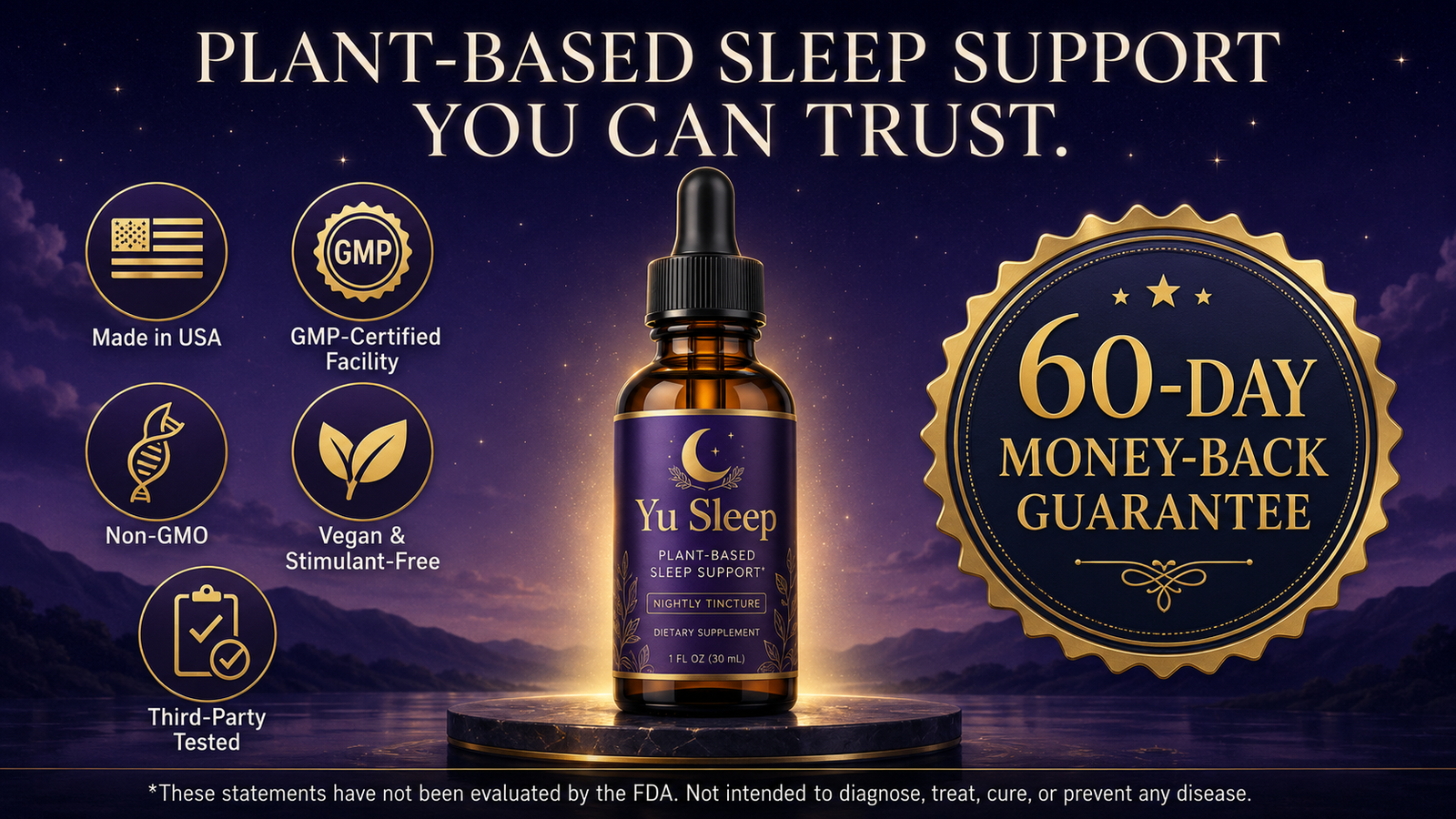
Yu Sleep is sold through its official listing in 2-, 3-, and 6-month bundles (there is no single-bottle option). At the time of writing, per-bottle pricing runs from $69 down to $49 on the largest bundle, with a 60-day money-back guarantee. Confirm current pricing and shipping on the official listing before ordering, since promotions change.
| Package | Per bottle | Total | Notes |
|---|---|---|---|
| 2-month (2 bottles) | $69 | $138 + shipping | Smallest option; good for a first trial |
| 3-month (3 bottles) | $59 | $177, free US shipping | Mid-tier; includes bonus guides |
| 6-month (6 bottles) | $49 | $294, free US shipping | Lowest per-bottle; includes bonus guides |
Prices verified from the current official listing (Aug 2026) and change with promotions — re-confirm before publishing. Note: Yu Sleep is only sold in multi-month bundles; there’s no single-bottle option, so the smallest commitment is two bottles.
Yu Sleep carries a 60-day money-back guarantee, which applies to purchases through the official listing rather than third-party sellers. One honest caution: the site pushes the 6-bottle package on the claim that it takes “3–6 months to reset your sleep architecture.” That timeline is a marketing construct, not established science — there’s no good evidence a sleep supplement needs a six-month course. Since a meaningful share of people are non-responders, the sensible move is to start with the smallest (2-month) bundle and judge it within the 60-day guarantee window before committing to six.
Yu Sleep vs buying the ingredients separately
Worth being upfront about: the individual ingredients in a formula like this — melatonin, magnesium, L-theanine, glycine — are inexpensive and widely available on their own. If you’re the type who’s happy managing a few separate bottles, you can usually assemble a comparable stack for less, and with full control over each dose. What you’d be paying Yu Sleep for is the convenience of a single evening serving, a fixed combination someone else formulated, and the guarantee. That convenience is a legitimate reason to choose a blend — plenty of people won’t stick with a four-bottle routine — but it’s an honest trade to understand before you buy. If cost is the deciding factor, price the formula’s per-serving cost against standalone melatonin plus magnesium and see how far apart they really are.
See current Yu Sleep pricing and guarantee
Price and guarantee should be verified on the official site before you order.
Is Yu Sleep Legitimate, or a Scam?
The honest answer: a sleep supplement built from melatonin, magnesium, and calming amino acids/herbs is a legitimate category — these are real, studied ingredients, not snake oil. Whether Yu Sleep specifically is worth your money comes down to two things you can check: the actual doses on the label, and the price relative to buying those ingredients separately.
Signs that point to a legitimate product, all verifiable on the listing: a transparent Supplement Facts panel with per-ingredient doses (not just a hidden “proprietary blend”), manufacturing in an FDA-registered/GMP facility, third-party testing, and a clear, honored refund policy. Signs to be wary of: undisclosed blend amounts, claims that it “cures” insomnia or replaces medication, and pressure tactics. A supplement that promises to treat a sleep disorder is overstepping what any supplement can legitimately claim.
So: not a scam as a concept, but “worth it” is label-dependent. Verify the panel and compare the per-serving cost to standalone melatonin + magnesium, which are inexpensive.
Yu Sleep FAQ
Our Editorial Verdict
Yu Sleep sits in a legitimate category with a real, if modest, evidence base. It’s a reasonable option for adults with mild, occasional sleep trouble who want a natural, non-prescription option and have realistic expectations of gradual improvement. Its value hinges on the actual label doses and price, and it isn’t the answer for chronic insomnia or serious sleep disorders — those call for a clinician and, often, CBT-I. Verify the panel, start with the smallest package, and treat it as an assist on top of solid sleep habits rather than a fix on its own.
✓ What we liked
- Legitimate, evidence-backed ingredient category
- Melatonin gives it a genuinely supported core
- Non-prescription, low habit risk
- Simple once-nightly routine
- Money-back guarantee (verify terms)
✗ What could be better
- Effects are gradual and modest, not dramatic
- Non-responders are common
- Value depends entirely on label doses vs price
- Herbal components have weak evidence
- Not appropriate for chronic insomnia or sleep disorders
- Ingredients can be bought separately, often cheaper
Ready to check Yu Sleep for yourself?
Confirm the formula, price, and 60-day-style guarantee on the official listing.
Get Yu Sleep – Official Site →
References
1. Ferracioli-Oda E, Qawasmi A, Bloch MH. (2013). Meta-analysis: melatonin for the treatment of primary sleep disorders. PLoS ONE, 8(5):e63773. PubMed ↗
2. Abbasi B, Kimiagar M, Sadeghniiat K, et al. (2012). The effect of magnesium supplementation on primary insomnia in elderly. J Res Med Sci, 17(12):1161-1169. PubMed ↗
3. Hidese S, Ogawa S, Ota M, et al. (2019). Effects of L-theanine on stress-related symptoms and cognitive functions. Nutrients, 11(10):2362. PubMed ↗
4. Yamadera W, Inagawa K, Chiba S, et al. (2007). Glycine ingestion improves subjective sleep quality. Sleep and Biological Rhythms, 5(2):126-131. Source ↗
5. Howatson G, et al. (2012). Effect of tart cherry juice on melatonin levels and sleep quality. Eur J Nutr. PubMed ↗
6. Byun JI, et al. (2018). Effects of oral GABA on sleep. PubMed ↗
7. Leach MJ, Page AT. (2015). Herbal medicine for insomnia: a systematic review. Sleep Med Rev, 24:1-12. PubMed ↗
8. Note on 5-HTP: evidence for sleep is preliminary; clinically important is its interaction risk with serotonergic drugs (SSRIs/SNRIs/MAOIs). Verify a current review before citing a specific trial. [VERIFY URL]
About the Author
Reviewed by James Carter, Lead Health Researcher at Men’s Health Authority. James has spent 8+ years analysing men’s health and natural supplements, evaluating ingredient quality, clinical evidence, manufacturing standards, and real-world outcomes. His rule: if he wouldn’t recommend it to his own father, he won’t recommend it here.
Related Articles
Affiliate Disclosure: Men’s Health Authority participates in affiliate programs and may earn a commission when readers buy through links on this page, at no extra cost to you. This does not change our assessment.
Medical Disclaimer & FDA statement: This review is for informational purposes only and is not medical advice. These statements have not been evaluated by the Food and Drug Administration. This product is not intended to diagnose, treat, cure, or prevent any disease. Consult a qualified healthcare provider before starting any supplement, especially if you are pregnant, nursing, taking medication, or have a medical condition.