
Saw Palmetto Alternatives: What the Evidence Actually Supports (2026)
If you have taken saw palmetto for months and felt nothing, you are not broken — the evidence is. The largest trial ever run on it, funded by the NIH across 369 men, found no benefit over placebo even at triple the standard dose. Yet it remains the best-selling prostate ingredient in America, riding on four decades of accumulated reputation.
The good news: the same research ecosystem that discredited saw palmetto validated several alternatives. This guide walks through the five with the strongest human evidence, what dose the trials actually used, and how to get them without buying five separate bottles.
Why Saw Palmetto Keeps Failing Trials
Saw palmetto’s theory is sound on paper — its fatty acids weakly inhibit 5-alpha-reductase, the enzyme converting testosterone to DHT. The problem is potency: pharmaceutical 5-ARIs suppress DHT by ~70% at milligram doses, while saw palmetto extract barely moves serum DHT at all in human measurement. The CAMUS trial escalated to 960mg daily — three times standard — and symptom scores still matched placebo. The earlier Cochrane analysis of 32 trials had already found the effect shrinking as study quality improved, the classic signature of an ingredient that does not work.
Alternative #1: Beta-Sitosterol — the Quiet Overachiever
Beta-sitosterol is a plant sterol found in pumpkin seed, pygeum and dozens of foods, and it has done what saw palmetto could not: pass controlled trials. The Cochrane-reviewed evidence shows improved urinary flow rates and symptom scores versus placebo at 60–130mg daily. It does not shrink the prostate — it appears to improve the functional symptoms that actually bother you: flow, urgency, and emptying. Any serious saw palmetto replacement should have it, or a pumpkin-seed/pygeum source of it, on the label.
Alternative #2: Stinging Nettle Root
Not the leaf — the root. A six-month randomised trial in 558 men found significant symptom improvement versus placebo (Safarinejad 2005), with benefits in both symptom score and residual urine volume. The proposed mechanism involves sex-hormone-binding globulin interactions and mild anti-inflammatory action within the gland. European urology has used nettle root for decades; American marketing mostly ignored it because it is cheap and unpatentable. Typical studied doses run 300–600mg of root extract daily.
Alternative #3: Boron — the Hormone-Math Mineral
Boron is the least famous name on this list and one of the more interesting: at 3–6mg daily it influences steroid hormone metabolism, with research showing shifts in free testosterone and estradiol ratios (Naghii 2010) that matter to the hormonal environment the prostate lives in. It will not fix symptoms alone — think of it as correcting the background conditions while beta-sitosterol and nettle work the foreground.
Alternatives #4 & #5: Pygeum and the Iodine Axis
Pygeum africanum (African cherry bark) carries a Cochrane review showing modest but real symptom benefits — it often rides along in good formulas as a beta-sitosterol source. The iodine-thyroid axis is the genuinely different path: thyroid function influences prostate tissue behaviour, and marine-botanical formulas like Prostadine build entirely on this mechanism. It is a genuinely different mechanism rather than a better-dosed version of the same one, which makes it worth considering specifically for men whom standard botanicals failed. (Thyroid patients need medical clearance first — the iodine load is real.)
The Different-Mechanism Option: Prostadine
Liquid iodine-marine formula for men whom standard botanicals failed — the seller reports flow improvements from week 6, which we could not independently verify.
Getting the Full Stack in One Bottle
You could assemble beta-sitosterol, nettle root, boron and pygeum from four separate bottles for roughly $60–80 monthly and a handful of capsules per day. Or you can pick a combined formula that already leads with this evidence-backed core — which is precisely what our top pick does — it puts the evidence-backed ingredients first and states their doses, instead of leading with saw palmetto.
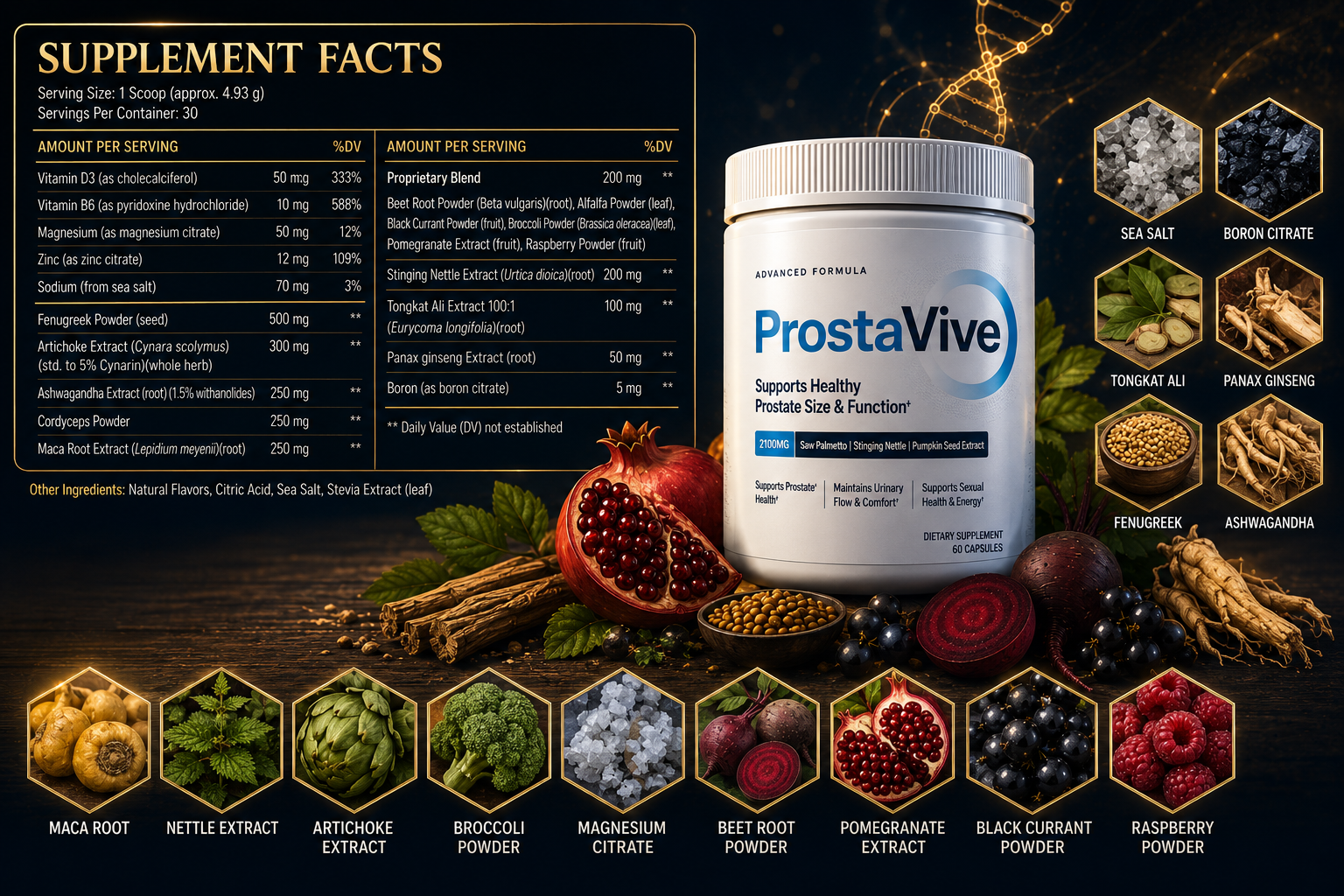
Our Top Tested Formula: ProstaVive
Leads with the evidence-backed core this article describes — nettle, sterol-rich botanicals and boron at disclosed doses — and is the closest match in this group to what the trials actually support.
How Saw Palmetto Won the Market Anyway
If the evidence is this weak, why does saw palmetto still dominate shelf space? The answer is a case study in supplement-market inertia. Its reputation was built in the 1980s and 90s on small, short, mostly industry-adjacent European trials that showed promise — and by the time rigorous NIH-funded testing arrived decades later, “saw palmetto = prostate” had hardened into consumer common sense that no JAMA paper could dislodge. Retail followed the demand, formulators followed retail, and the ingredient became self-perpetuating: it appears in formulas because buyers expect it, and buyers expect it because it appears in formulas.
There is also a subtler dynamic: saw palmetto is cheap, abundant, and safe — the perfect ingredient for a manufacturer who needs a recognisable name on the label without efficacy risk or cost. Understanding this teaches the broader skill this article is really about: ingredient reputation and ingredient evidence are separate variables, and the market only prices the first one. The alternatives below are the mirror image — strong evidence, weak marketing — which is precisely why they are both more effective and less famous.
Building the Replacement Stack: Doses and Combinations
If you were assembling the evidence-backed replacement from scratch, the shopping list reads: beta-sitosterol 60–130mg (or pumpkin seed/pygeum extracts supplying equivalent sterols), stinging nettle root extract 300–600mg, boron 3–6mg, and optionally pygeum 100–200mg. Run the pharmacy math and the separate-bottle route lands around $60–85 monthly across four products and six-plus capsules daily — workable, but compliance-hostile, and compliance is where most supplement value dies.
Combination formulas solve the logistics if — and only if — they pass the dose test. The failure mode is the “kitchen sink” product listing all four alternatives plus a dozen extras in one modest capsule; arithmetic guarantees everything inside is underdosed. The formulas worth buying either use multi-capsule servings or discipline their ingredient list. Check the milligrams against the ranges above; any product hiding behind a proprietary blend total fails automatically. This ten-second audit is more protective than any amount of review-reading, because it tests the one thing marketing cannot fake: whether the trial conditions physically fit in the bottle.
The Mechanism Map: Why Stacking These Works
The reason the replacement stack outperforms any single ingredient is that its members work different layers of the same problem. Beta-sitosterol operates at the symptom layer — improving flow dynamics and emptying, likely through effects on smooth muscle tone and local inflammation. Nettle root works the hormonal-binding layer, interacting with sex-hormone-binding globulin and the availability of hormones the gland responds to. Boron adjusts the endocrine background — the testosterone-estradiol arithmetic that determines what environment the prostate lives in. Pygeum adds an anti-inflammatory and secretory-health angle documented in its Cochrane-reviewed trials.
Contrast that with mega-dosing a single pathway: doubling beta-sitosterol does not touch the hormonal layer, and no amount of boron improves flow mechanics this month. Multi-layer coverage is also why combined formulas show broader response rates in practice — a man whose issue is predominantly hormonal responds to a different component than a man whose issue is mechanical, and neither knows in advance which he is. You are not stacking for potency; you are stacking for coverage of an unknown.
Switching Off Saw Palmetto: A Practical Transition Plan
If you are currently on a saw palmetto product, do not just stop cold and call the experiment over. Run the transition properly: week zero, log your baseline for seven nights (wake-ups, stream score 1–10, urgency episodes) while still on the old product — this is your honest starting line, including whatever placebo comfort it provides. Day one, switch directly to the replacement stack; there is no washout requirement between botanicals of this class. Weeks 3–5, watch for the early-responder signals; week 8, compare your log to baseline and make the call. Men switching from saw palmetto monotherapy have the most to gain on paper — if the largest trials are right that saw palmetto does nothing, their baseline is effectively untreated, so the delta was visible.
One honest caveat: a minority of men do report subjective benefit on saw palmetto, and physiology is individual even when trial averages are damning. If you are a genuine responder with logged data proving it, you have no reason to switch. The transition plan exists for the majority who kept buying it on reputation and were never shown a better option.
Reading the Research Yourself: A 10-Minute Skill
You do not need a medical degree to audit supplement claims — you need PubMed and three habits. First, search the ingredient plus “randomized” and sort by date; human RCTs outrank everything, and their absence after decades of popularity is itself a verdict. Second, read the abstract’s actual numbers, not its adjectives — “significant improvement” can mean a 4% change on a subjective scale, and the CAMUS trial’s importance is precisely that it reported hard symptom scores against placebo. Third, check who paid: industry funding does not automatically invalidate a study, but a literature where only manufacturer-funded trials succeed and independent ones fail — saw palmetto’s exact pattern — is the classic signature of a marketing compound rather than a medical one.
Apply the same three habits to anything this site recommends, including our picks. Our reviews link their citations for exactly that reason: an audience that verifies keeps a publisher honest, and the supplement industry improves only at the speed its customers learn to read. The alternatives in this article survive that audit; that is the entire reason they are here.
Frequently Asked Questions
Do saw palmetto alternatives have side effects?
The evidence-backed stack tests remarkably clean: beta-sitosterol and pygeum show placebo-level side effects in reviews, nettle root occasionally causes mild stomach upset, and boron is benign at 3–6mg. The real caution is interactions — nettle and formula companions like ginseng touch blood pressure and INR, so medicated men should run the five-minute pharmacist check.
Is there any reason to still take saw palmetto?
If your own logged data shows genuine benefit, keep it — trial averages are not individual guarantees. But as a first choice for a new buyer, the evidence hierarchy points clearly to beta-sitosterol and nettle root instead.
How long should I try a saw palmetto alternative before judging?
Twelve weeks with a baseline week of logging — first signals typically arrive weeks 3–6. Buy inside a guarantee window that outlasts that timeline so the experiment costs nothing if it fails.
What works better than saw palmetto for prostate health?
Beta-sitosterol and stinging nettle root both carry stronger controlled-trial evidence than saw palmetto — which failed its largest NIH-funded trial. Boron and pygeum add supporting evidence, and iodine-based formulas offer a different mechanism entirely.
Is saw palmetto dangerous?
No — it is well tolerated. The problem is efficacy, not safety: the best evidence says it simply does not outperform placebo for urinary symptoms.
Can I take beta-sitosterol and nettle root together?
Yes — they work different mechanisms and appear together in most quality combination formulas. That pairing (plus boron) is the core of our top pick on the evidence.
How long should I give a saw palmetto alternative to work?
Run a 12-week evaluation with a baseline week of symptom logging. In the trials, the earliest separation from placebo appeared around weeks 4-6, with primary endpoints measured at weeks 8-12.
This article is informational and not medical advice. Consult your doctor before starting any supplement, especially if you take medication.