
Ikaria Lean Belly Juice is a once-daily 3 g powder sold for weight loss, with a marketing story built around “ceramides” and uric acid as the hidden cause of belly fat. The label is a mix of reasonable ingredients — green tea extract, kelp (fucoxanthin), resveratrol, citrus pectin, ginseng, milk thistle, a fruit-polyphenol mix, fibre and a small probiotic blend — but every one of them sits inside a proprietary blend, so you cannot know a single dose. Arithmetic settles most of it: the nine-ingredient “Metabolic Blend” totals 1,000 mg, which means the green tea extract, resveratrol and ginseng are almost certainly a fraction of the amounts used in the weight-loss studies. The uric-acid-causes-belly-fat story is not supported by trials. What is real: a long 180-day money-back guarantee, a generally benign ingredient list, and a few interaction cautions (thyroid, blood thinners, blood sugar, grapefruit). Any weight change will come mostly from the calorie deficit you run alongside it.
IN THIS REVIEW
What Ikaria Lean Belly Juice Is (and What It Claims)
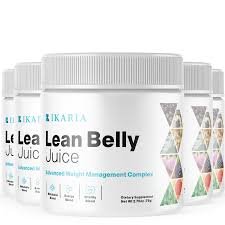
Ikaria Lean Belly Juice is sold as a once-daily powder for weight loss and metabolism.
Ikaria Lean Belly Juice is a direct-to-consumer powdered drink mix: one 3 g scoop stirred into about six ounces of water, once a day, 30 servings per jar. It is named after the Greek island associated with longevity, and its sales pages tell a specific story — that stubborn belly fat is driven by a build-up of uric acid (and, in some versions, “ceramides”) which the drink is said to flush out, restarting fat burning. The product is marketed to both men and women, typically over 40, who have struggled to lose weight through diet alone.
The seller states the product is made in the United States in a GMP-compliant facility and is sold only through its official website, with checkout processed through ClickBank or BuyGoods depending on the version of the sales page. Returns go to a fulfilment address in Tallmadge, Ohio. The company behind it is not clearly named on the sales pages; a Better Business Bureau file for the operating location showed a B+ rating with a small number of complaints as of mid-2026 (not accredited).
The one thing to understand up front: the ingredient list is genuinely decent for a wellness drink, but the seller only shows the Supplement Facts panel as an image, and everything on it is grouped into four proprietary blends. That single choice is what makes the weight-loss claims impossible to verify.
Key Facts
| Category | Weight-loss / metabolism “superfood” powder |
| Format | Powder — 1 scoop (3.02 g) daily in ~6 oz water, 30 servings per jar |
| Headline claim | Belly-fat loss by lowering uric acid / ceramides; metabolism, energy, digestion |
| Label structure | Four proprietary blends: Metabolic (1,000 mg), Polyphenol (1,000 mg), Digestive (325 mg), Probiotic (125 mg / 3 billion CFU) |
| Dose transparency | Poor — blend totals only; no individual ingredient amounts; panel shown only as an image |
| Best-evidenced ingredients | Green tea extract (EGCG), fucoxanthin from kelp, citrus pectin, fibre — all dose-dependent |
| Guarantee | 180 days from the ship date; buyer pays return postage (confirm on the checkout page you use) |
| Price (confirm at checkout) | $69 + $9.95 shipping single · $177 for 3 ($59/jar) · $234 for 6 ($39/jar), free shipping on bundles — as listed 4 Sep 2026 |
| Our take | Mixed — a qualitative editorial opinion (not a lab test, and not a numeric score) |
What the Label Says — and What It Hides

The Supplement Facts panel: four proprietary blends, no individual doses. Read the panel on the jar you receive.
Based on the Supplement Facts panel as published in the seller’s materials and transcribed by independent reviewers (checked 4 Sep 2026), one 3.02 g scoop contains the following. The blend totals are disclosed; the amount of each ingredient inside a blend is not. Read the panel on the jar you receive — formulas change, and older versions of this product listed a slightly different ingredient set.
| Blend (total per scoop) | Ingredients inside it (order as listed) | What the total tells you |
|---|---|---|
| Metabolic Blend — 1,000 mg | Dandelion root, turmeric root, citrus pectin, green tea leaf extract (EGCG), kelp extract (fucoxanthin), milk thistle seed extract, Panax ginseng root, black pepper extract (piperine), Japanese knotweed (resveratrol) | Nine ingredients sharing 1 g: an average of ~110 mg each. Ingredients listed later are, by labelling rules, present in smaller amounts than those listed earlier. |
| Polyphenol Blend — 1,000 mg | Beetroot, hibiscus, strawberry, acai, African mango extract, black currant, blueberry, cranberry, grapefruit, pomegranate, raspberry powders | Eleven fruit/vegetable powders sharing 1 g: ~90 mg each — flavour and colour, with negligible active dose. |
| Digestive Blend — 325 mg | Inulin, oat fibre | About a third of a gram of fibre. A typical fibre supplement serving is 3–5 g; a medium apple has ~4 g. |
| Probiotic Blend — 125 mg (3 billion CFU) | Nine strains: L. acidophilus, L. salivarius, L. plantarum, L. rhamnosus, B. lactis, B. bifidum, L. fermentum, L. reuteri, B. longum | A modest CFU count spread across nine unspecified strains; well below the 10–50 billion CFU used in most probiotic trials. |
Read the formula honestly: a 3 g scoop is the weight of a little over half a teaspoon of sugar. Once you subtract the fruit powders, fibre and probiotics, roughly 1 g is left for nine “metabolic” ingredients. That is not a formula that can carry study-level doses of green tea extract (300–800 mg), resveratrol (150–500 mg) and ginseng (1–3 g) at the same time — the maths does not allow it, whatever the sales page implies.
Ingredient Evidence Audit
For each main ingredient: what human research shows for weight or metabolic outcomes, the dose that research used, and what the 1,000 mg blend total makes possible. Because the seller does not disclose amounts, the “dose match” column is our reasoned estimate from the blend arithmetic, not a measured figure.
| Ingredient | What the human evidence shows — and at what dose | Likely dose match |
|---|---|---|
| Green tea extract (EGCG) | The best-studied ingredient here. A Cochrane review of green tea preparations for weight loss found a small, statistically non-significant average loss (well under 1 kg over 12 weeks); individual positive trials used 300–800 mg EGCG/day, often with caffeine. High-dose green tea extract has been linked to rare liver injury. | Almost certainly below |
| Kelp extract (fucoxanthin) | One 16-week randomized trial in obese women found a fucoxanthin-containing seaweed extract (about 2.4 mg fucoxanthin/day, combined with pomegranate seed oil) produced greater weight loss than placebo. Only a few milligrams of fucoxanthin are needed, so this is the one metabolic ingredient a small kelp dose could plausibly deliver — but the fucoxanthin content of Ikaria’s kelp is not stated, and the trial has not been replicated in men. | Possible, unverifiable |
| Resveratrol (Japanese knotweed) | Meta-analyses of resveratrol trials show at best a trivial effect on body weight (roughly 0.5–1 kg) at 150–500+ mg/day. Listed last in the blend, so present at the smallest amount. | Far below |
| Citrus pectin | Pectin increases fullness and modestly lowers cholesterol in trials, but at 3 g or more per dose — the weight of the entire Ikaria scoop. | Far below |
| Panax ginseng | Small trials suggest modest effects on blood sugar and lipids at 1–3 g/day of root powder; weight-loss evidence is weak. Cannot approach that dose inside a 1 g blend. | Far below |
| Milk thistle, dandelion, turmeric | Liver-support and anti-inflammatory herbs with no meaningful human evidence for fat loss. Turmeric’s curcumin needs ~500–1,000 mg plus piperine to be absorbed; dandelion is a mild diuretic (water, not fat). | Not weight-relevant |
| Black pepper extract (piperine) | An absorption enhancer for curcumin and some other compounds; effective at 5–20 mg. Reasonable inclusion, no direct weight effect. | Plausible |
| Polyphenol fruit blend | Antioxidant powders at ~90 mg each. African mango extract has small, industry-funded weight-loss trials at 150–300 mg/day of a specific extract; the rest are flavour-level. | Negligible |
| Fibre + probiotics | Fibre and certain probiotic strains have modest weight-management evidence, but at 3–10 g of fibre and 10–50 billion CFU of specific strains. Ikaria provides 0.3 g of fibre and 3 billion CFU. | Token |
The pattern: one ingredient (fucoxanthin) that might be at a meaningful dose, one useful helper (piperine), and everything else at amounts that cannot reproduce the studies the marketing leans on. Nobody has tested whether these ingredients together, at these amounts, do anything for weight. Realistic expectations: in the positive trials for the best ingredients here, weight loss was on the order of 1–2 kg over 3–4 months with diet control — not the dramatic transformations the sales page implies.
The Uric-Acid Claim, Examined
The sales pitch is that high uric acid is the hidden cause of belly fat, and that lowering it “unlocks” fat burning. Here is what the research actually supports. Uric acid does correlate with obesity, metabolic syndrome and fatty liver — people who carry more abdominal fat tend to have higher uric acid, partly because fat tissue and insulin resistance raise it. But correlation runs mostly in the other direction: losing weight lowers uric acid, not the reverse. Trials of uric-acid-lowering drugs (allopurinol, febuxostat) in people with metabolic syndrome have not produced meaningful fat loss. There is no randomized trial showing that lowering uric acid with any supplement causes weight loss, and none of Ikaria’s ingredients is a proven urate-lowering agent at the doses it can contain. If you have genuinely high uric acid or gout, that is a medical issue for your doctor, not a reason to buy a weight-loss powder.
⚠ What is NOT known (read before buying)
• Every individual dose. Four proprietary blends; no ingredient amounts. This is the reason the weight-loss claims cannot be evaluated.
• No trial on the finished product. All evidence is for separate ingredients at doses the formula most likely does not contain.
• No third-party test report. GMP manufacturing is stated; no certificate of analysis or named testing body was found.
• Who makes it. The company is not clearly identified on the sales pages; several near-identical “official” domains exist, which makes it easy to land on a copycat.
• Which guarantee applies. Most seller pages say 180 days from shipment; some checkout versions have shown shorter windows. Read the page you actually buy from.
Who Should Avoid It
- Anyone with a thyroid condition — kelp is a concentrated iodine source; excess iodine can worsen both over- and under-active thyroid. The iodine content is not stated.
- Men on blood thinners or antiplatelet drugs — ginseng, turmeric, resveratrol and green tea can all affect clotting; discuss with a pharmacist.
- Anyone on diabetes medication — several ingredients (ginseng, green tea, milk thistle) can lower blood sugar and add to your medication’s effect.
- Anyone on blood-pressure medication — hibiscus and beetroot lower blood pressure; monitor readings.
- Anyone taking a medicine that interacts with grapefruit (many statins, some blood-pressure and heart drugs, some immunosuppressants) — the blend contains grapefruit powder. The amount is small, but the interaction is well documented; ask a pharmacist.
- People with liver disease — green tea extract has been linked to rare liver injury, particularly at high doses on an empty stomach.
- Anyone with a ragweed/daisy allergy (dandelion) or an allergy to any listed fruit; anyone under 18; pregnant or breastfeeding women.
- Anyone with an eating disorder or a history of one — “flush belly fat” products are not a safe frame for weight management.
This is not medical advice. Unexplained weight gain, or belly fat that resists diet and exercise, can be linked to thyroid function, sleep apnoea, medication side effects, low testosterone in men, and insulin resistance — all of which a doctor can check. Use any supplement as an optional add-on after that, not instead of it.
Price, Guarantee & Where to Buy
The seller’s official website was the only purchasing channel we could verify on 4 Sep 2026. We could not confirm any authorized retail availability; marketplace listings may be resold or counterfeit stock without the guarantee, and several look-alike “official” domains exist. Prices below are as listed on that date — confirm the current price, shipping and guarantee on the checkout page you actually use:
Cost per day: about $2.63 on a single jar, $1.97 on the 3-pack and $1.30 on the 6-pack. For comparison, a standardized green tea extract capsule (300–400 mg EGCG) plus a psyllium fibre supplement — both at verified doses — typically cost under $0.60 a day combined.
The guarantee, read carefully. The seller advertises a 180-day money-back guarantee, counted from the date the order ships, and states that opened jars are accepted. You email support for authorization, post the jars back to the Ohio returns address at your own cost, and the refund is issued after receipt. Some checkout variants have shown shorter windows, so screenshot the guarantee wording on the page you buy from and keep the order confirmation. A long refund window lowers your financial risk only if you use it: decide by week 8–10 whether anything has changed.
See the seller’s current price & return terms
Confirm the current price, shipping and guarantee directly with the seller before ordering (checked 4 Sep 2026 — terms can change).
View the seller’s current offer →Honest Alternatives
Because Ikaria’s value depends on doses it does not disclose, it is worth knowing what does the same jobs at known amounts:
- For the green tea effect: a standardized green tea extract giving 300–400 mg EGCG daily, taken with food, is the form the trials used — and the dose is printed on the bottle. Expect a small effect, not a large one.
- For fullness and digestion: 5–10 g of psyllium or another soluble fibre before meals has far better evidence for appetite and cholesterol than 0.3 g of inulin.
- For probiotics: a product naming its strains with 10–50 billion CFU, if you want one at all.
- For men over 40 specifically: a testosterone check is worth doing before spending on fat-loss powders — low testosterone is a common, treatable driver of abdominal fat gain in men. See our guide to testosterone-support supplements for how we assess that category.
- The option that actually works: a modest, sustained calorie deficit (roughly 300–500 kcal/day), 25–30 g of protein per meal, resistance training two or three times a week, and 7+ hours of sleep. No supplement in this category comes close.
Pros, Cons & Verdict
What we liked
- Long 180-day guarantee that accepts opened jars
- Ingredient list is generally benign — nothing exotic, no stimulants
- Includes the few weight-relevant ingredients that do have trials (EGCG, fucoxanthin, pectin)
- Pleasant daily habit: fruit powders, fibre and probiotics do no harm
- Reasonable per-day cost on the 6-jar bundle
What gives us pause
- All four blends are proprietary — not one individual dose is disclosed
- Blend arithmetic makes study-level doses of green tea, resveratrol, ginseng and pectin impossible
- The uric-acid / ceramide story is marketing, not evidence
- No trial on the finished product; no certificate of analysis; company not clearly named
- Multiple look-alike “official” domains; guarantee wording varies by checkout
- Kelp iodine and grapefruit powder are real interaction concerns for some buyers
Editorial verdict — mixed: Ikaria Lean Belly Juice is an inoffensive antioxidant-and-fibre drink sold with a weight-loss story its doses cannot support. If you enjoy a daily greens-style powder, tolerate the ingredients, and value a long refund window, it is a low-risk purchase — but buy it as a pleasant habit, not as a fat-loss tool. Any belly fat you lose over the next six months will come from the calorie deficit, protein and training you run alongside it. If a doctor has not yet checked your thyroid, sleep and (for men) testosterone, do that first; it is free with most check-ups and far more likely to explain stubborn weight.
Frequently Asked Questions
Green tea for weight loss and weight maintenance — Cochrane systematic review (2012). PubMed 23235664
Fucoxanthin-containing seaweed extract (Xanthigen) and body weight in obese women — 16-week randomized trial (Diabetes Obes Metab, 2010). PubMed 19840063
Resveratrol and body weight — meta-analyses of randomized trials. PubMed search: resveratrol body weight meta-analysis
Pectin, satiety and cholesterol — human trials. PubMed search: pectin satiety randomized
Uric acid, obesity and metabolic syndrome — direction of causation and urate-lowering trials. PubMed search: uric acid lowering metabolic syndrome randomized
Green tea extract and liver injury — NIH LiverTox. ncbi.nlm.nih.gov/books/NBK547925
Iodine (kelp) and thyroid — NIH Office of Dietary Supplements fact sheet. ods.od.nih.gov
Grapefruit–drug interactions — U.S. FDA consumer update. fda.gov
Seller’s official sales materials and label transcriptions (blend totals, pricing, guarantee wording) — accessed 4 September 2026.
1 thought on “Ikaria Lean Belly Juice Review: Ingredients, Evidence, Price & Safety (2026)”
Comments are closed.