
Testosterone is built from raw materials your body extracts from food. Cholesterol, zinc, vitamin D, magnesium, selenium, and boron are all required cofactors in testosterone production — and the majority of men over 40 are deficient or sub-optimal in at least two of them. The right foods can raise testosterone naturally by 10 to 25% over 8 to 12 weeks. The wrong foods can lower it by an equivalent amount in the same window. Understanding which foods do what — and why — is one of the most underappreciated tools in men’s hormonal health.
📄 In This Guide

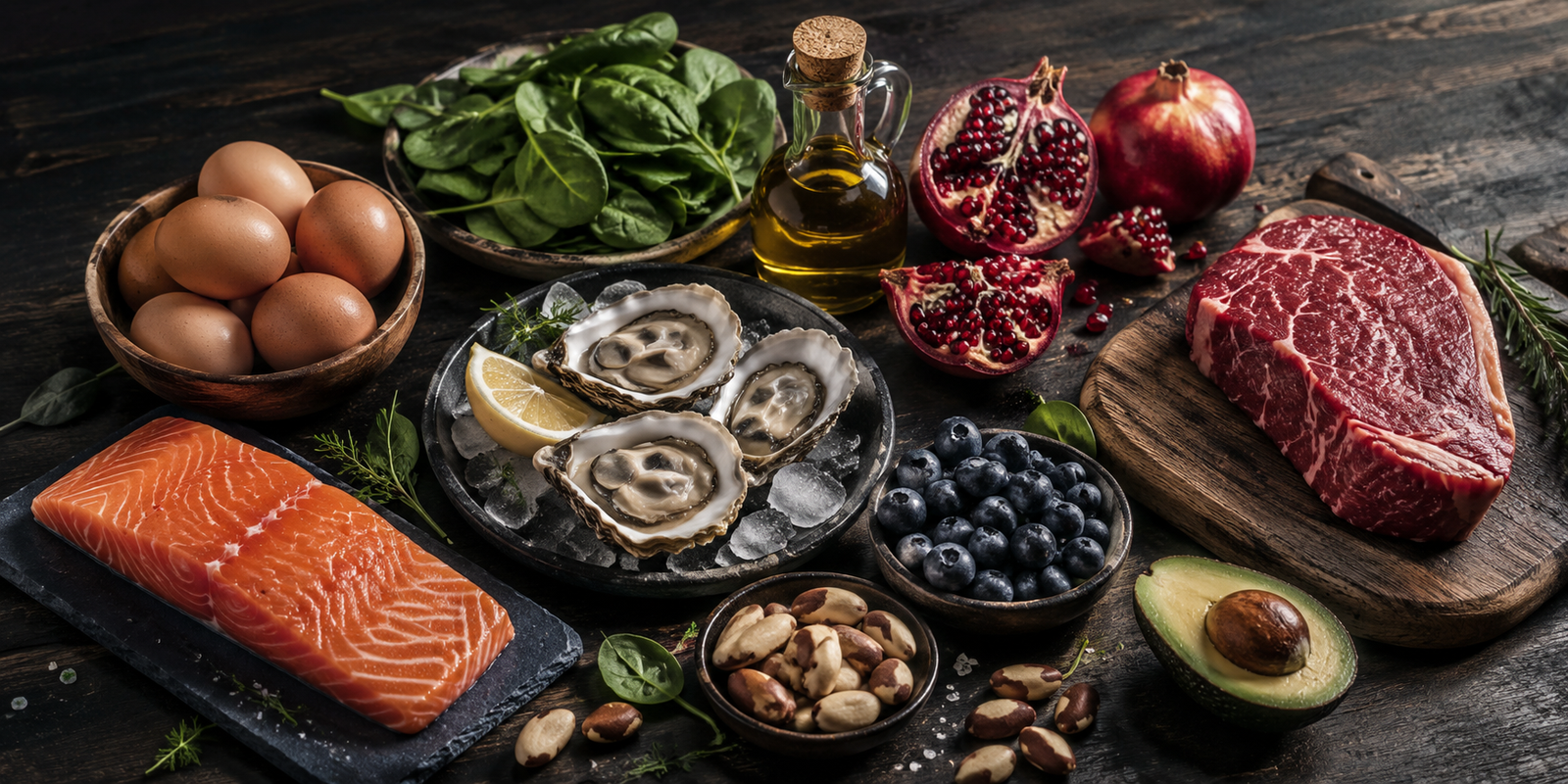
A testosterone-supporting plate combines protein, healthy fats, leafy greens, and zinc-rich foods — the foundation of natural hormonal health for men over 40.
How Food Affects Testosterone Production
Testosterone is synthesised from cholesterol inside the Leydig cells of the testes — meaning your body literally needs dietary fat as a starting material. This is why very low-fat diets consistently suppress testosterone in clinical trials. But cholesterol alone is not enough. The conversion process requires a chain of micronutrients: zinc enables several key enzymatic steps, vitamin D acts as a hormone-regulating signal, magnesium increases free (unbound) testosterone, selenium supports antioxidant defence in testicular tissue, and boron influences testosterone availability in blood.
Beyond these direct synthesis requirements, food shapes the hormonal environment in indirect ways. Insulin spikes from refined carbohydrates suppress testosterone within hours. Chronic blood sugar dysregulation contributes to visceral fat accumulation, which converts testosterone to oestrogen. Inflammation from highly processed foods damages testicular tissue and reduces testosterone output. A man eating a typical Western diet is fighting his own hormones at multiple levels simultaneously — most of which can be reversed with consistent dietary changes.
The 10 Best Foods to Boost Testosterone
Oysters — The Highest Natural Zinc Source
Top Pick
Oysters contain more zinc per serving than any other food — approximately 30 to 50mg per 100g, which is 3 to 5 times the daily requirement. Zinc is critical for testosterone synthesis: men with zinc deficiency consistently show suppressed testosterone, and supplementing zinc in deficient men can raise testosterone by 30 to 40%. Eating oysters 2 to 3 times per month covers most men’s zinc needs and provides a noticeable hormonal boost. They are also rich in omega-3 fats, vitamin B12, and selenium — a near-perfect food for male hormonal health.
Whole Eggs (Including Yolks)
Daily Staple
Egg yolks contain cholesterol (the raw material for testosterone), vitamin D, choline, and complete protein with all essential amino acids. The decades-long fear of egg yolks based on cholesterol concerns has been largely refuted — research now consistently shows whole eggs do not raise cardiovascular risk in most people and provide one of the most testosterone-supportive nutrient profiles available. Eat 2 to 4 whole eggs daily as a foundational testosterone-supporting habit. The yolk contains nearly all the nutritional value — discarding it eliminates the primary benefit.
Fatty Fish — Salmon, Mackerel, Sardines
Vitamin D + Omega-3
Fatty fish are the best dietary source of both vitamin D and long-chain omega-3 fatty acids — two of the most testosterone-supportive nutrients in human nutrition. Research published in Hormone and Metabolic Research linked vitamin D supplementation in deficient men to significant testosterone increases over 12 months. Omega-3s reduce inflammation and improve insulin sensitivity — both indirectly support testosterone production. Aim for 2 to 3 servings per week of salmon, mackerel, sardines, or anchovies. Tinned sardines are inexpensive, shelf-stable, and nutritionally dense.
Pomegranate — Clinically Demonstrated T Boost
Research-Backed
A landmark study at Queen Margaret University found that drinking pomegranate juice daily raised testosterone levels by an average of 24% over just 14 days. Pomegranate is rich in antioxidant polyphenols that protect testicular tissue from oxidative damage — a major factor in age-related testosterone decline. The fruit also improves vascular function, supporting better erectile health alongside hormonal benefits. Consume as whole pomegranate seeds, fresh juice, or 100% unsweetened pomegranate juice — avoid sweetened versions which negate benefits with added sugar.
Leafy Greens — Spinach, Kale, Swiss Chard
Magnesium Source
Magnesium is one of the most consistently testosterone-supportive minerals in research — particularly because it increases free testosterone by reducing SHBG (sex hormone binding globulin) binding. Most men are mildly to moderately magnesium-deficient. Leafy greens are among the best dietary sources, alongside pumpkin seeds and dark chocolate. Eating a fist-sized portion of leafy greens with two meals daily covers most men’s magnesium needs. Greens also provide folate, vitamin K, and nitrates that support cardiovascular function — important because testosterone production depends on robust circulation.
Beef and Red Meat — Quality Sources
Zinc + Protein
Quality red meat provides bioavailable zinc, iron, vitamin B12, creatine, and complete protein. Grass-fed beef additionally contains more omega-3s and conjugated linoleic acid than grain-fed alternatives. The “red meat causes everything bad” narrative has softened considerably in recent research — moderate consumption of quality red meat (2 to 4 servings per week) within an otherwise whole-food diet does not appear to increase health risks and provides substantial hormonal support. Choose grass-fed where affordable, lean cuts, and avoid heavily processed meat products which are a separate category with different health implications.
Olive Oil — Monounsaturated Fat for Hormone Synthesis
Cooking Foundation
Extra virgin olive oil is consistently associated with healthy testosterone levels in research, likely because monounsaturated fats are particularly effective substrates for steroid hormone production. A small but compelling study in Morocco found that men who switched from butter to olive oil as their primary cooking fat experienced average testosterone increases of 17% over three weeks. Use extra virgin olive oil for cold applications (dressings, drizzling) and regular olive oil for medium-heat cooking. Avoid heavily refined seed oils (soybean, corn, canola) which have inflammatory effects that can suppress testosterone.
Brazil Nuts — Selenium Powerhouse
Tiny Daily Habit
Brazil nuts are the most concentrated dietary source of selenium — a single nut contains approximately 70-95mcg, exceeding the daily requirement. Selenium supports antioxidant defence in testicular tissue and is essential for normal sperm production. Eating just 1 to 2 Brazil nuts daily provides optimal selenium intake without exceeding safe levels (more than 3 per day can cause selenium toxicity over time). This is one of the highest-leverage single dietary habits for hormonal support — minimal effort, significant nutritional impact.
Avocados — Healthy Fats Plus Boron
Versatile Addition
Avocados provide monounsaturated fats, vitamin K, folate, magnesium, and boron — a trace mineral that research has linked to increased free testosterone and reduced oestrogen in men. Boron also supports vitamin D metabolism, amplifying the benefits of vitamin D-rich foods consumed alongside it. Half an avocado 3 to 4 times per week is a practical, palatable way to incorporate these benefits. Avocados pair particularly well with leafy greens and eggs — creating a near-perfect hormone-supporting meal combination.
Berries — Antioxidant Protection
Daily Antioxidant
Blueberries, blackberries, raspberries, and strawberries provide a concentrated dose of polyphenols and anthocyanins that protect testicular tissue from oxidative damage. Aging-related testosterone decline is partly driven by accumulated oxidative stress on Leydig cells — and antioxidant-rich berries are among the most effective dietary defences against this damage. They are also relatively low in sugar compared to other fruits, supporting stable insulin levels that further protect testosterone production. A fist-sized portion of mixed berries daily — fresh or frozen — is one of the easiest dietary additions to make.
Combining vitamin D-rich fish, leafy greens, and healthy fats in one meal creates a synergistic effect on testosterone production — more than any single food alone.
Foods That Lower Testosterone
⚠ Foods and Habits That Suppress Testosterone
Excessive alcohol: The single most reliable dietary testosterone suppressor. Even moderate intake (2 to 3 drinks daily) maintains suppressed testosterone, elevated cortisol, and impaired sleep — all hormonal negatives. Heavy drinking can reduce testosterone by 20 to 30% within weeks.
Sugar-sweetened beverages and refined sugars: Drive insulin spikes that acutely suppress testosterone. JAMA-published research showed glucose drinks suppressed testosterone by 25% within 2 hours in healthy men.
Highly processed foods and trans fats: Industrial trans fats are independently associated with lower testosterone in observational research. Processed foods also drive inflammation that further suppresses production.
Refined seed oils in excess: Soybean, corn, sunflower, and canola oils used heavily in processed foods are pro-inflammatory at typical Western intake levels — contributing to chronic inflammation that suppresses hormone production.
Excessive soy products: Moderate soy consumption shows no significant testosterone effects in most studies, but very high intake of soy isolates (common in protein powders, meat substitutes) may have mild oestrogenic effects in some men.
Mint in large amounts: Small studies have linked very high spearmint or peppermint tea consumption to mild testosterone reductions. Occasional consumption is fine; daily large quantities may be worth reducing.
A Testosterone-Supporting Daily Meal Pattern
🔧 Simple Testosterone-Boosting Meal Framework
- Breakfast: 3 whole eggs scrambled with spinach, half an avocado, olive oil drizzle
- Mid-morning snack: Handful of mixed berries with 1-2 Brazil nuts
- Lunch: Grilled salmon or grass-fed beef, large leafy green salad with olive oil dressing
- Afternoon: Plain Greek yoghurt with berries, or a small portion of nuts
- Dinner: Lean protein, two fist-sized portions of vegetables, complex carbohydrate (sweet potato, rice)
- Hydration: Water as primary beverage; coffee in moderation; minimal alcohol
- Weekly additions: Oysters 1-2 times per month, fatty fish 2-3 times per week, fresh pomegranate when in season
- Pattern over perfection: Aim for 80% adherence consistently rather than 100% short-term — long-term hormonal benefits come from sustainable patterns
What Does NOT Work for Boosting Testosterone Through Food
⚠ Common Misconceptions to Drop
Specific “T-boosting” superfoods alone: No single food dramatically raises testosterone. The pattern of eating across weeks and months matters more than any individual food. Marketing claims about specific “testosterone foods” overstate single-food effects.
Eliminating all carbohydrates: Very low-carb diets can elevate cortisol over time, which suppresses testosterone. Moderate carbohydrate intake (particularly from whole sources around exercise) supports testosterone better than aggressive carb restriction.
Very high-protein, low-fat approaches: Testosterone is synthesised from cholesterol — extremely low fat intake reliably suppresses testosterone in research. Both fat and adequate protein are necessary.
Avoiding eggs and red meat for cholesterol fears: Decades of research now suggest dietary cholesterol from whole foods does not significantly raise blood cholesterol in most people — and these foods provide essential testosterone-supporting nutrients.
Expecting fast results from food alone: Meaningful testosterone changes from dietary intervention take 8 to 12 weeks minimum. Short-term changes do not predict long-term hormonal improvements.
Frequently Asked Questions
1. Prasad AS, Mantzoros CS, Beck FW, et al. (1996). Zinc status and serum testosterone levels of healthy adults. Nutrition, 12(5):344–348. PubMed ↗
2. Pilz S, Frisch S, Koertke H, et al. (2011). Effect of vitamin D supplementation on testosterone levels in men. Hormone and Metabolic Research, 43(3):223–225. PubMed ↗
3. Cinar V, Polat Y, Baltaci AK, Mogulkoc R. (2011). Effects of magnesium supplementation on testosterone levels. Biological Trace Element Research, 140(1):18–23. PubMed ↗
4. Caronia LM, Dwyer AA, Hayden D, et al. (2013). Abrupt decrease in serum testosterone levels after an oral glucose load in men. Clinical Endocrinology, 78(2):291–296. PubMed ↗
Medical Disclaimer: This article is for informational and educational purposes only. Always consult a qualified healthcare professional before making significant dietary changes — particularly if you have existing medical conditions, hormonal concerns, or are taking medications. Men’s Health Authority Team are health journalists and nutrition researchers, not licensed medical professionals.
1 thought on “Foods That Boost Testosterone Naturally”
Comments are closed.