
Written by: MHA Editorial Team
Editorial accuracy: Each formula checked against its published label and the cited research by the MHA editorial team
Published: July 23, 2026 | Last Updated: July 23, 2026 | Next Review: October 2026
⏱️ 55 min read | 📄 ~15,000 words | ✓ Editorially Reviewed | ⓘ Affiliate Disclosure
Home » Prostate Health » Best Prostate Supplements 2026
An honest, in-depth look at which prostate-support supplements are actually worth considering for men over 50 — what the research genuinely supports, what’s underdosed or off-target hype, and the point every ad skips: when a supplement isn’t the answer at all.
If you’re a man over 50 getting up two or three times a night to pee, dealing with a weak or hesitant stream, or feeling like your bladder never quite empties, you’ve probably wondered whether a prostate supplement could help. The ads promise a lot — “shrink your prostate,” “empty your bladder completely,” “sleep through the night again.” The reality is more complicated, and getting it right matters for both your wallet and your health.
Here’s the honest summary up front: most over-the-counter prostate supplements produce modest-to-no measurable effect on urinary symptoms in rigorous trials, and none of them shrink the prostate the way people imagine. A few contain ingredients with at least some clinical support. Several are built more on marketing than evidence. And none of them is a substitute for a proper medical evaluation if your symptoms are significant. This guide ranks the options honestly, goes deep on each one, explains what every ingredient actually does, and is blunt about the limitations — because with something as important as your prostate, that’s the only kind of review worth reading.
This is editorial analysis from health writers and researchers, not medical advice. If you have urinary symptoms that bother you, the right first step is a conversation with a doctor and a simple exam — not a bottle of drops.

🏆 Our Top Picks at a Glance
ProstaVive
The most transparent formula here — it discloses nearly every dose and backs itself with a 180-day guarantee. Really a male-vitality blend with a prostate assist, but a coherent, low-risk pick.
Prosta Peak
The most prostate-appropriate core of the group — saw palmetto and pygeum — with a full 180-day money-back guarantee. The right botanicals, though the full formula isn’t disclosed.
Protoflow
An eight-botanical blend that pairs saw palmetto with libido and circulation herbs — better understood as a vitality formula with prostate support than a targeted BPH product.
Prostadine
A dropper-based liquid built largely on seaweeds and iodine. Easy to take, but the weakest evidence base of the four — and the iodine content deserves a real caution.
Why You Should Trust This Review
Our approach is simple and consistent. We read each product’s ingredient list, compared every ingredient and disclosed dose against the published human research on prostate health, and weighted formulas that use well-studied ingredients at transparent, meaningful doses over those that hide amounts inside undisclosed blends or lean on ingredients with little prostate evidence. When a product claims third-party testing but names no lab and publishes no certificate, we treat that claim as unverified — because you can’t act on a promise you can’t check.
How we make money — and how we keep it honest. Every product on this page is sold through an affiliate program, and we may earn a commission on any of them. We’re not going to pretend otherwise or hide behind one “sponsored” pick. What we can promise is that the ranking reflects the evidence and the transparency of each formula, not the payout: the product that discloses its doses sits at the top, the ones that rely on marketing over data sit lower — with the reasons spelled out — and we say clearly, more than once, when a supplement isn’t the right tool at all.
Our limitations, stated plainly. We’re health writers and researchers, not physicians, and this is editorial analysis rather than clinical advice. We did not run independent lab assays on these products; none of the four publishes a genuine third-party certificate of analysis, so our evaluation rests on published ingredient lists, manufacturer documentation, and the peer-reviewed research on each ingredient. Most importantly: prostate supplements are not a treatment for an enlarged prostate, and if your symptoms are significant or changing, this article should point you toward a doctor — not away from one.
📑 In This Guide
- Do Prostate Supplements Actually Work?
- Understanding BPH & When to See a Doctor
- How We Evaluated Each Product
- Quick Comparison Table
- The Four Formulas Reviewed (In Depth)
- Key Ingredients Deep Dive
- Natural Ways to Support Prostate Health
- What You Should Know Before Buying
- How to Choose the Right One for You
- Who Should Avoid These Supplements
- Frequently Asked Questions
- Sources & References
Do Prostate Supplements Actually Work?
This is the question every honest guide should answer before recommending anything, and the truthful answer is uncomfortable for the supplement industry: for the most-studied ingredient of all, the best trials say no.
“Prostate supplement” is a marketing category, not a medical one. These products don’t contain any drug that shrinks the prostate or relaxes the bladder neck — that would make them prescription medications. Instead they contain botanicals, plant sterols, and minerals proposed to ease urinary symptoms or support prostate tissue. The trouble is that when these ingredients are put through large, rigorous, placebo-controlled trials, the results are humbling.
The clearest example is saw palmetto, the single most popular prostate herb on earth. Two large, well-designed, NIH-funded trials — the STEP trial published in the New England Journal of Medicine [1] and the dose-escalation CAMUS trial in JAMA, which pushed the dose all the way to 960 mg per day [2] — both found saw palmetto no better than a placebo for urinary symptoms, flow rate, or prostate size. A 2012 Cochrane review pooling the evidence reached the same conclusion. [3] That doesn’t mean every prostate ingredient is useless, but it should reset your expectations hard before you spend a cent.
The ingredients with somewhat more favorable (though still limited and older) evidence are beta-sitosterol and pygeum, both of which have shown modest improvements in urinary symptom scores in systematic reviews. [4][5] Stinging nettle root and pumpkin seed have smaller, more mixed signals. [7][10] Beyond those, the data thin out quickly. Keep that short hierarchy — beta-sitosterol and pygeum ahead of saw palmetto, and most everything else behind — in mind as you read the reviews below.
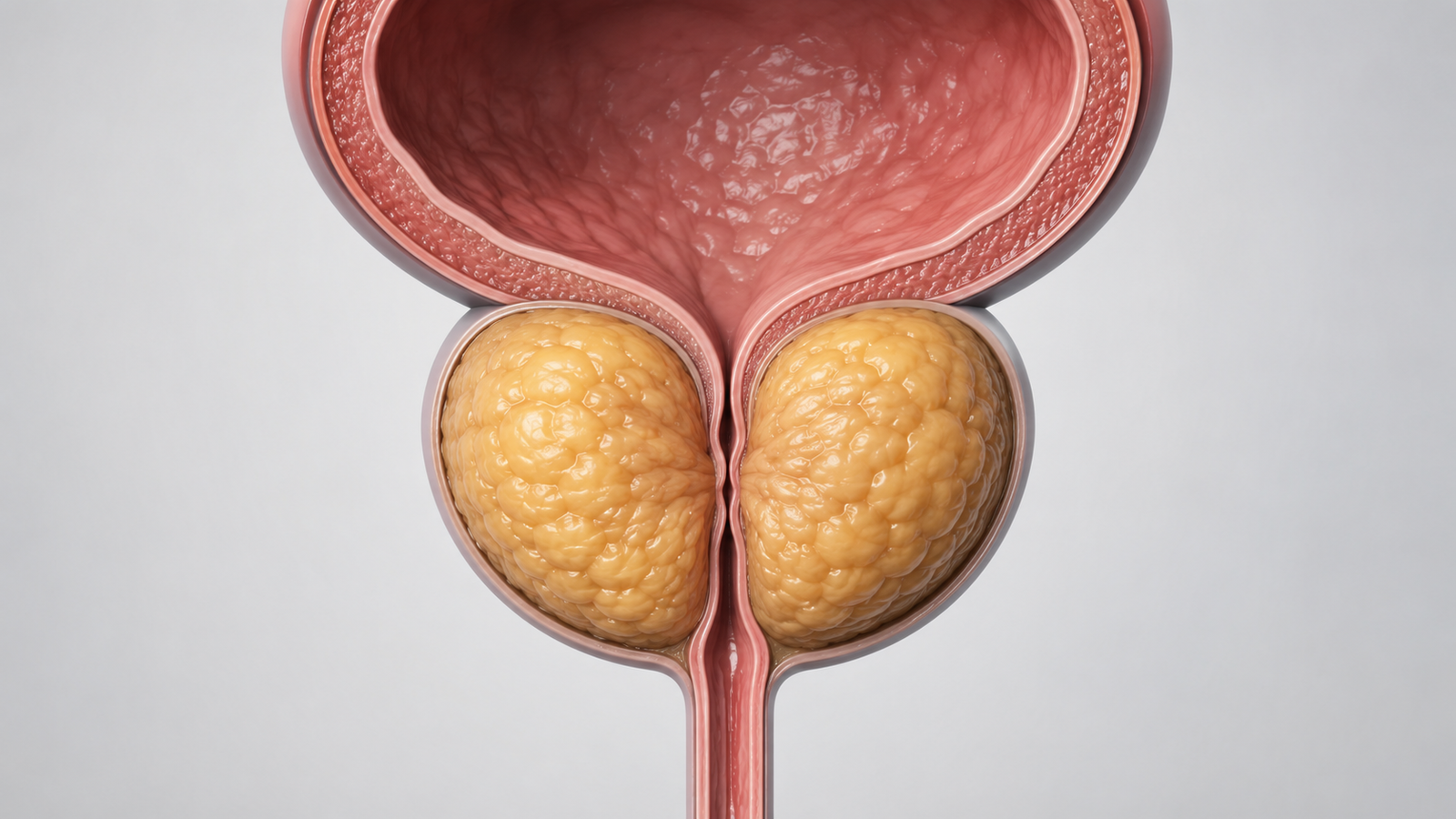
What these supplements can and can’t do
Set the right expectation and you’ll be far happier with the outcome. At best, a well-chosen prostate supplement built on beta-sitosterol or pygeum may take a modest edge off urinary symptoms for some men over a few months — a slightly better stream, one fewer trip to the bathroom. That’s a real quality-of-life difference for the men it helps, and it’s worth trying if your symptoms are mild.
What no supplement on this page — or any page — can do is shrink an enlarged prostate, relieve severe obstruction, or substitute for the medications that genuinely change the course of benign prostatic hyperplasia. It cannot rule out the other conditions that cause the exact same symptoms, including infection, bladder problems, and prostate cancer. That’s why the honest version of this conversation always circles back to getting evaluated first.
Understanding BPH & When to See a Doctor
Most urinary symptoms in older men trace back to benign prostatic hyperplasia (BPH) — a non-cancerous enlargement of the prostate that’s driven largely by age and hormones. As the gland grows, it squeezes the urethra it surrounds, and the muscle tone in the prostate and bladder neck increases. The result is the cluster of complaints doctors call lower urinary tract symptoms (LUTS).
BPH is extraordinarily common and becomes more so with every decade. Some degree of prostate enlargement is present in roughly half to sixty percent of men in their sixties, and up to eighty to ninety percent of men in their eighties. Not everyone with an enlarged prostate has bothersome symptoms — but a substantial share of men over 50 do, and the odds climb with age.
The two kinds of symptoms
LUTS come in two broad flavors, and knowing which you have helps you describe it to a doctor:
- Voiding (obstructive) symptoms: a weak or slow stream, hesitancy (trouble getting started), straining, a stop-and-start stream, dribbling at the end, and a feeling of not emptying completely.
- Storage (irritative) symptoms: needing to go frequently, sudden urgency, waking at night to urinate (nocturia), and sometimes leaking before you reach the toilet.
Why a supplement is the wrong first move for significant symptoms
Here’s the part the ads never mention. The same symptoms BPH causes can also be caused by urinary tract infections, an overactive or underactive bladder, neurological conditions, certain medications, and — importantly — prostate and bladder cancer. A supplement can’t tell the difference. A doctor can, usually with a simple symptom questionnaire, a physical exam, a urine test, and sometimes a PSA blood test. Proven medical therapies also exist and actually change the disease: alpha-blockers (like tamsulosin) relax the muscle for relatively fast relief, and 5-alpha-reductase inhibitors (like finasteride and dutasteride) genuinely shrink the gland over months and lower the risk of retention and surgery. No supplement does any of that.
🚩 See a doctor promptly — don’t reach for a supplement — if you have:
- Blood in your urine (even once)
- Inability to urinate — this is a medical emergency (acute urinary retention)
- Rapidly worsening symptoms, or symptoms that suddenly change
- Painful urination, fever, or recurrent urinary tract infections
- Unexplained weight loss, or bone/back pain with urinary symptoms
- An abnormal PSA result or a prostate exam your doctor wants to follow up
If none of those apply and your symptoms are mild and stable, a trial of a supplement alongside the lifestyle steps below is a reasonable, low-stakes experiment. Just go in with realistic expectations and a plan to get checked if things don’t improve — or if they get worse. We cover the warning signs in more depth in our guide to the symptoms of an enlarged prostate.
How We Evaluated Each Product
Every product was scored against five weighted criteria.
1. Ingredient Evidence Quality (30%)
Does each ingredient have human research behind it for prostate health, BPH, or urinary symptoms — and is it a prostate ingredient at all, rather than a libido or general-wellness herb wearing a prostate label? Formulas built on the better-supported ingredients scored higher.
2. Dose Transparency (25%)
Are individual doses disclosed, or hidden behind an undisclosed blend? You can’t judge whether an ingredient is at a studied dose — or present in a token “fairy dust” amount — if the label won’t show you. Transparency was heavily rewarded here, because in this category it’s rare.
3. Manufacturing & Testing Claims (20%)
We looked for GMP-certified manufacturing and, ideally, genuine third-party testing with a named lab or published certificate. “Made in an FDA-registered facility” is a low bar — it refers to the facility, not to any approval of the product — so we didn’t give much weight to that phrase alone.
4. Value & Guarantee (15%)
Cost per bottle relative to formula quality, plus the strength of the refund policy. We also note that ClickBank’s standard refund window is 60 days, so any longer “guarantee” is honored by the seller directly — worth knowing before you rely on it.
5. Honesty of Marketing (10%)
We marked down products that lean on manufactured urgency, invented mechanisms, exaggerated claims, or a swarm of look-alike “official” websites — because that pattern usually signals a weaker product underneath.
Quick Comparison Table
| Product | Best For | Doses Disclosed | Guarantee | Score |
|---|---|---|---|---|
| ProstaVive | Total prostate + male vitality | Yes (most) | 180 days | 3.8 |
| Prosta Peak | Prostate-specific botanicals | No | 180 days | 3.7 |
| Protoflow | Prostate + libido/circulation | No | ~60 days | 3.4 |
| Prostadine | Convenient liquid drops | No | 60 days | 3.2 |
Note: None of the four publishes a genuine third-party certificate of analysis from a named lab. All are sold primarily through direct “official site” funnels. Scores reflect ingredient evidence and transparency, not marketing polish.
The Four Formulas Reviewed (In Depth)
Below is a full, honest read on each product — what it is, how it works, an ingredient-by-ingredient breakdown, its pricing and guarantee, its reputation, and exactly who it fits. We’ve ordered them by our overall score, which is driven mostly by ingredient evidence and dose transparency. Remember the backdrop for all four: even the best-supported prostate ingredients produce modest effects at most, and none of these products replaces a medical evaluation.
ProstaVive — Best Overall: Total Prostate + Male Vitality
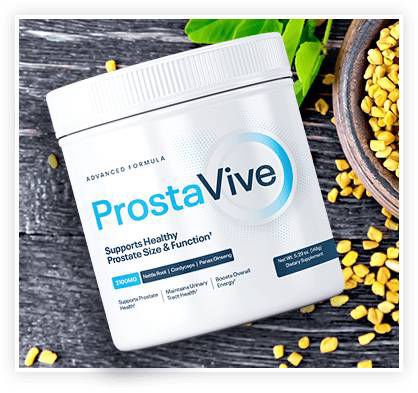
Quick Verdict: ProstaVive earns our top spot not because it is the most targeted prostate product on this list — it isn’t — but because it is honest about what’s inside it and generous in how it treats you if you’re unhappy. It discloses nearly every dose, a rarity in this shady category, and pairs a broad adaptogen-and-testosterone formula with a genuinely long 180-day money-back guarantee. The catch: this is really a male-vitality drink wearing a prostate label. If your goal is energy, libido, and general well-being after 50, it may serve you well. If you want a laser-focused BPH formula, read our reservations closely before you buy.
What It Is
ProstaVive is a powdered “prostate and male vitality” supplement that you mix into a glass of water each day, rather than a capsule you swallow. That format alone sets it apart from almost everything else in this category, where soft gels and tablets dominate. The powder approach has a certain appeal — it can absorb quickly, it lets the brand pack in a larger volume of ingredients than a single capsule allows, and for men who dislike swallowing pills it removes a small daily friction. It also, frankly, gives the product a “wellness ritual” feel that the marketing leans into heavily.
The brand itself is simply called ProstaVive, and here is where the first honest caveat belongs: there is no independent, named manufacturer behind it that we could verify. Fulfillment runs through a BuyGoods address in Tallmadge, Ohio — BuyGoods being a well-known payment and fulfillment processor for direct-response supplements, not a lab or formulator. In plain terms, ProstaVive is a marketed brand with an order-fulfillment partner, not a company with a transparent manufacturing pedigree you can research. That’s common in this space, but you deserve to know it going in.
What you’re actually buying is a stimulant-free daily powder built around adaptogens, testosterone-support botanicals, a couple of genuinely prostate-relevant ingredients, and a scattering of vitamins and minerals. It positions itself as a “total” solution for the aging male body. Whether it delivers on the prostate half of that promise is the question we spend most of this review answering.
How It Works
To understand ProstaVive, you have to separate what the label claims to do from what its ingredients are actually known to do. The marketing frames the product around prostate health and urinary comfort. But when you look at the formula ingredient by ingredient, the center of gravity is somewhere else entirely: this is a testosterone, libido, energy, and stress-support blend.
The mechanism the brand implies is a kind of whole-body “male optimization” — the idea being that if you support hormones, reduce stress, and boost energy, downstream benefits (including, they suggest, prostate comfort) will follow. There is a grain of logic to the holistic framing; a man over 50 who sleeps better, feels less stressed, and has more energy genuinely does feel better overall. But it’s important to be clear-eyed: improving your testosterone or your stress resilience does not shrink an enlarged prostate or directly improve urinary flow. Those are different physiological problems with different evidence-based interventions.
So the honest description of “how it works” is this: ProstaVive works primarily as an adaptogenic and testosterone-supporting vitality formula. Any prostate-specific benefit rests almost entirely on a single ingredient — nettle root — plus general-nutrition contributions from zinc and vitamin D. The rest of the formula works on energy, mood, stress, and libido, which are real and worthwhile targets, just not the ones the product name promises.
The Ingredients, One by One
Credit where it’s due: ProstaVive publishes doses for most of its actives, drawn from the brand’s press materials. We’ll frame these as “the brand states” because we can’t independently confirm them against a certificate of analysis, but disclosure at this level is genuinely uncommon here. Let’s walk through the meaningful ones and be honest about what each is actually for.
Nettle root (stinging nettle), 200mg (brand-stated). This is the one ingredient in the entire formula with real, prostate-relevant evidence. Stinging nettle root has been studied for lower-urinary-tract symptoms, and in at least one small randomized trial it improved urinary symptom scores in men with benign prostatic enlargement[7]. It’s the ingredient that most justifies calling this a “prostate” product at all. Worth noting: the 200mg here is on the modest side compared with doses used in some studies, but its presence is a legitimate positive.
Zinc, 12mg (brand-stated), and Vitamin D3 (no dose given). These are sensible general male-health inclusions. Zinc concentrates in the prostate, and observational research has found that serum zinc tends to be lower in men with prostate cancer[9] — though it’s essential to be honest that this is correlation, not proof that zinc supplements treat or prevent BPH or cancer. Vitamin D is broadly important for men over 50 regardless of prostate status. Neither is a targeted BPH treatment, but neither is filler.
Boron, 5mg, and Magnesium (no dose given). Boron is included largely for its association with hormone metabolism and free-testosterone levels; magnesium supports sleep, muscle, and general metabolic health. Reasonable, but again — vitality and general health, not prostate.
Tongkat Ali 100mg, Ashwagandha 250mg, Fenugreek 500mg, Maca root 250mg, Panax ginseng 50mg, Cordyceps 250mg (all brand-stated). Here is the heart of the formula, and here is where honesty matters most. Every one of these is a testosterone, libido, energy, or stress-and-fatigue ingredient. Tongkat Ali and fenugreek are classic testosterone-support botanicals; ashwagandha is an adaptogen studied for stress and cortisol; maca is used for libido and energy; ginseng for energy and sexual function; cordyceps for stamina and fatigue. Several of these have decent evidence for their own purposes. But none of them has credible evidence for improving urinary flow or reducing prostate size, and we won’t pretend otherwise. Do not read a prostate benefit into any of these six.
Artichoke extract, 300mg (brand-stated). Artichoke is fundamentally a liver-support and cholesterol ingredient. Its presence in a prostate formula is a bit of a head-scratcher; it’s a wellness inclusion, not a urinary one.
Vitamin B6 and sea salt (no dose given), plus an undisclosed proprietary fruit-and-vegetable blend (beetroot, alfalfa, black currant, broccoli, pomegranate, raspberry). B6 is a routine energy-metabolism vitamin. The proprietary produce blend is where our skepticism sharpens: with no disclosed doses, a “superfood” medley like this is very likely present in token amounts — what the industry politely calls “fairy dusting.” It reads well on a label and does little in a glass.
Step back and the pattern is unmistakable. ProstaVive omits every classic evidence-based BPH ingredient: there is no saw palmetto, no beta-sitosterol, no pygeum, no pumpkin seed oil, no lycopene. For a product sold on prostate health, that’s a striking set of absences, and it’s the single most important thing to understand before buying.
What We Like
- ✓ Genuine dose transparency — the brand publishes doses for most actives, which is rare and commendable in a category built on secrecy.
- ✓ A broad “total male health” formula — for energy, libido, stress, and general well-being, the adaptogen-and-testosterone angle may sincerely help men over 50 feel better day to day.
- ✓ Includes nettle root, the one ingredient here with real lower-urinary-tract evidence[7].
- ✓ Sensible general-health nutrients — zinc, boron, and vitamin D are reasonable, evidence-informed inclusions for aging men.
- ✓ An unusually long 180-day money-back guarantee, which meaningfully lowers your financial risk.
- ✓ Powder format that’s easy to take for men who dislike pills.
Taken together, these positives are real and they’re why ProstaVive earns a featured spot rather than a dismissal. If you approach it as a vitality and general-wellness formula with a modest prostate assist, it delivers a coherent, mostly-transparent package with a long safety net. That’s more than most of its competitors can say.
Where It Falls Short
- ✗ It’s a vitality formula wearing a prostate label. The name and marketing promise prostate support the ingredient list mostly doesn’t deliver.
- ✗ It omits every classic BPH ingredient — no saw palmetto, beta-sitosterol, pygeum, pumpkin seed, or lycopene. For a “prostate” product, that’s a glaring gap.
- ✗ Only one ingredient (nettle root) has real prostate/urinary evidence, and at a fairly modest dose.
- ✗ An undisclosed proprietary fruit/veg blend that’s likely present in token, “fairy-dusted” amounts.
- ✗ No genuine third-party testing. The brand leans on “GMP-certified” and “FDA-registered facility” language, which is not the same as independent lab verification.
- ✗ No independent, named manufacturer — just a marketed brand with a BuyGoods fulfillment address.
The through-line of these shortcomings is a mismatch between promise and formula. Nothing here is unsafe or absurd, but a man buying ProstaVive specifically to ease nighttime bathroom trips or weak urinary flow is likely to be disappointed, because the formula simply isn’t built for that job. We’d rather tell you that plainly than let the label do the talking.
Pricing & Guarantee
ProstaVive uses the classic direct-response pricing ladder. A single bottle runs $79. Buy three and the price drops to roughly $59 per bottle (about $177 total); buy six and it falls to around $39 per bottle (about $234 total). As always in this category, the deepest “savings” require the largest upfront commitment — a common tactic to increase order value before you’ve even confirmed the product works for you.
Be skeptical of the anchor pricing. The marketing dangles an inflated “regular price” — figures as high as $297 per bottle — to make $39 to $79 feel like a steal. No credible retailer sells this powder for $297, so treat those anchors as persuasion theater, not real value. Judge the product on its actual price and its actual formula.
The redeeming feature here is the guarantee. ProstaVive offers a 180-day money-back guarantee — a full six months. That’s genuinely long, and it’s the single strongest reason a curious buyer can try it with limited financial risk. If it doesn’t do anything for your energy, libido, or overall sense of well-being, you have a generous window to ask for your money back. Guarantees are only as good as the company honoring them, and with a BuyGoods-fulfilled product your recourse runs through that processor — but on paper, the terms are among the most consumer-friendly on this list.
Reputation & Marketing
This is where we have to raise our eyebrows. ProstaVive is marketed through the aggressive, hype-heavy playbook that gives this whole category a bad name, and a discerning buyer should recognize the warning signs. We counted more than ten near-identical “official” mirror domains — a tactic used to blanket search results and make the brand feel omnipresent. The sales pages lean on fake urgency and manufactured scarcity (“almost sold out,” ticking timers), the inflated anchor pricing discussed above, and testimonials that are impossible to verify.
One claim deserves special scrutiny: the “FDA-registered facility” language. This is technically-true-but-misleading marketing. Facility registration is a basic administrative step; it is not FDA approval, and — this is the key point — the FDA does not approve dietary supplements at all. Any phrasing that implies FDA endorsement of the product itself is a red flag. Likewise, “GMP-certified” describes manufacturing practices, not independent verification that what’s on the label is actually in the powder. We found no evidence of genuine third-party testing.
None of this makes ProstaVive a scam, and its dose transparency actually cuts against the worst of the category. But you should walk in with your guard up, ignore the countdown timers, and buy on the merits — the formula and the guarantee — not the theatrics.
Who It’s Best For
ProstaVive is best for the man over 50 whose real complaint is closer to “I feel tired, flat, and low-libido” than “I’m up three times a night to urinate.” If you want a broad daily formula to support energy, stress resilience, sexual desire, and overall vitality — and you’d treat any prostate benefit as a bonus rather than the point — this is a reasonable, transparent, low-risk pick. The adaptogen and testosterone-support ingredients are aimed squarely at how you feel day to day, and the six-month guarantee lets you test that on your own body.
It is not the right choice if your primary goal is targeted relief of urinary symptoms or benign prostatic enlargement. For that, you want a formula built around saw palmetto, beta-sitosterol, pygeum, or pumpkin seed — the ingredients ProstaVive conspicuously leaves out. And as always, any man with rising PSA, blood in the urine, or significant urinary changes needs a doctor, not a powder.
Our Honest Take
ProstaVive lands at the top of our list on a technicality that happens to matter: in a category defined by secrecy and hype, it’s more honest about its ingredients than almost anyone else, and it backs itself with a genuinely long guarantee. Those two things earn real respect. The formula is coherent, mostly transparent, and built from ingredients with legitimate uses.
But we won’t oversell it, because overselling is exactly what we’re trying to save you from. This is a vitality formula in a prostate costume. Strip away the label and you have an energy, libido, and stress blend with one meaningful prostate ingredient (nettle root) plus sensible general-health nutrients. If that’s what you actually want, ProstaVive is a solid, low-risk buy — and the 3.8 score reflects genuine strengths held back by a promise its formula doesn’t fully keep. Buy it for vitality, not for your bladder, and you’ll likely be satisfied.
Prosta Peak — Best Prostate-Specific Botanicals & Longest Guarantee
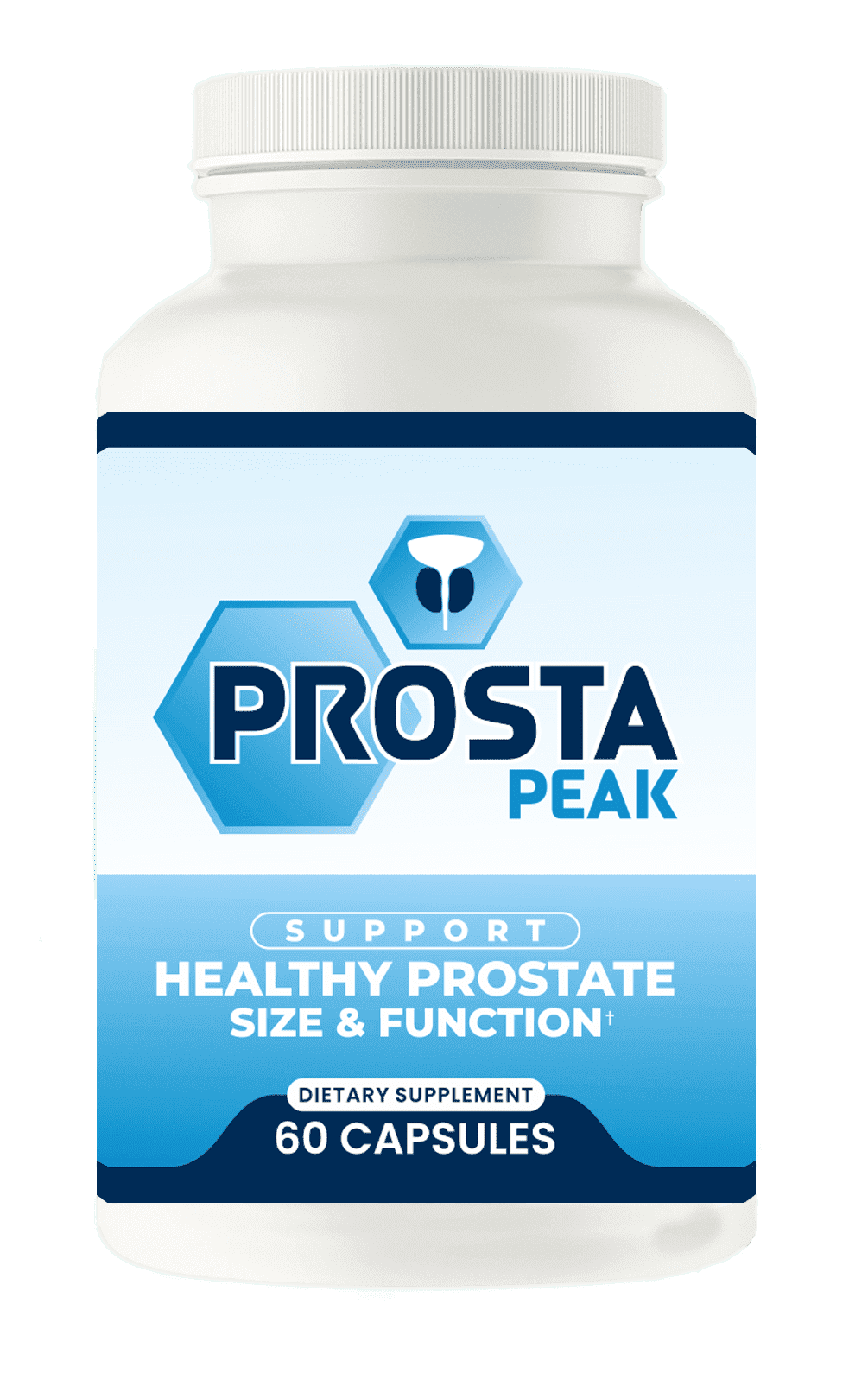
Quick Verdict: Prosta Peak earns its award the honest way: it is built around the two botanicals that actually belong in a prostate formula — saw palmetto and pygeum — rather than a scattershot of vitamins that have nothing to do with the prostate. Add the longest money-back guarantee in this roundup (a full 180 days) and you have a product that respects the biology and gives you real time to judge it. But we can’t ignore the fine print. Prosta Peak hides every dose, names only 6 of a claimed “20+” ingredients, and leans on the one herb that failed the biggest clinical trials. Right instincts, incomplete transparency.
What It Is
Prosta Peak is a plant-based capsule marketed as a daily prostate-support supplement for men — and, refreshingly, it is genuinely aimed at the prostate rather than being a general “men’s wellness” multivitamin wearing a prostate costume. That distinction matters more than it sounds. A lot of products in this category pad their labels with zinc, selenium, vitamin B6 and a dusting of pumpkin seed, then call themselves prostate formulas. Prosta Peak takes a different route: its publicly named core is saw palmetto and pygeum, the two botanicals most consistently associated with benign prostatic hyperplasia (BPH) — the age-related prostate enlargement that has men over 50 waking up two and three times a night to urinate.
The format is simple: a plant-based capsule you take daily, with no animal-derived gelatin, which will matter to vegetarian readers and to anyone watching what goes into the shell as much as the fill. The brand positions the product as a “natural” alternative to prescription approaches, and it is honest enough in its marketing to call itself a supplement rather than a treatment. That framing is legally and scientifically correct — no supplement in this category is a substitute for a doctor’s evaluation of urinary symptoms — but it’s worth saying out loud, because the category is full of products that blur the line. Prosta Peak, for the most part, does not.
Where it becomes frustrating is the moment you try to look past the marketing at the actual formula. The brand claims “more than 20 ingredients,” yet publishes only six of them. That’s not a rounding error. That’s roughly fourteen ingredients you are being asked to swallow, literally, on faith. We’ll come back to that, because it’s the single biggest reason this product sits at 3.7 rather than higher.
How It Works
The theory behind Prosta Peak is the same theory behind every serious botanical prostate formula, and it rests almost entirely on its two headline herbs. Saw palmetto (Serenoa repens) has long been proposed to ease BPH symptoms by influencing the enzyme 5-alpha-reductase, which converts testosterone into dihydrotestosterone (DHT), the hormone most implicated in prostate growth. Pygeum (Prunus africana, African plum bark) is thought to act through anti-inflammatory and anti-swelling pathways in the prostate tissue itself, and has traditionally been used to address the nighttime urination and weak stream that define early BPH.
That’s the mechanism the brand is selling, and on paper it’s coherent. The problem is that “coherent mechanism” and “proven result” are two different things, and Prosta Peak’s two stars have very different report cards. Saw palmetto is the more famous of the two — and, unfortunately, the more disappointing. When it was put through the largest and most rigorous trials, it performed no better than a placebo for BPH symptoms.[1] A comprehensive Cochrane review later reached the same conclusion, finding no meaningful benefit even when the dose was pushed higher.[3] In other words, the ingredient Prosta Peak leads with is the one with the weakest modern evidence.
Pygeum tells a more encouraging story, though a quieter one. An older meta-analysis found that pygeum roughly doubled the odds of a man reporting improvement in urinary symptoms.[5] That’s a real signal — but the data are older and more limited than we’d like, drawn from smaller and less standardized trials than the ones that sank saw palmetto. So the fairest way to describe Prosta Peak’s engine is this: it pairs a popular-but-underwhelming herb with a lower-profile-but-more-promising one. The instinct to include pygeum is exactly right. The decision to headline saw palmetto is where the science and the marketing part ways.
The Ingredients, One by One
Prosta Peak names six ingredients publicly, so let’s walk through them plainly and separate the prostate-relevant from the merely traditional.
Saw Palmetto. The flagship, and the most-studied prostate botanical in the world. It’s also the one that repeatedly failed to beat placebo in the best trials.[1][3] It is not dangerous, and some men swear by it, but the strongest evidence says its symptom benefit is close to nil. Including it isn’t wrong — it’s the expected core of any prostate formula — but it should not be the reason you buy.
Pygeum. The most defensible ingredient in the bottle. The evidence is older and thinner, but it points in the right direction: a meaningful improvement in urinary symptoms in pooled analysis.[5] If Prosta Peak dosed this at a studied level, it would be a genuine selling point. The trouble, as you’ll see, is that we can’t confirm the dose.
Green Tea. A well-loved antioxidant with plausible general-health benefits, but it is not a proven BPH remedy. We’re not aware of solid clinical evidence that green tea relieves prostate urinary symptoms, so we won’t pretend otherwise. Treat it as a supporting antioxidant, not a prostate actor.
Cat’s Claw. A traditional Amazonian herb used historically for inflammation and immune support. It has no established evidence base for BPH or prostate symptoms. It may be here for its anti-inflammatory reputation, but that’s tradition and theory, not proof.
Raspberry. Presumably included as an antioxidant/polyphenol source. Again — no meaningful clinical evidence tying it to prostate health. Pleasant, harmless, and not a reason to expect fewer nighttime trips to the bathroom.
Soursop. A tropical fruit (graviola) with a long folk-medicine history and a lot of internet mythology attached to it. There is no credible clinical evidence supporting soursop for prostate symptoms, and we’d caution readers against the more extravagant claims made about it elsewhere. In this formula it functions as another traditional botanical, not a validated prostate ingredient.
So of six named ingredients, exactly two — saw palmetto and pygeum — have a legitimate claim to being prostate botanicals, and only one of those (pygeum) has evidence pointing the right way. The other four are antioxidant or traditional herbs with no BPH data behind them. And then there are the roughly fourteen unnamed ingredients the brand references but never lists, which we simply cannot evaluate, because you’re not allowed to see them.
What We Like
- ✓ The core is genuinely prostate-appropriate — saw palmetto and pygeum are the two recognized BPH botanicals, and it’s the best core of any product in this roundup.
- ✓ Pygeum’s inclusion shows the formulator understood the category; it’s the ingredient with the most favorable evidence here.[5]
- ✓ A 180-day money-back guarantee — the longest in this roundup (tied for first) and long enough to actually judge a prostate supplement, which needs weeks to show anything.
- ✓ Plant-based capsule, suitable for men who avoid animal-derived gelatin.
- ✓ Focused positioning — it’s a prostate product, not a kitchen-sink men’s multivitamin pretending to be one.
The theme running through everything we like is judgment. Somebody chose the right two botanicals to build around and backed the product with a guarantee long enough that you’re not gambling. In a category crowded with formulas that mistake “lots of ingredients” for “the right ingredients,” Prosta Peak’s core reflects a real understanding of what BPH is and which plants have historically been used against it. That’s worth crediting, and it’s the biggest single reason this product outscores its shelf-mates on formula intent.
Where It Falls Short
- ✗ No per-ingredient doses are disclosed anywhere. You cannot confirm that pygeum — or anything else — is present at a studied, effective level.
- ✗ Only 6 of a claimed “20+” ingredients are named. Roughly fourteen ingredients are hidden, which is a serious transparency gap.
- ✗ The headline ingredient, saw palmetto, is the one that failed the largest, best trials.[1][3] The marketing leads with the weakest evidence.
- ✗ Third-party testing is claimed but unverifiable — no lab is named and no certificate of analysis is published.
- ✗ The manufacturer is not clearly named, and multiple look-alike “official” mirror domains muddy the waters around who actually stands behind the product.
Here’s the honest problem. A good core is only as good as its execution, and Prosta Peak makes it impossible to verify the execution. Pygeum could be dosed beautifully or it could be a fairy dusting of a few milligrams — you cannot tell, because the doses are secret. “Third-party tested for purity and potency” sounds reassuring until you notice there’s no lab named and no test results to read. And a formula that trumpets “more than 20 ingredients” while showing you fewer than a third of them is asking for a trust it hasn’t earned. The right instincts are undermined at nearly every turn by a refusal to show its work.
Pricing & Guarantee
Prosta Peak runs roughly $39 to $59 per bottle depending on whether you buy the 3-bottle or 6-bottle package, with the larger multi-bottle bundles bringing the per-bottle cost down. Single-bottle pricing is unclear from the official materials, which is itself a mild red flag — supplement brands that only price attractively in bulk are counting on you committing to several months before you’ve felt anything. Expect the usual “up to 60% off, limited-time” framing on the checkout page; treat that urgency the way you’d treat any countdown timer online, which is to say, skeptically. The discount is real enough, but the “limited time” almost never is.
The guarantee, though, is the genuinely strong part of the deal — and it’s what anchors this product’s award. Prosta Peak offers a 180-day money-back guarantee, the longest in this roundup (tied for the top spot). For a prostate supplement, that length is not a gimmick; it’s meaningful. Botanical prostate support, if it does anything, tends to reveal itself over weeks to a couple of months, not days. A 30-day window would barely let you finish the bottle before the clock ran out. Six months gives you room to try it honestly, track your nighttime bathroom trips, and get your money back if nothing changes. If you’re going to take a chance on Prosta Peak despite the transparency issues, that long guarantee is the thing that makes the chance survivable — so keep your order confirmation and note the purchase date.
Reputation & Marketing
This is where we have to slow down and be careful, because the surrounding ecosystem is messier than the product itself. The manufacturer behind Prosta Peak is not clearly named anywhere we could find, and there are multiple look-alike “official” mirror domains competing for the same searches. That pattern — a supplement whose “official site” seems to exist in several near-identical versions, with no obvious company name to anchor accountability — is common in this corner of the market, and it’s not a good look. It doesn’t make the product unsafe, but it does make it harder to know who you’re actually buying from and where a complaint would go.
The purity claim compounds the concern. Prosta Peak says it’s “third-party tested for purity and potency,” which is exactly the phrase a cautious buyer wants to hear. But a claim is not a certificate. No testing lab is named and no certificate of analysis is published, so there is nothing for you or us to verify. We’re not accusing the brand of fabricating anything — we simply can’t confirm what they’re asserting, and in 2026 a genuinely tested supplement can and increasingly does publish its results. When a brand won’t, we grade the claim as unproven rather than trusted. Between the unnamed manufacturer, the mirror domains, and the unverifiable testing, the marketing asks for a level of trust the disclosure doesn’t support.
Who It’s Best For
Prosta Peak makes the most sense for a specific reader: a man over 50 dealing with the ordinary early nuisances of BPH — the nighttime trips, the weaker stream, the sense that things aren’t emptying the way they used to — who has already been checked out by a doctor, wants to try a plant-based option, and specifically values a formula built around real prostate botanicals rather than a vitamin grab-bag. If pygeum’s evidence appeals to you and you want a long runway to test the product without financial risk, the 180-day guarantee makes Prosta Peak a defensible experiment.
It is a poor fit for anyone who needs to know exactly what they’re taking. If you’re the kind of careful reader who checks doses against the studies, or you have other conditions and take medications where hidden ingredients are a real hazard, the undisclosed formula should stop you. It’s also not for anyone hoping saw palmetto will be the fix — the evidence says it very likely won’t be.[1][3] And to be clear for everyone: new or worsening urinary symptoms deserve a doctor’s evaluation first, because BPH shares symptoms with conditions no supplement should be managing.
Our Honest Take
Prosta Peak is the most frustrating kind of product to review: it gets the hard part right and the easy part wrong. The hard part is knowing which botanicals actually belong in a prostate formula, and here Prosta Peak nails it — saw palmetto and pygeum are the two recognized BPH herbs, and pairing them with a 180-day guarantee shows a company that understands both the biology and the patience the category requires. Of the four products in this roundup, this is the one with the most prostate-appropriate core. That’s why it wins its award and why it scores a respectable 3.7.
But the easy part — telling you what’s in the bottle and how much — is exactly where it stumbles. It leads with saw palmetto, the herb that failed the biggest and best trials.[1][3] It leans on pygeum, which has the better evidence,[5] but then hides the dose so you can’t confirm there’s enough of it to matter. It claims “20+ ingredients” and shows you six. It claims third-party testing and publishes no proof. Give it credit for choosing the right core and standing behind it for six months; withhold your full trust until it’s willing to show its work. If you buy it, buy the multi-bottle package for the value, mark your calendar for the guarantee, and judge it honestly against your own nighttime bathroom count — that’s the only lab report on this product you’ll actually be able to read.
Protoflow — Best for Prostate + Libido & Circulation
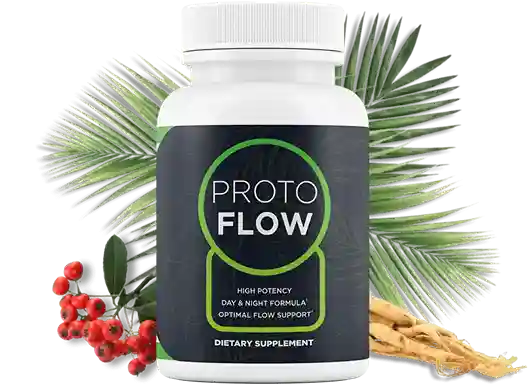
Quick Verdict: Protoflow markets itself as a prostate supplement, but read the label honestly and it is really a men’s vitality blend — libido, energy, and circulation herbs wrapped around a single genuine prostate botanical. If your goal is broad vitality and you want a saw palmetto herb along for the ride, this eight-botanical capsule is fair about the lane it plays in. If your goal is targeted prostate or urinary relief, it is a mismatch. Seven of the eight ingredients have no BPH evidence behind them, doses are hidden, third-party testing is unproven, and even the guarantee length is reported inconsistently. It earns a middling 3.4 because the formula is coherent for vitality — just not for the problem the marketing implies.
What It Is
Protoflow is a capsule supplement from a company calling itself PhytoThrive Labs, sold through a direct-to-consumer funnel and positioned front and center as a prostate-health product for men over 50. Open the ingredient panel, though, and a different product comes into focus. Protoflow is built on eight botanicals: Saw Palmetto, Chinese Ginseng, Hawthorn Berry, Cayenne Pepper, Damiana, Muira Puama, Epimedium (better known as Horny Goat Weed), and Catuaba. That is a striking lineup, because only one of those eight — saw palmetto — has any historical association with the prostate at all. The remaining seven are, almost without exception, traditional libido, energy, and blood-flow herbs. Damiana, muira puama, epimedium, and catuaba are classic folk aphrodisiacs. Chinese ginseng is an energy adaptogen. Hawthorn and cayenne are circulation herbs. So while the box says “prostate,” the contents say “vitality and libido.” We think that gap is the single most important thing a shopper needs to understand before buying, and it shapes everything else in this review. Protoflow is not a scam of a formula — several of these herbs show up in legitimate men’s wellness products — but it has been dressed in prostate clothing, and men who buy it expecting BPH or urinary relief are likely to be looking in the wrong aisle.
How It Works
Protoflow does not publish a mechanism the way a pharmaceutical would, so the “how it works” story has to be reconstructed from what the ingredients traditionally do. Saw palmetto is the one component with a prostate rationale: it has long been used in the hope of easing benign prostatic hyperplasia symptoms, on the theory that it influences the enzyme pathway (5-alpha reductase) tied to prostate growth. The catch is that the best modern evidence does not support it. The large, well-run STEP trial published in the New England Journal of Medicine in 2006 found saw palmetto performed no better than placebo for BPH symptoms.[1] So even Protoflow’s one legitimate prostate herb rests on shaky clinical ground.
The other seven ingredients do not target the prostate at all. Their traditional logic is about circulation and sexual vitality: hawthorn and cayenne are used to support blood flow, ginseng to support energy and stamina, and the aphrodisiac quartet (damiana, muira puama, epimedium, catuaba) to support libido and erectile function. Strung together, the honest mechanism is “a men’s blood-flow and libido blend” — which can be a perfectly reasonable thing to want. But it is not a prostate mechanism, and Protoflow’s marketing blurs that line. Compounding the problem, none of the per-ingredient doses are disclosed. Without knowing how much of each botanical is in a capsule, there is no way to judge whether even the vitality effects are plausible or whether the herbs are present in token, “label decoration” amounts. A proprietary blend with hidden doses means you are trusting the manufacturer’s word, and nothing more.
The Ingredients, One by One
Saw Palmetto — the only ingredient with a genuine prostate history. It is the herb men reach for when they want a “natural” answer to nighttime bathroom trips and weak urine flow. Unfortunately, the rigorous STEP trial found it no better than placebo for BPH.[1] It is not harmful, but do not expect it to be the workhorse the packaging implies.
Chinese Ginseng — an energy and adaptogen herb, used traditionally for stamina, fatigue, and general vitality. It has no meaningful prostate or BPH evidence, and we would not represent it as doing anything for urinary symptoms.
Hawthorn Berry — a circulation and cardiovascular herb in folk use. Its lane is blood flow, not the prostate. There is no BPH evidence here.
Cayenne Pepper — included almost certainly as a circulation booster and to help “drive” other ingredients. Again, this is a blood-flow rationale, not a prostate one.
Damiana — a traditional libido herb. Human trial support for the aphrodisiac claim is thin, and it has nothing to do with the prostate.
Muira Puama — nicknamed “potency wood,” a folk aphrodisiac from the Amazon. Traditional libido use, limited rigorous human evidence, no prostate relevance.
Epimedium (Horny Goat Weed) — perhaps the most famous herb on this list, used traditionally for libido and erectile support. Its reputation runs ahead of the strong human data, and it is not a prostate ingredient.
Catuaba — another Brazilian aphrodisiac botanical, rounding out the libido quartet. Traditional use, weak clinical backing, and no bearing on prostate health.
Step back and the pattern is unmistakable: one prostate herb (with disappointing evidence) and seven vitality, energy, and circulation herbs (most with only traditional, not strong clinical, support). To be fair to these botanicals, none of them are dangerous or fringe, and several appear in mainstream men’s wellness formulas. But it is intellectually honest to say that outside of saw palmetto, not one of these has meaningful human-trial evidence for the prostate — and several lack strong human evidence even for the libido and circulation uses they are famous for. Anyone claiming otherwise is selling, not informing.
What We Like
- ✓ It is a coherent vitality blend — for a man whose actual goal is libido, energy, and circulation, the ingredient logic hangs together.
- ✓ Eight recognizable botanicals, no exotic mystery compounds or stimulant fillers.
- ✓ Includes saw palmetto, the one herb men over 50 typically ask about, so the “prostate” nod is at least present.
- ✓ Simple capsule format, easy to add to a daily routine.
- ✓ Multi-bottle pricing brings the per-bottle cost down substantially for committed users.
Here is the fair reading. If we set aside the prostate marketing and evaluate Protoflow as what it actually is — a men’s vitality, libido, and circulation formula — it is not a bad concept. The herbs belong to that world, the format is convenient, and a man seeking a broad “feel more like myself” botanical stack could reasonably give it a try. Our praise is real but conditional: it only holds if you understand you are buying a vitality product, not a targeted prostate remedy. Judged against its own honest lane, Protoflow is average-to-decent. Judged against the promise on the label, it comes up short.
Where It Falls Short
- ✗ Sold as a prostate product when only one of eight ingredients (saw palmetto) is a genuine prostate herb — and that one failed the STEP trial.[1]
- ✗ No per-ingredient doses disclosed, so even the vitality claims are impossible to verify.
- ✗ The other seven herbs have no prostate/BPH evidence, and several lack strong human evidence even for libido or circulation.
- ✗ Third-party testing is not credibly established — one review mentions “independent lab certification” but names no lab and no certificate.
- ✗ The money-back guarantee is reported inconsistently (roughly 60 days on the official funnel, 90 on some review sites).
- ✗ Review sites cannot even agree on whether zinc or lycopene are in the formula — a red flag that reviewers may not be reading a real label.
That last point deserves emphasis, because it tells you something about the information ecosystem around this product. Zinc and lycopene are two of the most common, genuinely prostate-relevant ingredients in the category. If reviewers disagree about whether Protoflow even contains them, it strongly suggests some of those reviewers are not looking at an actual supplement facts panel — they are paraphrasing marketing copy or each other. When the basic contents of a product are in dispute, treat every glowing claim around it with extra skepticism. Combine that with hidden doses and an unnamed “certification,” and you have a product whose paperwork does not inspire confidence.
Pricing & Guarantee
Protoflow is priced like most funnel supplements: a single bottle runs around $79, while the 3- and 6-bottle packages drop the per-bottle price to roughly $49 to $53. That structure is designed to push you toward the bigger, “better value” bundles, and mathematically the multi-bottle price is far more reasonable than the $79 single. But bulk-buying only makes sense if you already trust the product, and with hidden doses and a prostate-vs-vitality mismatch, we would be cautious about committing to six bottles up front. The guarantee is where things get murkier. The official funnel appears to offer about a 60-day money-back window, yet some third-party review sites claim 90 days. We treat 60 days as the likely real figure, since the seller’s own page should govern, but the inconsistency itself is worth noting: when even the refund terms are reported two different ways, read the checkout page’s fine print carefully before you buy and screenshot whatever guarantee is actually shown at the moment of purchase. Do not rely on a review site’s number to hold the company to a refund.
Reputation & Marketing
Protoflow’s reputation is a case study in category positioning. The marketing leans hard on “prostate,” which is the pain point most likely to make a man over 50 click and buy, even though the formula is really about vitality and libido. That is not necessarily fraud — the ingredients are what they are, and they are disclosed — but it is a framing that flatters the product and can mislead a shopper who does not read closely. The “independent lab certification” language is a good example: it sounds reassuring, but with no named lab and no verifiable certificate, it functions as trust theater rather than proof. Add the conflicting reports about guarantee length and about whether zinc and lycopene are present, and the picture is of a product wrapped in more confident marketing than its documentation can support. None of this makes Protoflow uniquely bad in a category full of aggressive funnels — but it does mean you should lean on the supplement facts panel and your own judgment, not the sales page.
Who It’s Best For
Protoflow makes the most sense for a specific man: one whose real goal is broad vitality — more energy, more libido, better sense of circulation — and who is comfortable with a traditional-herb blend rather than clinically dosed, evidence-backed ingredients. For that person, the eight-botanical stack is honest about its lane, and the saw palmetto is a small bonus nod toward prostate health. It is a reasonable “general men’s vitality” experiment, especially at the multi-bottle price. Who it is not for: any man whose primary concern is genuine prostate or urinary trouble — frequent nighttime urination, weak stream, BPH symptoms. For that goal, Protoflow is a mismatch. Only one of its ingredients targets the prostate, and that one underperformed placebo in the best available trial. Men with cardiovascular conditions or those on blood-pressure or blood-thinning medication should also be cautious, given the circulation herbs, and should talk to a doctor first. If targeted prostate support is what you came for, look at products built around ingredients with actual prostate evidence rather than a libido blend in a prostate costume.
Our Honest Take
Protoflow scores a 3.4 out of 5 because it is a fundamentally honest formula wearing a slightly dishonest label. Evaluated as what it actually is — a men’s vitality, libido, and circulation blend — it is a middling but not unreasonable option, built from recognizable herbs in a convenient capsule. Evaluated as what it is marketed to be — a targeted prostate supplement — it falls apart, because seven of its eight ingredients have nothing to do with the prostate and the eighth failed its landmark clinical trial.[1] The hidden doses mean we cannot even verify the vitality claims, the third-party testing is unproven, and the fact that reviewers disagree about the basic contents tells you the information around this product is unreliable. Our bottom line is simple and consistent with how we review everything on Men’s Health Authority: if you want broad vitality and you go in with clear eyes, Protoflow is a fair-enough try at the multi-bottle price. If you want your prostate handled, buy something built for that job instead. Honesty converts, and the honest truth here is that Protoflow is a good vitality blend pretending to be a prostate pill.
Prostadine — Best Liquid Format (With Caveats)
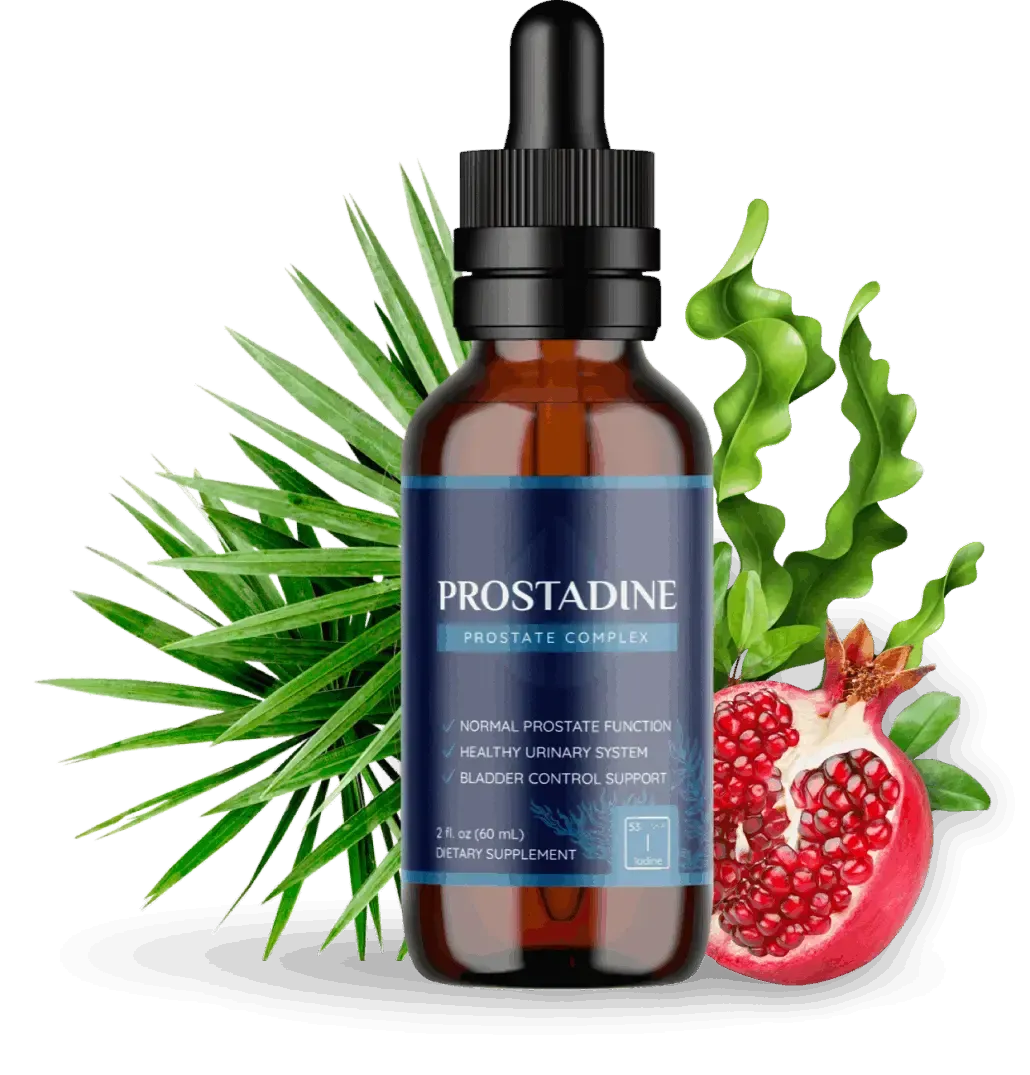
Quick Verdict: Prostadine is the most heavily marketed prostate product on ClickBank, and it earns points for one genuine reason: it is a liquid dropper, which is a real convenience for men who hate swallowing capsules. But that is where our enthusiasm ends. The formula is built on a marketing story about “hard water minerals” harming your prostate — a claim with no basis in mainstream medicine — and it leans on four iodine-rich seaweeds plus added iodine of undisclosed amount. That is a safety concern, not a selling point. This is our lowest-scored pick, and the one we would steer most men away from for targeted prostate support.
What It Is
Prostadine is a liquid dietary supplement sold in a dropper bottle and marketed almost exclusively toward men worried about prostate health, urinary flow, and the nighttime bathroom trips that come with an aging prostate. You take it by placing drops under the tongue or mixing them into water, tea, or coffee. In a category dominated by capsules and softgels, that liquid format is genuinely distinctive, and it is the single feature that sets Prostadine apart in a crowded field.
It is also, by a wide margin, one of the most aggressively advertised prostate products in the ClickBank ecosystem. If you have spent any time researching prostate supplements online, you have almost certainly seen a Prostadine video sales letter, a pop-up, or a “doctor exposes” style ad. That heavy marketing footprint is worth understanding up front, because it shapes almost everything about how this product is presented — and, frankly, how much of the messaging you should take at face value. Popularity here reflects an advertising budget, not clinical validation.
The product is positioned as a daily, long-term routine rather than a short course. That framing matters a great deal once we get to the iodine question, because the safety concerns with this formula compound the longer you use it. A supplement you take for a week is a very different risk proposition than one you take every morning for a year, and Prostadine is explicitly sold as the latter.
How It Works
Here is where we have to be direct, because the core premise of Prostadine is the biggest problem with it. The marketing built around this product claims that mineral buildup from “hard water” accumulates in and around your prostate, and that these deposits are the hidden cause of your urinary trouble. The pitch is that Prostadine “detoxifies” or flushes out this mineral damage. It is a tidy, memorable story, and it explains why so many men click.
The trouble is that this is not an established medical concept. There is no recognized body of urology or nephrology research describing hard-water minerals as a driver of benign prostatic hyperplasia (BPH) or lower urinary tract symptoms. The prostate does not accumulate calcium from your tap water in the way the ads imply, and “detoxifying” it is not a mechanism that appears in any clinical guideline. In plain terms, this is a manufactured mechanism — a plausible-sounding explanation invented to sell a product, not a description of how the body actually works.
Once you set that story aside, the natural next question is: what, if anything, in the bottle could plausibly help a prostate? To answer that honestly, we have to look at the actual ingredients rather than the narrative wrapped around them — and when we do, the picture gets thinner, not more reassuring.
The Ingredients, One by One
Prostadine lists nine ingredients, and the composition tells you a lot about the product’s priorities. Four of the nine are seaweeds: Nori Yaki extract, Wakame extract, Kelp powder, and Bladderwrack powder. Read that again — nearly half the formula is seaweed. The remaining five are Saw Palmetto, Pomegranate extract, Iodine, Shilajit, and Neem. Critically, no per-ingredient doses are disclosed anywhere we could verify, so you cannot know how much of anything you are actually getting.
Let’s take them in turn. Nori Yaki, Wakame, Kelp, and Bladderwrack are all marine algae. They are nutritious foods and are rich in minerals, but there is no BPH or prostate-symptom literature supporting any of them as a targeted prostate therapy. We want to be honest rather than pad this out: seaweed is not an evidence-based prostate protocol. What these four ingredients do share is a high natural iodine content, which becomes a genuine safety issue we address in its own section below.
Saw Palmetto is the only ingredient in the formula with a real research history for prostate symptoms — and even that history is not encouraging. The large, well-run STEP trial published in the New England Journal of Medicine found saw palmetto was no better than placebo for BPH symptoms.[1] So the one component with actual prostate literature behind it is also a component that quality evidence suggests does not work — and in Prostadine it appears to be a minor part of the blend rather than the centerpiece.
Pomegranate extract is a pleasant antioxidant with no established BPH benefit. Shilajit is a mineral-rich substance popular in traditional formulations, again without prostate-specific clinical support. Neem is a traditional botanical with no BPH evidence base worth citing. And Iodine is listed as a standalone added ingredient on top of the four seaweeds that already contain it. We are deliberately not attaching prostate citations to any of these, because honestly, there are none to attach. Claiming otherwise would be exactly the kind of manufactured support we are criticizing the product for.
What We Like
- ✓ Liquid dropper format. This is the standout. If you dislike swallowing pills, have trouble with capsules, or simply prefer a drop-in-water routine, Prostadine delivers that in a way most competitors do not.
- ✓ Easy to take and easy to adjust. A dropper makes it simple to build into a morning drink and to fine-tune the amount, which some men appreciate.
- ✓ 60-day money-back guarantee. The official site offers a 60-day return window, which gives you a real, if limited, path to a refund if it does nothing for you.
- ✓ Saw palmetto is at least a category-appropriate inclusion. It does not work well in the trials, but it is the correct kind of ingredient to have in a prostate product — unlike the seaweeds.
We want to be fair here: the liquid format is not a gimmick, and for a specific type of buyer it is the deciding feature. Plenty of men over 50 are managing several daily medications and are tired of adding one more capsule to the pile. For them, a few drops in their coffee is a lower-friction routine, and friction is a real reason supplements get abandoned. If a liquid delivery method is what gets you to actually take something consistently, that has value. We just can’t let a nice delivery system distract from what is — or isn’t — being delivered.
Where It Falls Short
- ✗ The core mechanism is invented. The “hard water minerals damage your prostate” premise is not a recognized medical concept. The entire reason-for-being is a marketing story.
- ✗ Half the formula is seaweed with no prostate evidence. Four of nine ingredients are algae. Seaweed is food, not a BPH treatment.
- ✗ Undisclosed iodine load is a safety risk. Four iodine-rich seaweeds plus added iodine, with no total disclosed, is a real thyroid concern on daily long-term use.
- ✗ No doses disclosed for anything. You cannot evaluate a formula you cannot see. Proprietary-style secrecy makes this impossible to assess properly.
- ✗ The one evidence-backed ingredient failed its best trial. Saw palmetto matched placebo in the NEJM STEP study[1] — and it is a minor component here anyway.
- ✗ No verifiable third-party testing. Some pages claim testing, but we found no published COA and no named lab.
Put simply, the weaknesses here are not cosmetic — they go to the heart of whether the product can do the job it is sold for. A convenient way to take an ineffective, seaweed-heavy formula with an undisclosed iodine load is still not something we can recommend for targeted prostate support. The delivery is the best part, and the delivery is not the point.
Pricing & Guarantee
Prostadine uses the standard ClickBank tiered pricing designed to push you toward larger orders. A single bottle runs $69. Buy three and the price drops to $59 per bottle, and the six-bottle package brings it to $49 per bottle with two free bonus e-books thrown in. As always with this structure, the “best value” is only a value if the product works for you — and buying a six-month supply of something you have not tried is a poor bet, especially given everything above.
On the guarantee, we want to set the record straight, because there is misinformation floating around. The official site offers a 60-day money-back guarantee. Some review pages claim 180 days; those are wrong, and we would treat any page that gets this basic fact wrong as an unreliable source for the rest of its claims. Sixty days is the real number. That gives you a genuine but time-limited window to request a refund, and if you do try Prostadine, we would strongly suggest testing it early and keeping your order confirmation so you can act well within that window rather than discovering the deadline has passed.
Reputation & Marketing
This is the part of the Prostadine story that should raise your guard the most. The product is surrounded by an unusually aggressive marketing apparatus: high-pressure video sales letters, manufactured urgency (“only a few bottles left”), and countdown timers designed to rush a decision. That kind of fake scarcity is a classic pressure tactic, and its presence is itself a yellow flag.
There is also a sprawl of near-identical “official” mirror domains, which makes it genuinely hard to know which site you are actually buying from and which “reviews” are independent versus affiliate-run. The testimonials attached to the product are unverifiable — we have no way to confirm the people or the results are real, so we do not weight them at all. And the third-party testing that some pages tout comes with no certificate of analysis and no named laboratory, which means it functions as a reassurance graphic rather than verifiable evidence.
None of this proves bad faith on the part of everyone involved, but taken together — invented mechanism, pressure marketing, domain sprawl, unverifiable testimonials, unsubstantiated testing claims — it paints a picture of a product sold primarily on persuasion rather than substance. For a category where men are making decisions about their health, that pattern deserves skepticism, not trust.
Who It’s Best For
We will be honest about the narrow case where Prostadine makes any sense. If a liquid format is a hard, non-negotiable requirement for you — if you genuinely cannot or will not take capsules — then Prostadine is one of the few prostate-marketed products that delivers drops instead of pills, and that convenience is real. That is the entire population we would even consider it for.
Even then, we would not send you off without a caveat: talk to your doctor first, and specifically raise the iodine question. If you have any thyroid condition, take thyroid medication, or have a family history of thyroid problems, this formula’s stacked, undisclosed iodine is a reason to be especially careful, and your physician should weigh in before you start. For everyone whose priority is actual, evidence-informed prostate support rather than delivery format, we would point you to one of our higher-scored picks instead. This is not the product to choose on the merits of what is inside it.
Our Honest Take
Prostadine is the lowest-scored pick in this guide, and that placement is deliberate. Of the four products we reviewed, this is the one we would steer the most men away from for targeted prostate support. The reasons are consistent with everything above: a mechanism that isn’t real, a formula that is nearly half seaweed with no prostate evidence, a genuine iodine safety concern that grows with daily use, undisclosed doses across the board, and a marketing operation built to pressure rather than inform.
We gave it three stars and a 3.2 rather than something lower for two honest reasons. First, the liquid dropper is a real, differentiated convenience that serves a specific group of men well. Second, the 60-day guarantee gives you an exit if it does nothing. Those are legitimate positives, and we are not going to pretend otherwise just to punish a product we are skeptical of. But convenience and a refund window cannot rescue a formula whose central promise is invented and whose composition carries a safety caution we take seriously.
Our bottom line: if you want a prostate supplement to actually help, look elsewhere in this guide. If a liquid format is truly the only thing that will get you to take anything at all, Prostadine is a technically available option — but only after a conversation with your doctor, and only with the iodine issue firmly in mind. Honesty is the whole point of this guide, and honesty here means telling you that the best thing about Prostadine is the bottle it comes in.
Key Ingredients Deep Dive
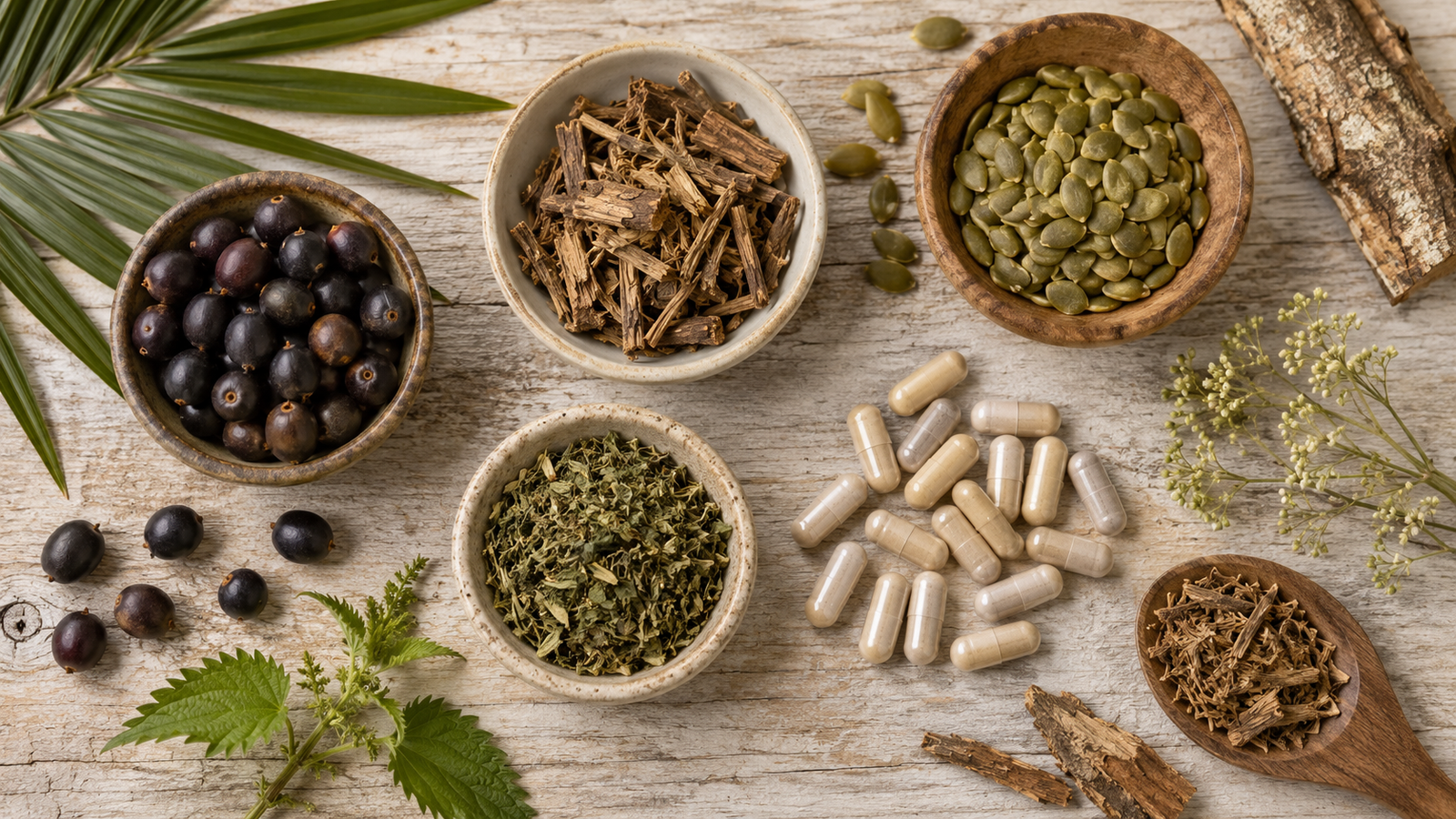
Whatever product you’re weighing, it helps to know the ingredients themselves — because the label is only as good as what’s actually in it and at what dose. Here’s an honest read on the ingredients you’ll see across prostate and men’s formulas and what the research actually supports. The theme of this category is humility: even the better ingredients show modest effects, and the most famous one may show none at all.
| Ingredient | What It Does | Evidence |
|---|---|---|
| Beta-Sitosterol | Improved symptom scores & flow in reviews; no size change | Limited–Moderate [4] |
| Pygeum | Roughly doubled odds of symptom improvement in older trials | Limited–Moderate [5][6] |
| Pumpkin Seed | Modest symptom improvement (whole seed) in one 1-yr RCT | Limited / Mixed [10] |
| Stinging Nettle Root | Improved symptoms in a small crossover trial | Limited [7] |
| Saw Palmetto | No better than placebo in the largest, best trials | Mixed / Negative [1][2][3] |
| Lycopene | Evidence judged insufficient for BPH | Limited [8] |
| Zinc | Concentrated in prostate; no RCT shows it treats BPH | Observational only [9] |
| Nettle / Tongkat / Ashwagandha | Vitality & testosterone herbs; only nettle has BPH data | Off-target for BPH |
| Seaweed / Iodine | No BPH evidence; excess iodine risks thyroid disruption | None / Caution |
The ingredients with the most support
Beta-sitosterol is, a little surprisingly, one of the better-documented prostate ingredients. A systematic review of randomized trials found it improved urinary symptom scores and flow measures compared with placebo. [4] The caveats are real — the trials were short (typically six months or less), used varied preparations, and showed no change in prostate size — but the symptom signal is genuine, which is why a properly dosed beta-sitosterol product is worth more than a saw-palmetto-only one. Studied doses run roughly 60–130 mg/day, which is worth remembering when a label discloses less. Notably, none of the four products in this roundup features beta-sitosterol prominently — a gap worth knowing about as you shop.
Pygeum (African plum bark) has similar older evidence: a Cochrane review and meta-analysis of around eighteen small trials found it roughly doubled the odds of symptom improvement and modestly helped nighttime urination and flow. [5][6] Again, the trials are dated and methodologically weak by modern standards, and no large rigorous study has confirmed the effect — but among these botanicals, it’s one of the more promising, and it’s the ingredient that most justifies Prosta Peak’s core. Studied doses are commonly around 100 mg/day.
Pumpkin seed has one decent point in its favor: the year-long, placebo-controlled GRANU study found whole pumpkin seed modestly reduced symptom scores — though the pumpkin seed extract arm didn’t clearly beat placebo, a genuinely mixed result worth reporting honestly. [10] Stinging nettle root improved symptoms in a small crossover trial [7], but most of its data comes from combination products, making its individual contribution hard to isolate — it’s the one genuinely BPH-relevant ingredient in ProstaVive’s otherwise vitality-focused formula.
Ingredients to be skeptical of
Just as useful as knowing what works is knowing what’s mostly marketing.
- Saw palmetto. The most famous prostate herb — and, in the best trials, the most disappointing. The NIH-funded STEP and CAMUS trials and the Cochrane review all found it no better than placebo, even at triple the usual dose. [1][2][3] Defenders argue specific standardized hexane extracts still show a small benefit and that “saw palmetto” isn’t one uniform product, which is fair — but a formula leaning mainly on saw palmetto is leaning on shaky ground.
- Testosterone & libido herbs (Tongkat Ali, ashwagandha, fenugreek, maca, ginseng, epimedium, damiana). These show up constantly in products marketed as prostate formulas — ProstaVive and Protoflow both lean on them. Several have legitimate evidence for their own purposes (energy, stress, libido), but none has credible evidence for improving urinary flow or prostate size. Don’t read a prostate benefit into a vitality ingredient.
- Lycopene. A systematic review judged the evidence insufficient to recommend it for BPH. [8] Eating tomatoes is great; paying a premium for lycopene in a prostate capsule is not well supported.
- High-dose zinc. The prostate concentrates zinc, and low serum zinc is associated with prostate cancer [9] — but that’s an association, not a reason to megadose. Long-term high-dose zinc (100 mg/day and up) has actually been linked in observational data to increased prostate cancer risk, plus copper deficiency. More is not better.
- Seaweed and added iodine. There’s no BPH evidence behind kelp, bladderwrack, and friends, and stacking several iodine-rich seaweeds plus extra iodine — as Prostadine does — can push intake high enough to disrupt thyroid function. This is a caution, not a benefit.
- Selenium. Not in these products, but you’ll see it elsewhere — and it’s worth knowing the large SELECT trial found selenium didn’t prevent prostate cancer, while vitamin E actually increased risk. [11] For the prostate, the science here says “don’t.”
None of this makes a product a scam on its own, but a formula built mainly on the skeptical list — rather than on the better-supported beta-sitosterol and pygeum — is asking you to pay for hope rather than data.
Natural Ways to Support Prostate Health
If you take one thing from this guide, make it this: the most reliable levers for urinary symptoms and long-term prostate health aren’t on a supplement label. They’re behavioral, they’re well-supported, and for many men they help more than any capsule. Think of a supplement as something you add on top of these, never instead of them.

1. Retrain your bladder habits
Simple behavioral changes are first-line advice from urologists for a reason. Cut fluids in the two to three hours before bed to reduce night-time trips, go easy on caffeine and alcohol (both irritate the bladder and increase urine production), and try “double voiding” — urinating, waiting a moment, and going again to empty more completely. These cost nothing and often help more than men expect.
2. Keep a healthy weight and stay active
Obesity and a large waistline are consistently linked to worse BPH and urinary symptoms, while regular physical activity is linked to milder ones. Even a daily walk counts. Losing excess abdominal fat is one of the higher-leverage changes available, and it helps nearly everything else about men’s health at the same time.
3. Eat for your prostate
You don’t need an exotic diet — just a sensible one. A pattern rich in vegetables, fruit, whole grains, healthy fats, and fish, and lighter on red and processed meat, is associated with better prostate outcomes. Tomatoes, cooked, are a fine natural source of lycopene, which is a better way to get it than a pill.
4. Move your body’s stress and pelvic tension
Chronic stress and a tense pelvic floor can worsen urinary urgency and frequency. Regular exercise, decent sleep, and — for some men — pelvic floor physical therapy can genuinely help. If urgency is your main complaint, this is worth raising with your doctor.
5. Review your medications
Some common over-the-counter drugs make urinary symptoms worse. Decongestants (like pseudoephedrine) and certain antihistamines can tighten the bladder neck or impair bladder emptying. If your symptoms flared after starting something new, that’s worth a conversation with a pharmacist or doctor before you blame your prostate.
6. Get the exam you’re avoiding
The single most valuable “natural” step is the least glamorous: get checked. A basic evaluation tells you whether your symptoms are ordinary BPH or something that needs real treatment, and it gives you a baseline to track over time. Everything else on this page works better when you actually know what you’re dealing with. For more, see our guide on how to improve prostate health naturally after 50.
What You Should Know Before Buying
This is the section most supplement guides skip — and the reason most of them shouldn’t be trusted.
Most prostate supplements produce modest effects, not transformations
The before-and-after stories in the ads are not the typical experience. In rigorous trials, the most famous ingredient (saw palmetto) shows no benefit over placebo, and the better ingredients (beta-sitosterol, pygeum) show modest symptom improvements at best. If you have healthy urinary function, a supplement is unlikely to do much at all.
Supplements do not shrink the prostate — and that distinction matters
No product on this page reduces prostate size or treats the underlying enlargement. If your symptoms are significant, the medications that actually change BPH — alpha-blockers for fast relief, 5-alpha-reductase inhibitors to shrink the gland over months — are prescriptions your doctor can discuss. A supplement is not a substitute, and delaying real evaluation to try drops can let a treatable problem progress.
The same symptoms can signal something serious
Urinary symptoms overlap between BPH, infection, bladder problems, and prostate or bladder cancer. That’s the core reason to get evaluated before self-treating: a supplement can mask or delay attention to a symptom that needed a doctor. Blood in the urine or an inability to urinate is never a “try a supplement first” situation.
Transparency and testing are the exception here, not the rule
Three of the four products on this page don’t disclose their doses, and none publishes a genuine third-party certificate of analysis. “Made in an FDA-registered, GMP facility” sounds reassuring but refers to the facility, not the product. Favor whatever transparency you can get, be skeptical of manufactured urgency and invented mechanisms, and treat the swarm of look-alike “official” sites as the warning sign it is.
How to Choose the Right One for You
With the honest caveats in mind, here’s a practical way to narrow the field based on what you’re actually trying to do. Match your situation to the approach below rather than grabbing the most-advertised bottle.
If you want a transparent, broad “total male health” formula
Go with the formula that discloses the most and does the most double-duty — that’s ProstaVive, our top overall pick. Just buy it for the right reason: it’s strongest as an energy, libido, and vitality formula with a modest prostate assist (nettle root, zinc, vitamin D), not as a targeted BPH treatment. The disclosed doses and 180-day guarantee make it a low-risk experiment.
If you want the most prostate-specific botanicals
Prosta Peak is built on saw palmetto and pygeum — the two recognized prostate herbs — and carries a matching 180-day guarantee. It’s the most “on-target” formula of the group for urinary symptoms, as long as you accept that you won’t see the exact doses and that pygeum, not the headline saw palmetto, is the ingredient doing the heavier lifting.
If your goals are broader — vitality, libido, circulation
Protoflow is honest about being a men’s vitality and libido blend once you look past the prostate branding. If energy, drive, and blood flow are really what you’re after and prostate support is a bonus, it fits that lane — just don’t buy it expecting targeted relief of a weak stream or nighttime trips.
If you strongly prefer a liquid
Prostadine’s dropper is the only liquid here. If capsules are a dealbreaker for you it’s an option, but it’s our lowest-scored pick for good reasons — weak prostate evidence and an iodine caution — so clear it with your doctor first, especially if you have any thyroid history.
If your symptoms are more than mild
Skip the shelf for now and see a doctor. A basic evaluation is quick, and if you have significant BPH there are treatments no supplement can match. You may also simply learn your symptoms come from something else entirely. Either way, that visit beats months of guessing with drops.
Whatever you choose, give it at least 8 to 12 weeks of consistent daily use, track your symptoms honestly (night-time trips, stream strength, urgency), and reassess. If nothing has improved after a fair trial, stop — and put the money and attention toward the behavioral steps and the medical evaluation that do the real work.
Who Should Avoid These Supplements
Talk to your doctor before starting any of these if you:
- Have blood in your urine, can’t urinate, or have rapidly worsening symptoms — these need medical evaluation now, not a supplement.
- Have prostate cancer or are being evaluated for it — some ingredients affect hormones and can complicate PSA interpretation; always tell your doctor what you take before a PSA test.
- Take prescription medications — especially blood thinners, or alpha-blockers and 5-alpha-reductase inhibitors for your prostate. Several botanicals may interact.
- Have a thyroid condition — iodine-heavy formulas (like the seaweed-based liquid) warrant real caution and medical advice.
- Are scheduled for surgery — some botanicals affect bleeding and should be stopped beforehand; tell your surgeon.
- Expect a supplement to fix significant BPH — that needs medical care, not a bottle.
Frequently Asked Questions
Do prostate supplements actually shrink the prostate?
Quick Answer: No. No over-the-counter supplement has been shown to shrink an enlarged prostate. At best, ingredients like beta-sitosterol and pygeum may modestly ease urinary symptoms for some men, without changing the gland’s size. The prescription drugs that actually shrink the prostate (5-alpha-reductase inhibitors) are a different category and require a doctor.
Does saw palmetto really work for an enlarged prostate?
Quick Answer: The best evidence says probably not. Two large NIH-funded trials (STEP and CAMUS) and a Cochrane review found saw palmetto no better than placebo for urinary symptoms, flow, or prostate size, even at high doses. Some standardized extracts may offer a small benefit, but it’s the most disappointing of the popular ingredients when tested rigorously.
Which prostate ingredient has the best evidence?
Quick Answer: Among the botanicals, beta-sitosterol and pygeum have the most supportive (though still limited and older) human research for improving urinary symptoms. Pumpkin seed and nettle root have smaller signals. None shrinks the prostate, and effects are modest — so look for a formula that includes beta-sitosterol or pygeum at a disclosed, meaningful dose.
How long until I notice anything?
Quick Answer: Most prostate ingredients need consistent daily use for 8 to 12 weeks before any effect is fair to judge. Some men notice small changes in night-time trips or stream sooner; others notice nothing. Give a product at least 8 weeks, track your symptoms, and pair it with bladder-habit and lifestyle changes for the best shot.
What’s the best prostate supplement for men over 50?
Quick Answer: Of the formulas we reviewed, ProstaVive is our top overall pick for its dose transparency, broad formula, and 180-day guarantee — though it’s more of a vitality formula than a targeted BPH product. Prosta Peak has the most prostate-specific botanicals. But if your urinary symptoms are more than mild, the best move isn’t a supplement at all — it’s a basic evaluation with a doctor.
Can prostate supplements affect my PSA test?
Quick Answer: Possibly. Some hormone-affecting ingredients can influence prostate-related markers, and anyone with prostate concerns should tell their doctor exactly what they’re taking before a PSA test. A supplement that alters PSA could mask a result that needed attention, which is another reason to keep your physician in the loop.
Are these supplements safe to take long-term?
Quick Answer: The well-studied botanicals (beta-sitosterol, pygeum, pumpkin seed, nettle) are generally considered safe for healthy adults at sensible doses, but long-term data for many blends is limited. Be especially cautious with high-dose zinc and iodine-heavy seaweed formulas, favor transparent products, and re-check with your doctor if you use them for many months.
Is the iodine in liquid prostate drops a concern?
Quick Answer: It can be. Seaweed-based liquids like Prostadine combine several iodine-rich ingredients plus added iodine, usually without disclosing the total amount. Consistently high iodine intake can disrupt thyroid function, so if you have any thyroid history — or take thyroid medication — talk to your doctor before using an iodine-heavy formula daily.
Is ProstaVive really a prostate supplement?
Quick Answer: Partly. ProstaVive is marketed for the prostate, but most of its formula is testosterone, energy, and libido ingredients (Tongkat Ali, ashwagandha, fenugreek, maca), with nettle root, zinc, and vitamin D as the prostate-relevant parts. It’s best thought of as a broad male-vitality formula with a modest prostate assist — genuinely useful for energy and drive, but not a targeted treatment for urinary symptoms.
Should I take a supplement or see a doctor first?
Quick Answer: If your symptoms are mild and stable, trying a supplement alongside lifestyle changes is reasonable. But if they’re bothersome, worsening, or come with any warning sign — blood in the urine, trouble urinating, pain, fever — see a doctor first. A quick evaluation rules out serious causes and opens up treatments that work far better than any supplement.
Final Verdict
If you want one transparent, broadly-useful option from this group, ProstaVive is our top pick — it discloses the most, carries a full 180-day guarantee, and covers energy, stress, libido, and general male vitality, with nettle root, zinc, and vitamin D providing a modest prostate assist. Just buy it for what it is: a vitality formula with a prostate nod, not a targeted BPH treatment. If your priority is genuinely prostate-specific botanicals, Prosta Peak has the best core (saw palmetto and pygeum) and a matching 180-day guarantee. Protoflow fits men who really want a broad libido-and-circulation blend, and Prostadine is the liquid option — our lowest-scored, and one to clear with a doctor first because of its iodine.
But the most important takeaway is the one the ads won’t tell you: these are modest support tools, not treatments. No supplement here shrinks the prostate, the single most famous ingredient (saw palmetto) failed the best trials, and several of these formulas are really vitality products in prostate packaging. The biggest wins come from bladder-habit changes, staying lean and active, and — if your symptoms are more than mild — a basic evaluation with a doctor, who has options no bottle on this page can match.
Our Top Pick: ProstaVive
The most transparent formula of the group — disclosed doses, broad male-vitality support, 180-day guarantee.
Affiliate Disclosure: Men’s Health Authority participates in affiliate programs including ClickBank. We may earn commissions when readers purchase through links on this page, at no additional cost to you. Every product reviewed is an affiliate product, so this compensation does not influence our rankings; our order reflects ingredient evidence and dose transparency.
Medical Disclaimer: This article is for informational and educational purposes only and is not medical advice. The Men’s Health Authority editorial team consists of health researchers and writers, not licensed medical professionals. Prostate supplements are not intended to diagnose, treat, cure, or prevent any disease, and do not shrink the prostate or replace medical care. Always consult a qualified healthcare provider before starting any supplement, particularly if you have urinary symptoms that warrant evaluation, take medications, or have a medical condition.
About Men’s Health Authority
Men’s Health Authority is an independent editorial resource covering men’s wellness and evidence-based health information for men over 40. Our editorial team are health researchers and writers — not licensed clinicians. We evaluate products against published labels and peer-reviewed research, cite our sources, and keep our rankings independent of commissions. Always consult a qualified healthcare professional for personal medical questions.
🛒 Retail Alternatives: 7 Prostate Formulas You Can Buy on Amazon
#1 Thorne Men’s Multi 50+ — Best Premium Quality
Thorne Men’s Multi 50+ — NSF Certified Multivitamin with Prostate Support
Quick Verdict: Thorne Men’s Multi 50+ is a comprehensive multivitamin specifically formulated for men over 50, with prostate-supporting ingredients including zinc and lycopene built into the formula. Thorne is trusted by Mayo Clinic, 100+ professional sports teams, and integrative medicine clinics for pharmaceutical-grade quality. Best for men who want broad nutritional support along with prostate health, not just a single-purpose prostate supplement.
What It Is
Thorne Men’s Multi 50+ is a 180-capsule bottle (90-day supply at 2 capsules daily) from Thorne — one of the most respected supplement manufacturers in the United States. Thorne supplements hold NSF Certified for Sport designation, meaning they’ve been tested for banned substances and verified for label accuracy. The Men’s Multi 50+ is specifically formulated for men over 50, combining comprehensive daily nutrition with prostate-supporting ingredients in a single convenient supplement.
How It Works
The formula provides 23 key nutrients with two ingredients specifically targeting prostate health: zinc (a mineral the prostate concentrates at 10x higher levels than other soft tissues [9]) and lycopene (a carotenoid with research backing for prostate cell health [10]). The full multivitamin profile addresses heart, brain, muscle, and immune health alongside prostate support. For men 50+ who want one supplement covering multiple needs, this is more efficient than stacking a multivitamin plus a separate prostate formula.
Pros
- ✓ Third-party certified — NSF verified for purity
- ✓ Manufactured by Thorne (one of the most respected US supplement brands)
- ✓ Used by Mayo Clinic and 100+ professional sports teams
- ✓ Comprehensive 23-nutrient formula (multi + prostate support in one)
- ✓ Includes both zinc and lycopene for prostate support
- ✓ Hypoallergenic — no major allergens or unnecessary excipients
- ✓ 90-day supply per bottle (better cost-per-day)
Cons
- ✗ Premium price (~$50-55 for 180 capsules)
- ✗ Not a dedicated prostate-only formula (combines with daily multivitamin)
- ✗ Lower individual prostate-ingredient doses than dedicated formulas
- ✗ 60-day return policy is shorter than Prostavive’s 180 days
- ✗ No saw palmetto or stinging nettle (the most-researched prostate herbs)
Best For
Men over 50 who want comprehensive daily nutritional support combined with basic prostate support in one product — particularly suitable for those not already taking a daily multivitamin. For more targeted prostate-specific support with herbal extracts, Prostavive or NOW Foods are better dedicated options.
Editorial Note
Thorne Men’s Multi 50+ is the right choice if you want one supplement that covers both your daily nutritional needs AND basic prostate support from zinc + lycopene. If you’re already taking a multivitamin or want more targeted herbal prostate support (saw palmetto, nettle, pygeum), Prostavive or NOW Foods are better dedicated options. Both can be used together if budget allows.
#2 Life Extension Ultra Prostate Formula
Life Extension Ultra Prostate Formula — 14-Ingredient Stack
Quick Verdict: The most comprehensive ingredient stack in our review, with 14 active compounds including some you won’t find elsewhere (boron, pygeum, AlgaeCal). The 365-day satisfaction guarantee is among the longest in the industry. Best for men who want maximum ingredient diversity.
What It Is
Life Extension Ultra Prostate Formula is a 60-softgel bottle (30-day supply at 2 softgels daily) from Life Extension — a longevity-focused supplement company founded in 1980. The formula uses softgels rather than capsules, which improves absorption of fat-soluble ingredients like lycopene and beta-sitosterol. Life Extension publishes detailed research-backed product reasoning on their site.
How It Works
This formula casts the widest net of any product we reviewed. It includes the standard prostate stack (saw palmetto, beta-sitosterol, pygeum [6], stinging nettle) plus additional research-backed compounds: boron (5mg, supporting free testosterone [7]), lycopene from tomato extract, pumpkin seed oil, and AlgaeCal calcium for mineral support. The softgel delivery system may improve bioavailability for fat-soluble ingredients.
Pros
- ✓ Most diverse ingredient stack (14 compounds) in our review
- ✓ Includes pygeum bark — important ingredient missing from many formulas
- ✓ Includes lycopene with research backing for prostate cell health
- ✓ 365-day satisfaction guarantee — among the longest available
- ✓ Softgel format may improve absorption of fat-soluble compounds
- ✓ Manufacturer publishes detailed research rationale
Cons
- ✗ Some individual ingredient doses may be sub-clinical due to spreading across 14 ingredients
- ✗ Higher cost per bottle than Amazon alternatives
- ✗ No testosterone-specific support like Tongkat Ali
- ✗ Softgels can be larger than capsules — harder to swallow for some
Best For
Men who want broad ingredient coverage with research-backed compounds — particularly those interested in lycopene and pygeum which are missing from most “basic” formulas. The 365-day guarantee gives extensive evaluation time.
#3 NOW Foods Prostate Health — Best Value
NOW Foods Prostate Health Clinical Strength — Best Value Pick
Quick Verdict: The best supplement deal in our review. NOW Foods delivers clinically-relevant doses of saw palmetto, beta-sitosterol, pygeum, and zinc at under $25 per 90-softgel bottle. Best for budget-conscious men who want proven ingredients without paying premium prices.
What It Is
NOW Foods Prostate Health Clinical Strength is a 90-softgel bottle (45-day supply at 2 softgels daily) from NOW Foods — a family-owned company that’s been making supplements since 1968. NOW Foods is known for genuinely affordable pricing without sacrificing quality, and they manufacture in GMP-certified facilities with extensive in-house testing.
How It Works
This formula focuses on the most-researched prostate ingredients: saw palmetto (200mg), pygeum (100mg), beta-sitosterol (40mg), and zinc (15mg). The doses are within clinically-studied ranges, and the formula avoids the “kitchen sink” approach. Sometimes simpler is better — and at this price point, NOW Foods delivers more clinical value per dollar than any other supplement we reviewed.
Pros
- ✓ Outstanding value (~$0.50 per day)
- ✓ Clinically-relevant doses of the most researched ingredients
- ✓ Includes pygeum (often missing from budget formulas)
- ✓ NOW Foods has 55+ year reputation for quality
- ✓ In-house quality testing exceeds industry standards
- ✓ Widely available on Amazon with Prime shipping
Cons
- ✗ Limited ingredient diversity compared to premium options
- ✗ No testosterone or hormonal support ingredients
- ✗ Standard Amazon return policy (not manufacturer guarantee)
- ✗ Softgels contain gelatin (not vegetarian)
Best For
Budget-conscious buyers, first-time supplement users, or men who want to test prostate supplementation before committing to premium options. The price point makes a 90-day trial genuinely affordable.
#4 Pure Encapsulations SP Ultimate
Pure Encapsulations SP Ultimate — Practitioner-Channel Quality
Quick Verdict: Pure Encapsulations is the practitioner-channel favorite — meaning healthcare providers commonly recommend it because of its hypoallergenic formulation and rigorous purity standards. The formula is conservative but every ingredient is purposefully chosen.
What It Is
Pure Encapsulations SP Ultimate is a 90-capsule bottle (30-day supply at 3 capsules daily) from Pure Encapsulations — a Massachusetts-based company specializing in hypoallergenic, free-from formulations. Their supplements are tested by independent laboratories and they maintain transparency about every excipient used. SP Ultimate is Pure Encapsulations’ comprehensive prostate formula.
How It Works
The formula combines saw palmetto extract (640mg per 3-capsule serving — a clinically-relevant dose), lycopene, pygeum bark extract, beta-sitosterol, plus complementary antioxidants including turmeric, green tea, and pomegranate. The dosing is well-considered and each ingredient is high-quality sourced. Pure Encapsulations specifically formulates without common allergens — no wheat, eggs, peanuts, magnesium stearate, hydrogenated oils, or artificial colors.
Pros
- ✓ Hypoallergenic formulation suitable for sensitive individuals
- ✓ Practitioner-channel quality control standards
- ✓ Independent third-party testing
- ✓ Free from common allergens and excipients
- ✓ Used by integrative medicine clinics
- ✓ Manufacturing transparency
Cons
- ✗ Premium pricing (~$36 for 30-day supply)
- ✗ Requires 3 capsules daily (more than competitors)
- ✗ 60-day return policy is moderate
- ✗ Best obtained through practitioner — direct retail can be inconsistent
Best For
Men with food sensitivities, multiple allergies, or those working with an integrative medicine practitioner who recommends Pure Encapsulations products specifically.
#5 Garden of Life mykind Organics — Best Organic
Garden of Life mykind Organics — USDA Organic Certified
Quick Verdict: The only USDA Organic certified product in our review. Garden of Life uses whole-food-derived ingredients rather than isolated extracts, which appeals to clean-label seekers. Best for men who specifically want organic, non-GMO certifications.
What It Is
Garden of Life mykind Organics Men’s Prostate Aid is a 120-tablet bottle (60-day supply at 2 tablets daily). It carries multiple meaningful certifications: USDA Organic, Non-GMO Project Verified, Vegan, Gluten Free, Kosher, and NSF Gluten Free. Garden of Life uses whole-food sources for nutrients rather than synthetic isolates.
How It Works
This is the most ingredient-philosophy-different product in our review. Rather than concentrated extracts, Garden of Life uses certified organic saw palmetto berry, organic pumpkin seed, organic lycopene from tomatoes, and organic selenium-rich foods. The whole-food approach may provide additional plant compounds that isolates miss, though the trade-off is potentially lower individual nutrient concentrations.
Pros
- ✓ USDA Organic certified (rare in supplements)
- ✓ Non-GMO Project Verified
- ✓ Whole-food-derived ingredients
- ✓ Multiple meaningful third-party certifications
- ✓ Vegan-friendly tablet format
- ✓ Manufacturer transparency about sourcing
Cons
- ✗ Individual ingredient concentrations may be lower than extract-based formulas
- ✗ Tablets are larger than capsules — may be harder to swallow
- ✗ Higher cost than non-organic alternatives
- ✗ Limited testosterone or hormonal support
Best For
Men who prioritize organic certification, prefer whole-food-derived nutrients, or follow vegan/vegetarian dietary patterns. Those with strong concerns about pesticides, GMOs, or synthetic excipients.
#6 Doctor’s Best Comprehensive Prostate Formula
Doctor’s Best Comprehensive Prostate Formula — Science-First Brand
Quick Verdict: A solid science-based budget alternative that uses trademarked ingredients (like AprèsFlex) with research backing. The brand specifically targets evidence-based formulations. Best for men who want documented research per ingredient at a moderate price.
What It Is
Doctor’s Best Comprehensive Prostate Formula is a 120-capsule bottle (60-day supply). Doctor’s Best positions itself as a science-first brand and frequently uses trademarked, research-backed ingredients (like CurcuWIN curcumin or Setria glutathione in other products) rather than generic extracts. The Prostate Formula uses standardized saw palmetto, beta-sitosterol, and quercetin.
How It Works
This formula includes quercetin — a flavonoid with anti-inflammatory effects studied for chronic prostatitis [8] — alongside the standard saw palmetto and beta-sitosterol foundation. The inclusion of quercetin makes this distinct from most competitors, particularly for men whose prostate concerns include inflammation-driven symptoms.
Pros
- ✓ Includes quercetin for anti-inflammatory support
- ✓ Good price-to-quality ratio
- ✓ Standardized extracts where available
- ✓ Brand focuses on evidence-based formulations
- ✓ Widely available with Amazon Prime
Cons
- ✗ Less ingredient diversity than premium options
- ✗ No testosterone support ingredients
- ✗ Standard Amazon return policy only
- ✗ Larger capsule size
Best For
Men whose prostate concerns include inflammation-driven discomfort (such as those with chronic prostatitis history) — the quercetin inclusion is meaningful. Also good for budget-conscious buyers wanting research-backed formulations.
#7 Nature’s Way Standardized Saw Palmetto

Nature’s Way Standardized Saw Palmetto — Single-Ingredient Simplicity
Quick Verdict: Pure standardized saw palmetto extract — nothing more, nothing less. For men who only want the single most-researched prostate ingredient at the cheapest price point with no proprietary blends or extras. Best as a starting test before committing to comprehensive formulas.
What It Is
Nature’s Way Standardized Saw Palmetto is a single-ingredient supplement containing 160mg of saw palmetto berry extract standardized to 85-95% fatty acids and sterols — the actual active compounds in saw palmetto. Nature’s Way has been making supplements for over 50 years with TRU-ID certified ingredient authentication.
How It Works
Saw palmetto’s primary mechanism is inhibition of 5-alpha-reductase, the enzyme that converts testosterone to DHT (the hormonal driver of prostate enlargement) [1]. Without other ingredients to provide complementary mechanisms, this product relies entirely on saw palmetto’s effects. The 160mg standardized dose hits clinically studied ranges, though most research uses 320mg daily (so you’d take 2 capsules).
Pros
- ✓ Lowest cost per day in our review (under $0.30)
- ✓ Standardized to active compounds (not generic powder)
- ✓ TRU-ID certified ingredient authentication
- ✓ Single-ingredient simplicity (no proprietary blends)
- ✓ Vegetarian capsules
- ✓ Long-established brand
Cons
- ✗ Single mechanism only — no comprehensive support
- ✗ No zinc, beta-sitosterol, or other complementary ingredients
- ✗ Recent research questions saw palmetto’s effectiveness as standalone treatment
- ✗ Standard Amazon return policy
Best For
Men who want to test saw palmetto specifically before committing to multi-ingredient formulas, or those whose physicians have recommended saw palmetto specifically. Also suitable for those who already supplement zinc and other nutrients separately.
Sources & References
- Bent S, Kane C, Shinohara K, et al. (2006). Saw palmetto for benign prostatic hyperplasia. New England Journal of Medicine, 354(6):557–566. PubMed
- Barry MJ, Meleth S, Lee JY, et al. (CAMUS Study Group). (2011). Effect of increasing doses of saw palmetto extract on lower urinary tract symptoms: a randomized trial. JAMA, 306(12):1344–1351. PubMed
- Tacklind J, MacDonald R, Rutks I, Stanke JU, Wilt TJ. (2012). Serenoa repens for benign prostatic hyperplasia. Cochrane Database of Systematic Reviews, (12):CD001423. PubMed
- Wilt TJ, MacDonald R, Ishani A. (1999). Beta-sitosterol for the treatment of benign prostatic hyperplasia: a systematic review. BJU International, 83(9):976–983. PubMed
- Ishani A, MacDonald R, Nelson D, Rutks I, Wilt TJ. (2000). Pygeum africanum for the treatment of patients with benign prostatic hyperplasia: a systematic review and quantitative meta-analysis. American Journal of Medicine, 109(8):654–664. PubMed
- Wilt T, Ishani A, Mac Donald R, Rutks I, Stark G. (2002). Pygeum africanum for benign prostatic hyperplasia. Cochrane Database of Systematic Reviews, (1):CD001044. PubMed
- Safarinejad MR. (2005). Urtica dioica for treatment of benign prostatic hyperplasia: a prospective, randomized, double-blind, placebo-controlled, crossover study. Journal of Herbal Pharmacotherapy, 5(4):1–11. PubMed
- Ilic D, Misso M. (2012). Lycopene for the prevention and treatment of benign prostatic hyperplasia and prostate cancer: a systematic review. Maturitas, 72(4):269–276. PubMed
- Zhao J, Wu Q, Hu X, et al. (2016). Comparative study of serum zinc concentrations in benign and malignant prostate disease: a systematic review and meta-analysis. Scientific Reports, 6:25778. PubMed
- Vahlensieck W, Theurer C, Pfitzer E, et al. (2015). Effects of pumpkin seed in men with lower urinary tract symptoms due to benign prostatic hyperplasia in the one-year, randomized, placebo-controlled GRANU study. Urologia Internationalis, 94(3):286–295. PubMed
- Klein EA, Thompson IM Jr, Tangen CM, et al. (2011). Vitamin E and the risk of prostate cancer: the Selenium and Vitamin E Cancer Prevention Trial (SELECT). JAMA, 306(14):1549–1556. PubMed
Related Articles on Men’s Health Authority
- Enlarged Prostate Symptoms: What to Watch For After 50
- How to Improve Prostate Health Naturally After 50
- The Complete Guide to Prostate Health After 50
- ProstaVive Review 2026 — Honest Analysis
- Saw Palmetto for the Prostate: What the Science Actually Says
- Best Testosterone Supplements 2026 for Men Over 50
- July 23, 2026: Initial publication with 4 in-depth product reviews.
- Scheduled review: October 2026 (quarterly).