
Written by: Malkiat Singh
Editorial accuracy: Checked against cited sources (NIDDK, Cleveland Clinic, and peer-reviewed urology reviews) by the MHA editorial team
Published: June 8, 2026 | Last Updated: June 8, 2026 | Next Review: September 2026
⏱️ 21 min read | 📄 ~5,400 words | ⓘ Affiliate Disclosure
Home » Prostate Health » What Causes Prostate Enlargement
A plain-English, deeply researched guide to why the prostate grows with age — the biology, the risk factors you can and can’t change, how it’s diagnosed and treated, and the warning signs that mean it’s time to see a doctor.
If you’re past 50 and finding yourself up twice a night to use the bathroom, waiting longer for the stream to start, or feeling like your bladder never quite empties, there’s a good chance an enlarging prostate is behind it. It’s one of the most common changes men face with age — and one of the most misunderstood.
The confusing part is that “enlarged prostate” gets tangled up with prostate cancer, low testosterone, and a hundred supplement ads, so it’s hard to know what’s really happening inside your body. This guide cuts through that. We’ll go deep on what benign prostatic hyperplasia (BPH) actually is, the biology that drives it, the risk factors you can and can’t influence, how doctors measure and treat it, and the red flags that mean it’s time to act rather than wait. The goal is to leave you genuinely informed — not alarmed, and not sold to.

Prostate enlargement (BPH) is a non-cancerous overgrowth of prostate tissue that becomes increasingly common after 50. The two best-established drivers are aging and the hormone DHT (dihydrotestosterone), which keeps stimulating prostate growth even as overall testosterone declines. A large and growing body of research also ties BPH to metabolic health — obesity, type 2 diabetes, and chronic inflammation — which means some of your risk is modifiable. Crucially, BPH is not prostate cancer and does not raise your cancer risk, but because the symptoms overlap, a proper medical evaluation matters.
This article draws on guidance from the National Institute of Diabetes and Digestive and Kidney Diseases (NIDDK), MedlinePlus, the Cleveland Clinic, and peer-reviewed urology reviews indexed on PubMed — all cited and linked at the bottom. It is written by the Men’s Health Authority editorial team, who are health writers and researchers, not physicians. It’s general education, not medical advice. For symptoms that are severe, worsening, or worrying you, see a doctor.
📑 In This Guide
- What Is an Enlarged Prostate (BPH)?
- The Anatomy: Where BPH Actually Happens
- Why an Enlarged Prostate Causes Urinary Symptoms
- What Actually Causes the Prostate to Grow?
- The Role of Diet and Lifestyle
- Risk Factors: What You Can and Can’t Change
- What Happens If BPH Is Left Untreated?
- What Does NOT Cause Prostate Enlargement
- Is an Enlarged Prostate the Same as Prostate Cancer?
- How Doctors Diagnose and Measure BPH
- How BPH Is Treated (A High-Level Overview)
- Can You Reduce Your Risk?
- When to See a Doctor
- Frequently Asked Questions
- Sources & References
What Is an Enlarged Prostate (BPH)?
The prostate is a walnut-shaped gland that sits just below the bladder and wraps around the urethra — the tube that carries urine out of the body. In a younger man it weighs roughly 20 grams, about the size of a walnut. Its main job is producing fluid that becomes part of semen, which is why it matters for fertility as well as urination. [1]
Across a man’s life, the prostate goes through two distinct growth phases. The first happens at puberty, when it roughly doubles in size. The second begins around age 25 and continues slowly for the rest of life. Benign prostatic hyperplasia — the medical term for an enlarged prostate — is the overgrowth that occurs during that second, lifelong phase. [1] Breaking the term down helps: “benign” means not cancer, “prostatic” refers to the prostate, and “hyperplasia” means an increase in the number of cells. So BPH is, quite literally, a non-cancerous increase in the number of prostate cells.
How common is it? Strikingly so. Roughly half of men show signs of BPH by age 60, and about 90% by age 85. [2] One clinical reference puts the rise even more starkly — from about 8% of men in their thirties to more than 90% by the ninth decade of life. [12] But “having BPH” and “being bothered by BPH” are not the same thing. NIDDK estimates that clinically significant, symptom-causing BPH affects about 5–6% of men aged 40–64 and 29–33% of men 65 and older. [1] In short: tissue growth is nearly universal with age, but how much it interferes with daily life varies enormously from one man to the next.
The Anatomy: Where BPH Actually Happens
To understand why BPH causes the symptoms it does — and why it’s biologically separate from most prostate cancer — it helps to know that the prostate isn’t a uniform lump. It’s divided into zones, and the location of the growth makes all the difference.
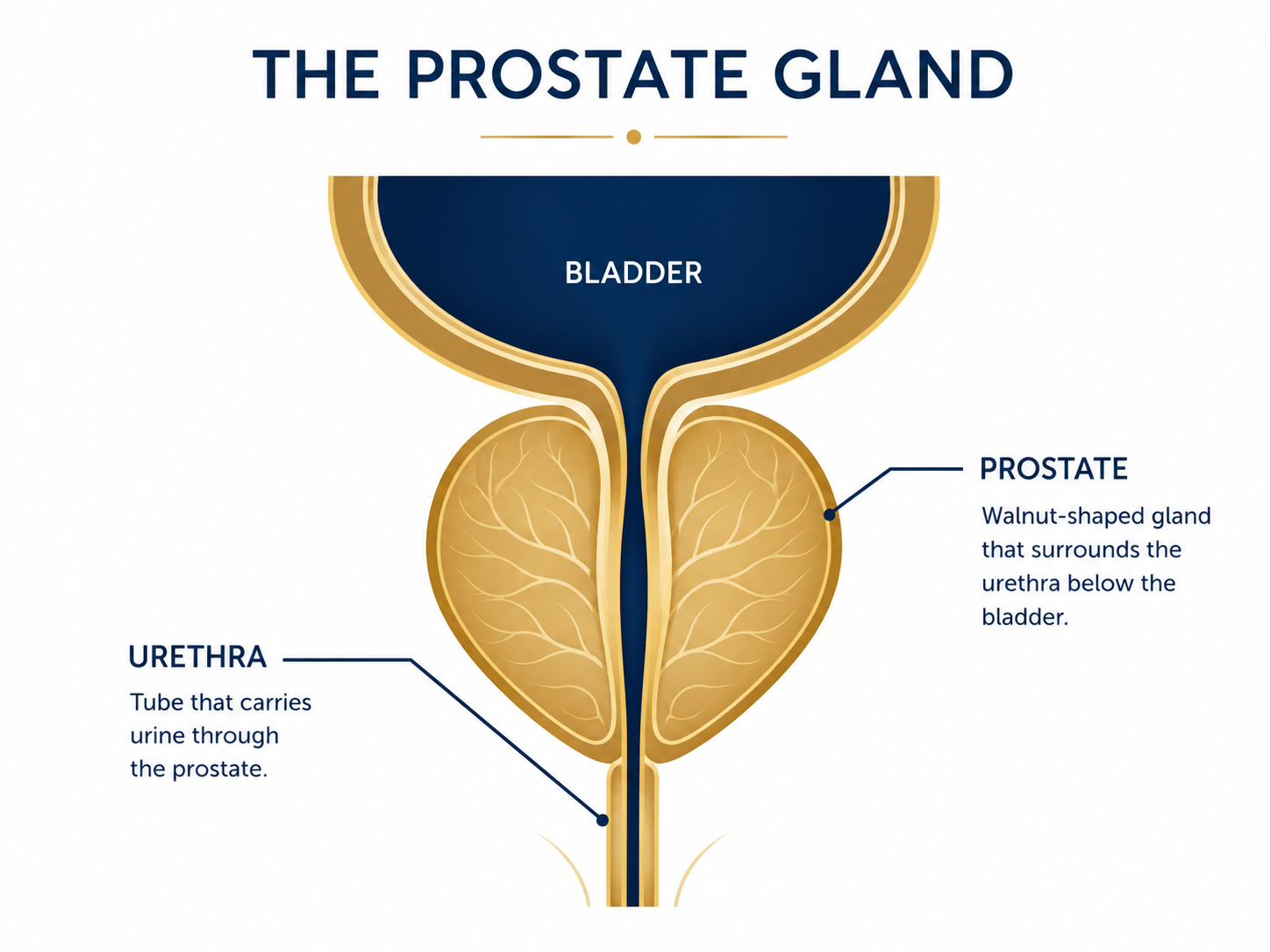
BPH develops primarily in the transition zone, the inner region of the prostate that immediately surrounds the urethra. [12] That’s the worst possible place for tissue to expand, because growth there squeezes directly on the urinary channel. Prostate cancer, by contrast, most often arises in the outer peripheral zone — which is one reason a man can have significant cancer with few urinary symptoms, or troublesome urinary symptoms with no cancer at all.
There’s a second layer to this. The prostate is made of two main tissue types: glandular epithelial cells (which produce fluid) and stromal cells (the supporting smooth-muscle and connective tissue). In BPH, both proliferate and form discrete nodules within the transition zone, though the stromal component often dominates. [12] This matters more than it might sound: because so much of the enlarged tissue is smooth muscle, the prostate doesn’t just passively bulk up — it can actively tighten, which becomes important when we look at why symptoms appear.
Why an Enlarged Prostate Causes Urinary Symptoms
Because the prostate surrounds the urethra, growth in the transition zone creates a plumbing problem. As the gland enlarges, it squeezes the urethra and narrows the channel urine flows through. The bladder then has to push harder to force urine past that squeeze, so over time its muscular wall thickens and becomes more irritable. Eventually the bladder can weaken and lose the ability to empty completely, leaving residual urine behind. [1]
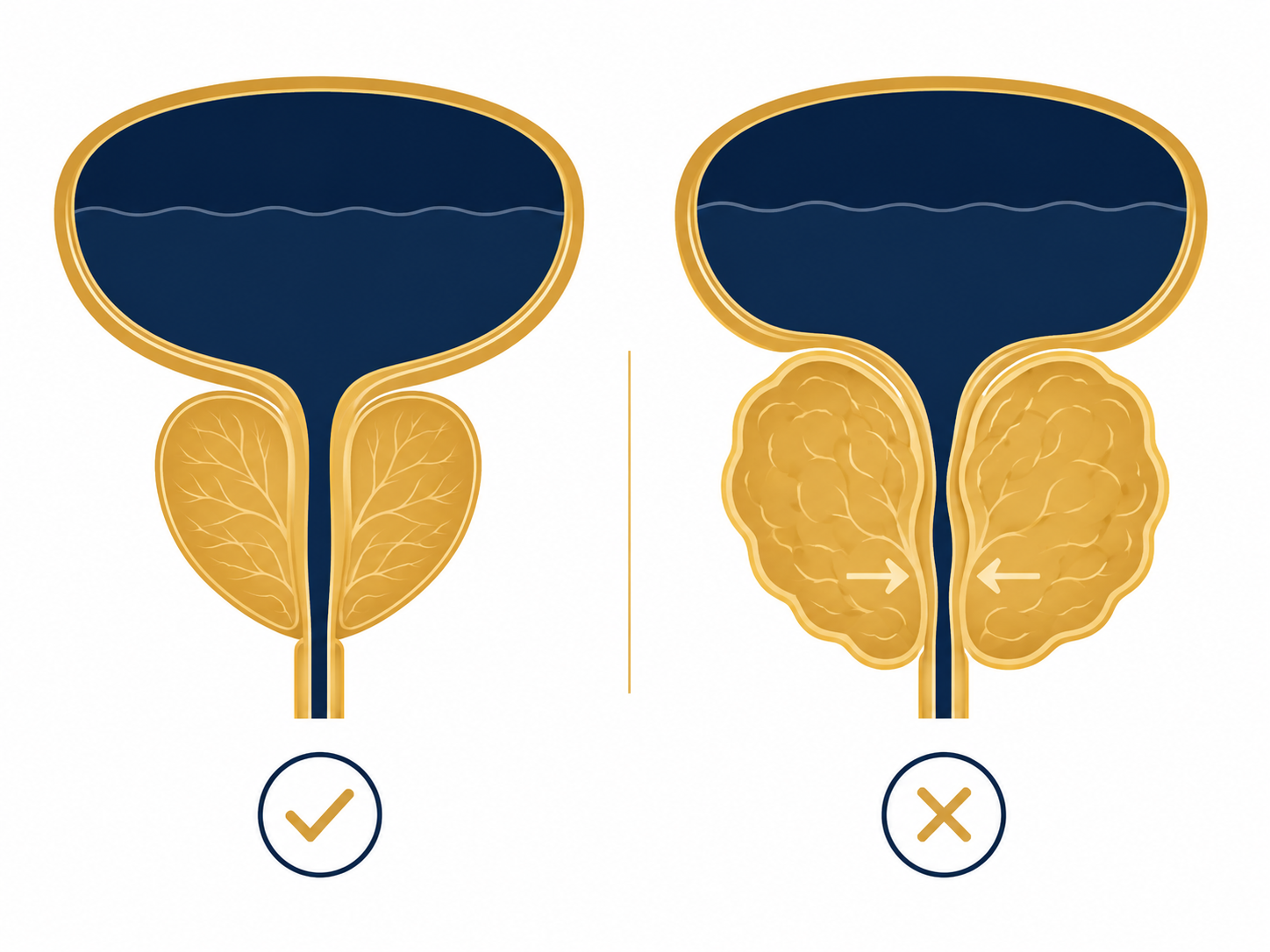
Doctors group the resulting lower urinary tract symptoms (LUTS) into two families, and recognizing which you have can be informative:
- Voiding (obstructive) symptoms — a weak or stop-start stream, difficulty getting started (hesitancy), straining to go, and dribbling at the end. These reflect the physical blockage.
- Storage (irritative) symptoms — urinating frequently, sudden urgency, waking at night to go (nocturia), and the feeling that the bladder isn’t empty. These reflect the bladder’s reaction to working against an obstruction over time.
This is also where the static versus dynamic distinction becomes practical. The static component is the physical bulk of tissue pressing on the urethra. The dynamic component is the smooth-muscle tension in the prostate and bladder neck, which is controlled by alpha-adrenergic nerve signals. That dynamic tightening is why a relatively small prostate can cause big symptoms, and it’s the reason medications that relax this muscle can bring relief even without shrinking the gland at all.
One nuance trips up a lot of men: symptom severity doesn’t track neatly with prostate size. A substantially enlarged prostate may cause barely any trouble, while a only slightly enlarged one can cause significant symptoms. [1] So “how big is it?” is a less useful question than “how much is it affecting your life?” — which is exactly how doctors approach it.
What Actually Causes the Prostate to Grow?
Here’s the honest scientific starting point: researchers still don’t fully understand why BPH develops. [1] Its cause is described as multifactorial and not completely defined. [12] But decades of study have identified several drivers that clearly matter, ranging from “well established” to “strongly associated.” Below are the main ones, roughly in order of how solid the evidence is.
1. Aging — the strongest factor
Age is the single biggest determinant. BPH is rare before 40 and climbs steadily with each decade afterward. [1] Aging isn’t really a “cause” you can isolate, though — it’s the backdrop against which the hormonal and metabolic changes below accumulate over years. Cells in the transition zone keep responding to growth signals, the balance of those signals shifts, and the cumulative result becomes visible as enlargement. Statistically, time is simply the most reliable predictor of whether the prostate will grow.
2. DHT — the hormone that keeps the prostate growing
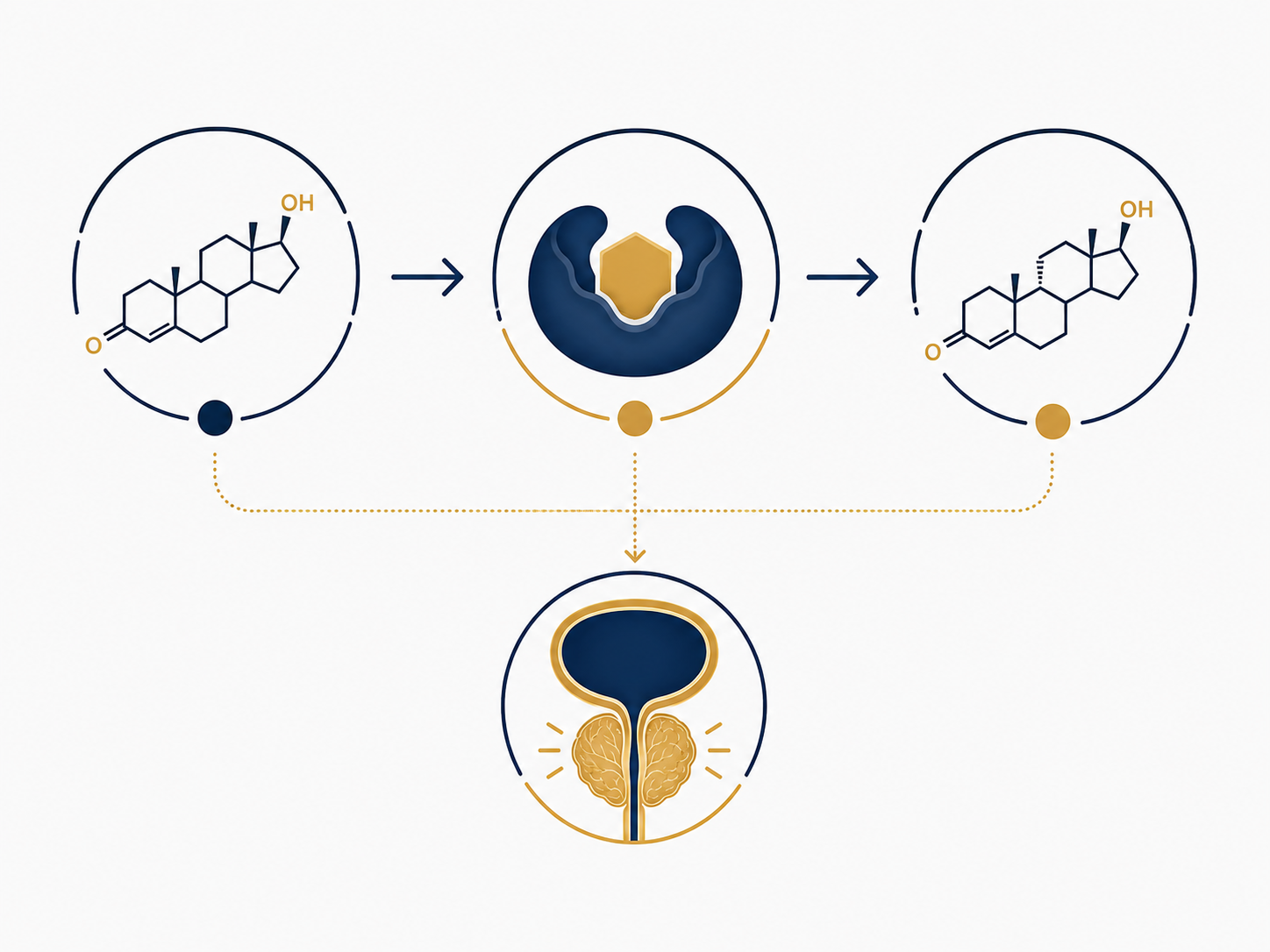
This is the best-understood biological driver. Inside the prostate, an enzyme called 5-alpha-reductase (predominantly the type 2 form) converts testosterone into a more potent androgen: dihydrotestosterone (DHT). DHT binds to androgen receptors inside prostate cells and stimulates them to grow and multiply. The prostate has especially high type 2 5-alpha-reductase activity, so it produces and concentrates DHT locally. [6]
Now the counterintuitive part. Even though blood testosterone declines as men age, DHT levels inside the prostate stay roughly normal. [5] The gland keeps receiving a steady growth signal year after year, regardless of what’s happening to testosterone in the bloodstream. This is precisely why the prescription drugs finasteride and dutasteride — which block 5-alpha-reductase and cut DHT production — can actually shrink an enlarged prostate and slow its progression. [4] The role of DHT is so central that researchers describe it as having an “obligatory” part in BPH development: without androgens acting on the prostate, the condition essentially doesn’t occur. [4]
3. The shifting estrogen-to-testosterone balance
Men make small amounts of estrogen too, and as testosterone falls with age, the ratio of estrogen to androgen tends to rise. Research suggests this shifting balance may sensitize prostate tissue and amplify growth signaling, working alongside the DHT pathway rather than instead of it. [7] Some laboratory work points to estrogen receptors becoming more influential in prostate cells as androgen-processing enzymes change with age. This is considered a contributing mechanism rather than a fully settled one, but it underlines an important theme: prostate growth is about the balance of hormones, not testosterone alone.
4. Stromal–epithelial signaling and growth factors
At the cellular level, BPH isn’t just hormones acting on isolated cells. The stromal (smooth-muscle and connective) cells and the epithelial (glandular) cells talk to each other through chemical messengers called growth factors. Hormonal signals appear to switch on this crosstalk, prompting the tissue to behave almost as if it were re-entering a developmental growth program. This stromal–epithelial interaction helps explain why BPH tends to be a slow, self-reinforcing process rather than a one-time event — and why the stromal smooth-muscle component contributes both to the physical bulk and to the dynamic tightening discussed earlier.
5. Metabolic health — obesity, diabetes, and insulin resistance
One of the most active areas of modern research links BPH to metabolic syndrome — the cluster of central obesity, high blood sugar, high blood pressure, and abnormal cholesterol. Large studies and reviews have found that men with metabolic syndrome and its components face a higher risk of developing BPH and of having it progress. [7][8][9] A prospective cohort of nearly 164,000 men found metabolic syndrome to be a significant risk factor for new-onset BPH. [9]
The proposed mechanisms are concrete rather than hand-wavy. High insulin levels (hyperinsulinemia) can stimulate prostate cell growth through the insulin-like growth factor (IGF-1) pathway; visceral fat fuels low-grade inflammation; and disordered cholesterol metabolism can worsen the androgen–estrogen imbalance described above. [8][9] What makes this category so important is that, unlike age and genetics, these factors are modifiable — which is why some researchers now frame BPH partly as a metabolic disease.
6. Chronic low-grade inflammation
Prostate tissue from men with BPH frequently shows inflammatory activity, including elevated pro-inflammatory signaling molecules such as interleukin-6 (IL-6) and tumor necrosis factor-alpha (TNF-α). [9] A large cohort analysis found that inflammatory markers partly explain the link between metabolic syndrome and BPH, identifying systemic chronic inflammation as a critical step in the pathway. [9] Inflammation appears to both promote tissue growth and drive progression over time, which is why it’s increasingly viewed as a meaningful target rather than just a bystander.
7. Family history and genetics
BPH runs in families. Men with a father or brother who had significant prostate enlargement — particularly enlargement that started relatively young and required surgery or other treatment — are at higher risk themselves. Family history, age, and hormone concentrations are all recognized contributors to whether and how BPH develops. [12] Genetics doesn’t determine your fate, but it shifts the baseline odds, and an early family history is a reason to pay closer attention to symptoms sooner.
8. Associated conditions: heart disease and erectile dysfunction
NIDDK notes that men with BPH more often also have heart and blood-vessel disease, type 2 diabetes, obesity, chronic kidney disease, or erectile dysfunction (ED). [1] These aren’t necessarily direct causes — they tend to share underlying metabolic and vascular roots — but the overlap is a useful signal that prostate health and overall cardiometabolic health are deeply connected. The practical upside is that taking care of your heart and metabolism is likely doing your prostate a favor at the same time.
The Role of Diet and Lifestyle
If metabolic health drives BPH, then the habits that shape metabolic health should matter too — and the research broadly supports that, even though it comes mostly from observational studies rather than large randomized trials. [10] Here’s what the evidence consistently suggests.

Factors associated with higher risk: obesity and diabetes top the list, followed by dietary patterns heavy in red and processed meat, animal fat, and refined starches. [10][11] Several studies have implicated high total meat and animal-product intake, and a diet rich in cereals and certain meats but poor in vegetables and legumes has been linked to greater BPH risk. [11][12]
Factors associated with lower risk: regular physical activity, generous vegetable consumption, and — somewhat surprisingly — moderate alcohol intake have all been associated with reduced BPH and LUTS risk in epidemiologic studies. [10][11] Diets emphasizing vegetables, fruits, nuts, legumes, and sources of long-chain omega-3 fats (the broad pattern of a Mediterranean-style diet) tend to look protective. [11]
Factors that remain unclear: the evidence on smoking and on blood lipids has not produced a consistent risk pattern, so claims in either direction should be treated cautiously. [10]
A few honest caveats are worth stating plainly. First, “moderate alcohol is associated with lower risk” is an observational finding, not a recommendation to drink — and alcohol can still worsen urinary symptoms in the short term by irritating the bladder. Second, randomized trials testing whether weight loss, exercise, or diet changes actually prevent or treat BPH largely haven’t been done yet, so we’re inferring from associations. [10] What’s reasonable to conclude is that the same lifestyle that protects your heart and blood sugar is a sensible bet for your prostate, with little downside. Notably, this means BPH is not purely an unavoidable symptom of aging — lifestyle appears to influence the odds. [12]
Risk Factors: What You Can and Can’t Change
It helps to separate the factors that are fixed from the ones you have some influence over.
| Can’t Change | Can Influence |
|---|---|
|
• Age (the dominant factor) • Family history / genetics • Baseline hormonal biology (DHT activity) • The natural aging of prostate tissue |
• Body weight and waist size • Blood sugar / insulin resistance • Physical activity level • Diet quality (meat & fat vs. vegetables) • Cardiovascular health • Chronic inflammation (via the above) |
The takeaway isn’t that lifestyle “cures” BPH — it doesn’t. But the modifiable column genuinely appears to affect risk and progression, which is more agency than men were once thought to have over what used to be considered an inevitable part of aging. [7][12]
What Happens If BPH Is Left Untreated?
For many men, BPH stays mild and stable for years, and “watchful waiting” is a perfectly reasonable path. But it’s worth understanding the possible course if symptoms are significant and ignored, because the bladder bears the brunt of working against an obstruction.
As the bladder muscle thickens and then fatigues, it can lose its ability to empty fully, leaving residual urine behind after every trip. [1] That stagnant urine and the back-pressure it creates can lead to a chain of complications over time, including:
- Acute urinary retention — a sudden, painful inability to urinate at all, which is a medical emergency requiring prompt catheterization.
- Recurrent urinary tract infections — incompletely emptied urine is a breeding ground for bacteria.
- Bladder stones — minerals can crystallize in retained urine.
- Bladder damage — a chronically overstretched bladder may not recover full function.
- Kidney strain — in more advanced, untreated cases, back-pressure can affect the kidneys.
These outcomes are far from inevitable, and most men never experience them — but they’re the reason doctors take persistent, worsening symptoms seriously rather than dismissing them. Catching and managing BPH earlier generally keeps more, and gentler, options on the table.
📩 Free: The Prostate Health Starter Guide
A no-hype PDF covering the questions to ask your doctor, the symptoms worth tracking, and the evidence-backed lifestyle basics for prostate and urinary health after 50.
No spam. Unsubscribe anytime. Education only — not medical advice.
What Does NOT Cause Prostate Enlargement
A lot of worry around BPH comes from myths and old wives’ tales. To set the record straight, the following do not cause an enlarged prostate:
- Sexual activity or masturbation frequency. Neither too much nor too little sex causes BPH. Sexual frequency is unrelated to prostate growth.
- Having a vasectomy. There’s no established causal link between vasectomy and prostate enlargement.
- “Holding it in.” Habitually delaying urination can strain the bladder over time but doesn’t grow the prostate itself.
- A single food, drink, or one-off habit. Caffeine and alcohol can worsen symptoms by irritating the bladder and increasing urine production, but they don’t cause the underlying enlargement.
- Riding a bicycle or sitting too long. These can aggravate prostate discomfort in some men but do not cause BPH.
- It being an early sign of cancer. BPH is benign — more on this next.
Is an Enlarged Prostate the Same as Prostate Cancer?
No — and this is one of the most important points in this guide. BPH is a benign (non-cancerous) overgrowth, and having an enlarged prostate does not increase your risk of developing prostate cancer. [3] They are different conditions that happen to involve the same gland, and as we saw earlier, they typically even arise in different zones of it — BPH in the inner transition zone, most cancers in the outer peripheral zone. [12]
The catch is twofold. First, they can produce overlapping urinary symptoms. Second, a man can have both at the same time purely by coincidence of age. That’s why you shouldn’t self-diagnose. Symptoms you might assume are “just BPH” can occasionally be the first clue of something else — including a urinary tract infection, prostatitis (prostate inflammation), an overactive or underactive bladder, certain neurological conditions, or, less commonly, prostate cancer. A doctor can sort out which is which with a straightforward evaluation, and a conversation about prostate cancer screening becomes worthwhile after age 50 (or earlier with a strong family history).
How Doctors Diagnose and Measure BPH
If you do see a doctor, the workup for suspected BPH is usually quick and non-invasive. Knowing what to expect tends to lower the anxiety around going. Common steps include:
- Symptom questionnaire (IPSS/AUA Symptom Index). A short, standardized set of questions scores how severe and bothersome your urinary symptoms are. It turns vague complaints into a number that can be tracked over time and used to gauge whether treatment is helping.
- Digital rectal exam (DRE). The doctor briefly feels the prostate through the rectal wall to estimate its size and texture. [1] It’s quick and tells the clinician a lot.
- PSA blood test. Prostate-specific antigen can be elevated in BPH, prostate inflammation, or cancer, so it’s interpreted in context rather than as a stand-alone “cancer test.” It also helps gauge prostate size and future progression risk.
- Urine tests. A urinalysis checks for infection or blood that might explain symptoms or point elsewhere.
- Uroflowmetry and post-void residual. These measure how fast urine flows and how much is left in the bladder after you go — direct evidence of how much obstruction is present.
- Ultrasound or other imaging, when needed, to measure prostate volume or check the bladder and kidneys.
You may be referred to a urologist (a specialist in the urinary tract) for some of these tests or if the picture is unclear. [1] Importantly, because some BPH symptoms could be caused by other urinary problems, any new urinary symptoms are worth discussing with a health professional rather than self-managing indefinitely. [1]
How BPH Is Treated (A High-Level Overview)
This is a “causes” guide, not a treatment prescription — and the right choice always depends on your individual situation and a doctor’s assessment. But men understandably want to know what’s on the menu, so here’s the landscape in plain terms, from least to most aggressive. None of this is a recommendation; it’s an orientation.
- Watchful waiting and lifestyle measures. For mild symptoms, doctors often monitor over time and suggest practical adjustments — limiting fluids in the evening, cutting back on caffeine and alcohol, and the metabolic-health habits discussed above.
- Alpha-blocker medications (such as tamsulosin and similar drugs) relax the smooth muscle in the prostate and bladder neck, targeting the dynamic component. They tend to relieve symptoms relatively quickly without shrinking the gland.
- 5-alpha-reductase inhibitors (finasteride, dutasteride) block DHT production and can actually shrink the prostate over several months, targeting the static component. They’re generally most useful for larger prostates and can reduce the risk of progression and the need for surgery. [4]
- Combination therapy. The two drug classes above are sometimes used together for greater effect.
- Other medications, including a low daily dose of the erectile-dysfunction drug tadalafil, are sometimes used for BPH-related symptoms.
- Minimally invasive procedures — such as prostatic urethral lift and water-vapor (steam) therapy — relieve obstruction with less downtime than traditional surgery and are increasingly common.
- Surgery, most classically transurethral resection of the prostate (TURP), removes or reduces obstructing tissue and is reserved for larger glands, severe symptoms, or complications.
The encouraging headline is that effective options exist across the whole spectrum, and many men get meaningful relief from the gentlest end of it. The decision about which path fits you is one to make with a clinician who knows your full picture.
Can You Reduce Your Risk?
There’s no guaranteed way to prevent BPH, and aging and genetics will always be in play. [1] But because metabolic health, inflammation, and activity level are linked to risk and progression, the same habits that protect your heart appear to support your prostate too: [7][10]
- Keep your weight and waistline in a healthy range — central obesity is one of the clearest modifiable links.
- Stay physically active — regular movement is consistently associated with lower BPH and LUTS risk. [10]
- Manage blood sugar and blood pressure — the metabolic-syndrome components matter individually, not just together.
- Favor a vegetable-forward, Mediterranean-style diet and go easier on red and processed meat, animal fat, and refined starches. [11][12]
- Watch the symptom triggers, like large evening fluids, caffeine, and alcohol — these don’t cause BPH but can make symptoms worse.
Some men also explore dietary approaches and supplements for prostate support. The evidence there is genuinely mixed — dietary supplements such as zinc, saw palmetto, and beta-sitosterol have produced inconsistent results in studies — and effects, where they exist, tend to be modest rather than dramatic. [11] If you’re curious, we cover what the research actually shows in our honest guides on foods for prostate health and improving prostate health naturally, and we review specific formulas — including their downsides — in our 2026 prostate supplement comparison. None of it replaces a conversation with your doctor.
Comparing prostate formulas? See our full editorial breakdown — ingredients, doses, evidence, and the honest cons — before you buy anything. We rank what the research supports, not what pays most.
Read Our Prostate Supplement Reviews →
Supplements are not a treatment for BPH — talk to your doctor first.
When to See a Doctor
🚨 Seek prompt or emergency care if you have:
- An inability to urinate at all (acute urinary retention) — this is a medical emergency.
- Blood in your urine.
- Pain or burning when urinating, especially with fever or chills (possible infection).
- Pain in the lower abdomen, back, or pelvis alongside urinary trouble.
Short of those red flags, it’s still worth booking a routine appointment if urinary symptoms are disrupting your sleep, your daily routine, or your quality of life — or if they’re steadily getting worse. Effective treatments exist across the whole range we covered above, and the earlier a doctor evaluates you, the more options tend to be available. Because other conditions can mimic BPH, a proper assessment is also how you rule out anything more serious. There’s no prize for toughing it out, and “I just figured it was age” is the most common reason men delay getting help that would have improved their nights years sooner.
Frequently Asked Questions
At what age does the prostate start to enlarge?
Quick Answer: The prostate begins a slow second growth phase around age 25 that continues for life, but noticeable enlargement and symptoms usually appear after 50. BPH is rare before 40. By age 60 roughly half of men show signs of it, and by 85 around 90% do — though many never develop bothersome symptoms. [1][2]
Does low testosterone cause an enlarged prostate?
Quick Answer: Not directly — and the relationship is the opposite of what many assume. Prostate growth is driven by DHT, a hormone made from testosterone inside the gland. Even as blood testosterone falls with age, prostate DHT stays roughly normal, so the growth signal continues. Low testosterone itself isn’t a recognized cause of BPH. [5][6]
Is an enlarged prostate a sign of cancer?
Quick Answer: No. BPH is benign and does not raise your risk of prostate cancer. The two are separate conditions — they even usually develop in different zones of the gland — although they can occur together and share some urinary symptoms. Because of that overlap, any new or worsening symptoms should be evaluated by a doctor rather than assumed to be “just” BPH. [3][12]
Can losing weight help prevent prostate enlargement?
Quick Answer: It may help reduce risk and slow progression. Obesity, type 2 diabetes, and metabolic syndrome are linked to BPH through insulin signaling and inflammation, and these are modifiable. Maintaining a healthy weight, staying active, and managing blood sugar won’t guarantee prevention, but they’re among the few factors you can actually influence. [7][10]
Does diet really affect the prostate?
Quick Answer: The observational evidence points that way. Diets high in red meat, animal fat, and refined starches are associated with higher BPH risk, while vegetables, physical activity, and a Mediterranean-style pattern are associated with lower risk. Large randomized trials are still lacking, so think of diet as a sensible, low-risk lever rather than a proven cure. [10][11][12]
Will an enlarged prostate go away on its own?
Quick Answer: Usually not. BPH tends to be a gradual, ongoing process tied to aging and hormones, so the enlargement rarely reverses on its own. Symptoms can fluctuate, however, and they’re very manageable. A doctor can match treatment to how much the symptoms affect you, ranging from watchful waiting to medication to procedures. [1]
Can an enlarged prostate cause permanent damage?
Quick Answer: It can if significant symptoms are ignored for a long time. Working against a chronic obstruction can weaken the bladder and, in advanced cases, lead to retention, infections, bladder stones, or kidney strain. These complications are uncommon and largely preventable with timely evaluation and management, which is why worsening symptoms shouldn’t be left indefinitely. [1]
Is BPH the same thing as prostatitis?
Quick Answer: No. Prostatitis is inflammation or infection of the prostate, often causing pain and sometimes fever, and it can affect younger men too. BPH is age-related non-cancerous growth of the gland. They can cause overlapping urinary symptoms, which is one more reason a proper diagnosis matters rather than guessing.
The Bottom Line
An enlarged prostate is, for most men, a normal part of getting older. The clearest drivers are aging and the hormone DHT, which keeps signaling the gland to grow even as testosterone declines, with the estrogen balance and cellular growth factors playing supporting roles. Layered on top of that biology is your metabolic health — weight, blood sugar, inflammation, diet, and activity — which appears to tilt the odds, and which is the part you can actually do something about.
What an enlarged prostate is not is a form of cancer, a cause of cancer, or a life sentence. If your symptoms are mild, lifestyle awareness and a conversation with your doctor are reasonable next steps. If they’re severe, worsening, or accompanied by any of the red flags above, don’t wait it out — get evaluated. Understanding the cause is the first step; acting on it is the one that actually improves your nights.
About Men’s Health Authority
Men’s Health Authority is an independent editorial resource covering men’s wellness and evidence-based health information for men over 40. Our editorial team are health researchers and writers — not licensed clinicians — and our articles are educational, not medical advice. We cite primary and authoritative sources so you can check our work. Always consult a qualified healthcare professional for personal medical questions or before making changes based on what you read here.
Sources & References
- National Institute of Diabetes and Digestive and Kidney Diseases (NIDDK). Prostate Enlargement (Benign Prostatic Hyperplasia). niddk.nih.gov
- Cleveland Clinic. Benign Prostatic Hyperplasia (BPH): Symptoms & Treatment. my.clevelandclinic.org
- MedlinePlus (U.S. National Library of Medicine). Enlarged Prostate (BPH). medlineplus.gov
- Andriole G, et al. (2004). Dihydrotestosterone and the prostate: the scientific rationale for 5α-reductase inhibitors in the treatment of benign prostatic hyperplasia. The Journal of Urology. PubMed
- Bartsch G, Rittmaster RS, Klocker H. (2000). Dihydrotestosterone and the concept of 5alpha-reductase inhibition in human benign prostatic hyperplasia. European Urology. PubMed
- Kinter KJ, Anekar AA. Biochemistry, Dihydrotestosterone. StatPearls / NCBI Bookshelf. ncbi.nlm.nih.gov
- Vignozzi L, Rastrelli G, Corona G, et al. (2016). Lower urinary tract symptoms, benign prostatic hyperplasia and metabolic syndrome. Nature Reviews Urology. nature.com
- Gacci M, et al. Metabolic Syndrome and Benign Prostatic Hyperplasia: Evidence of a Potential Relationship, Hypothesized Etiology, and Prevention. (Review, PMC). ncbi.nlm.nih.gov
- He J, et al. (2025). Association between metabolic syndrome and risk of benign prostatic hyperplasia: a prospective cohort study of 163,975 participants. Journal of Global Health. jogh.org
- Parsons JK. (2011). Lifestyle factors, benign prostatic hyperplasia, and lower urinary tract symptoms. Current Opinion in Urology. PubMed
- Espinosa G. (2013). Nutrition and benign prostatic hyperplasia. Current Opinion in Urology. PubMed
- Risk factors for benign prostatic hyperplasia: a comprehensive review. (Review, PMC). ncbi.nlm.nih.gov
Related Articles on Men’s Health Authority
Medical Disclaimer: This article is for informational and educational purposes only and does not constitute medical advice. The Men’s Health Authority editorial team consists of health researchers and writers, not licensed medical professionals. Always consult a qualified healthcare provider before making health decisions, particularly if you have existing medical conditions, take prescription medications, or have prostate symptoms requiring professional evaluation.
- June 8, 2026: Initial publication (expanded edition).
- Scheduled review: September 2026 (quarterly).