
- Quick Answer: Is VisiFlora Safe?
- Eye-Nutrient Safety: Evidence, Concerns & Trends
- The Beta Carotene / Smoker Warning — Read First
- Ingredient-by-Ingredient Safety Review (21 Actives)
- Who Should NOT Take VisiFlora
- Drug Interactions to Know
- Timeline: When Side Effects Usually Appear
- What to Do If Side Effects Appear
- How VisiFlora’s Safety Profile Compares
- Frequently Asked Questions
1. Quick Answer: Is VisiFlora Safe?
VisiFlora is a 21-ingredient eye-support capsule with a broadly familiar carotenoid + antioxidant profile (lutein, zeaxanthin, astaxanthin, bilberry, saffron, zinc). For most adults with no medications and no smoking history, side effects tend to be mild — typically minor stomach upset if taken on an empty stomach. However, VisiFlora contains beta carotene, ginkgo biloba, coleus forskohlii, and high-dose vitamin E, each of which carries a specific, well-documented safety concern that anyone considering the product needs to know before their first capsule.
The single most important flag: if you currently smoke, have smoked within the last 15 years, or have significant occupational asbestos exposure, do not start VisiFlora without physician clearance. Two large randomized trials (ATBC and CARET, discussed in Section 3) found beta carotene supplementation raised lung cancer incidence in these groups. This is not a hypothetical concern — it is why the National Eye Institute removed beta carotene from the AREDS2 formula.
Product at a Glance
| Format | 1 capsule daily, with food |
| Actives disclosed | 21 ingredients (only zinc amount — 11 mg — specified) |
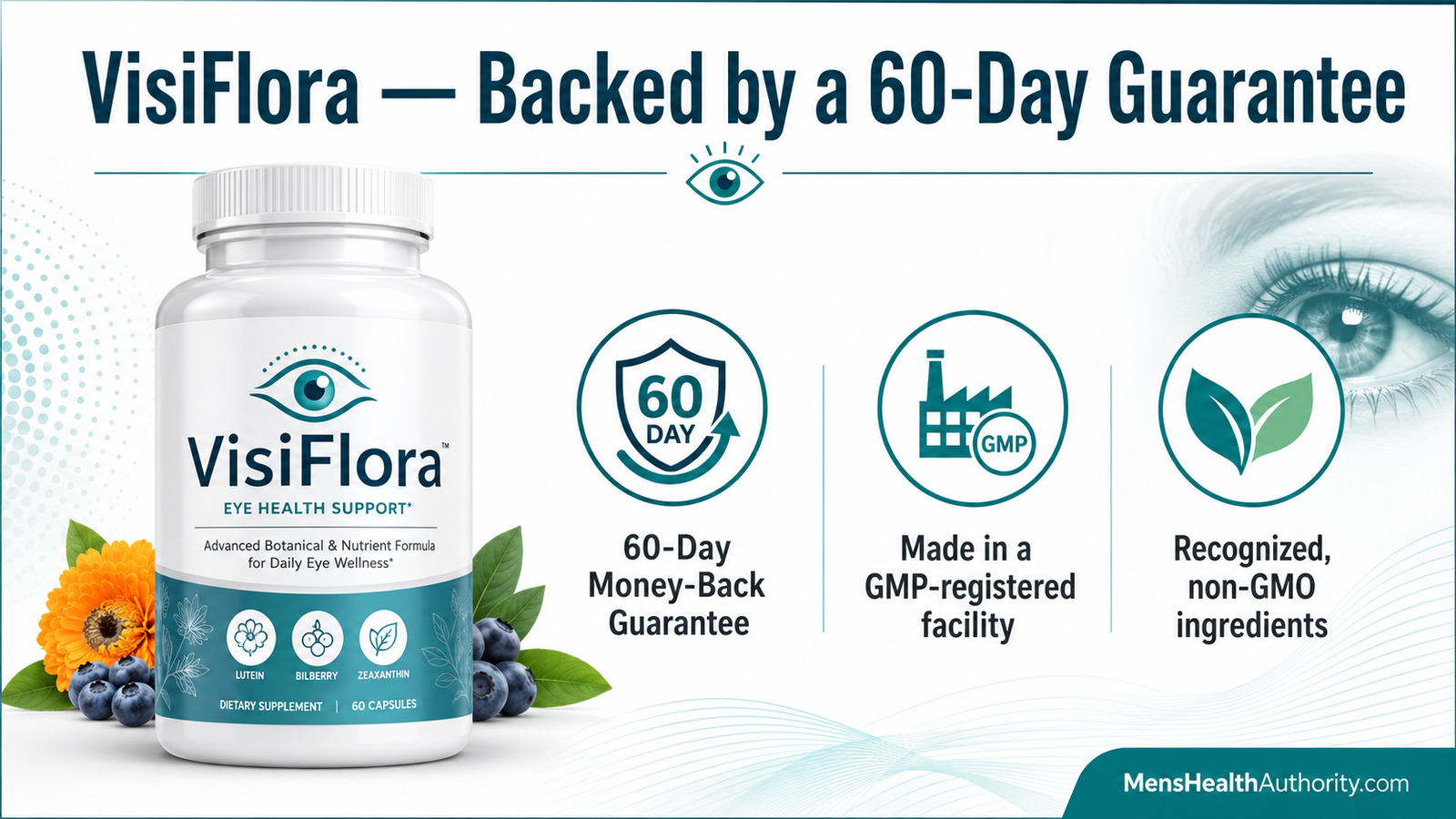
| Guarantee | 60-day money-back |
| Main safety flags | Beta carotene (smokers), Ginkgo (bleeding), Coleus (BP/rhythm), high-dose vitamin E |
| Best fit | Non-smoking adults not on anticoagulants/BP meds, cleared by clinician |
Read the Full VisiFlora Review →
2. Eye-Nutrient Safety: Evidence, Concerns & Trends
Eye-support supplements sit in an unusual regulatory space: some ingredients (lutein, zeaxanthin, zinc) have decades of NIH-funded evidence at defined doses, while others (saffron extract, coleus forskohlii) have smaller trials and less standardized dosing. The last two decades of research have also produced several important reversals — ingredients once considered safe or beneficial are now known to carry population-specific risks. Any honest safety review has to start here.
| Trend / Signal | What Changed | Source |
|---|---|---|
| AREDS2 removed beta carotene | The NIH updated its landmark eye-health formula in 2013, replacing beta carotene with lutein/zeaxanthin after safety concerns in smokers. | National Eye Institute AREDS/AREDS2 study page |
| ATBC (1994) & CARET (1996) trials | Two large randomized trials in smokers and asbestos-exposed workers found beta carotene supplementation increased lung cancer incidence. | NEJM 1994 (PMID 8127329); NEJM 1996 (PMID 8901853) |
| NCCIH ginkgo interactions | US National Center for Complementary and Integrative Health lists ginkgo biloba as a documented interaction risk with anticoagulants, antiplatelets, and some seizure medications. | NCCIH Ginkgo fact sheet |
| Selenium narrow safe range | NIH Office of Dietary Supplements sets an Upper Limit of 400 mcg/day. Stacking selenium-containing multivitamins with eye formulas can push intake into toxicity range (selenosis). | NIH ODS Selenium fact sheet |
Where VisiFlora Fits
VisiFlora’s formula is a common commercial choice: it front-loads carotenoids and antioxidants that most consumers recognize, but it does not follow the AREDS2 update — beta carotene is still included, and its amount is not disclosed. That is a legitimate concern for a meaningful slice of the addressable market (current and former smokers), and it is the single biggest reason we score this satellite review as Verify With Your Doctor rather than Recommended. For non-smoking adults with no relevant medications, the formula is on par with mid-tier competitors on safety; for smokers or medicated adults, the risk-adjusted picture is very different.
3. The Beta Carotene / Smoker Warning — Read This Section First
If you currently smoke, have smoked in the past 15 years, or have significant occupational asbestos exposure: do NOT begin VisiFlora without direct clearance from your physician. This is not a general “check with your doctor” boilerplate — it reflects two large randomized trials showing supplemental beta carotene increased lung cancer incidence in these populations.
The ATBC Trial (Finland, 1994)
The Alpha-Tocopherol, Beta-Carotene Cancer Prevention Study enrolled roughly 29,000 male smokers in Finland. Subjects were randomized to beta carotene (20 mg/day), alpha tocopherol (vitamin E), both, or placebo. After a median 6.1 years, the beta carotene group showed an 18% higher incidence of lung cancer compared to placebo, along with a higher rate of total mortality. The finding was unexpected, statistically robust, and published in the New England Journal of Medicine (PMID 8127329).
The CARET Trial (US, 1996)
The Beta-Carotene and Retinol Efficacy Trial enrolled roughly 18,000 US participants at high risk for lung cancer — current and former heavy smokers and workers with significant asbestos exposure. The intervention combined beta carotene (30 mg/day) with retinyl palmitate. CARET was stopped 21 months early because interim analysis showed a 28% higher lung cancer incidence and a 17% higher total mortality in the intervention arm. Results were published in NEJM (PMID 8901853).
Why AREDS2 Dropped Beta Carotene
When the National Eye Institute designed the AREDS2 trial (2006–2012) to refine its eye-health formula, the ATBC and CARET findings were sufficiently established that the study was designed to test lutein and zeaxanthin as beta carotene substitutes. The published AREDS2 formula that most reputable eye supplements now follow — and that is recommended for smokers — contains no beta carotene.
What This Means for VisiFlora
VisiFlora still includes beta carotene in its 21-ingredient formula and does not disclose the dose. Without a stated amount, we cannot tell readers whether the dose is well below the ATBC/CARET range (20–30 mg) or approaches it. In practical terms:
- Current smokers: Should not take VisiFlora. Ask for an AREDS2-formulated product (Preservision AREDS2, Ocuvite for smokers) instead.
- Former smokers within 15 years: Same caution — the CARET population included former smokers.
- Occupational asbestos exposure: Same caution.
- Never-smokers with no asbestos exposure: The trial evidence does not extend to your population, but you may still wish to ask your physician, particularly if you eat a carotenoid-rich diet.
4. Ingredient-by-Ingredient Safety Review (21 Actives)
VisiFlora discloses 21 active ingredients; only zinc’s amount (11 mg) is specified. The table below covers each ingredient’s most common effects at typical supplement doses, its rare but clinically important adverse events, and the populations that should be most cautious.
| Ingredient | Common effects | Rare but important | Who should watch out |
|---|---|---|---|
| Astaxanthin | Generally well tolerated; occasional GI upset | Slight BP lowering; hormone-modulating potential at high doses | Low-BP, hormonal cancers Low |
| Vitamin C | Mild GI, loose stools at >1 g | Kidney stones with high chronic doses | Kidney stone history Low |
| Vitamin E | Well tolerated at RDA | Additive bleeding risk with anticoagulants; higher hemorrhagic stroke risk at >400 IU/day | Anticoagulant users, pre-surgery Moderate |
| Copper | Well tolerated at RDA | GI upset, liver strain with excess | Wilson’s disease Low |
| Selenium | Well tolerated within RDA | Selenosis (hair loss, brittle nails, GI, neuro) if stacked past 400 mcg/day UL | Multi-supplement stackers Moderate |
| Chromium | Generally tolerated | Additive glucose-lowering with diabetes meds | Diabetics on medication Moderate |
| Grape Seed Extract | Occasional headache/GI | Additive bleeding risk with anticoagulants | Warfarin/DOAC users Moderate |
| Rutin | Generally well tolerated | Rare rash, headache | Flavonoid allergies Low |
| Quercetin | Generally well tolerated | CYP3A4/CYP2C8 liver enzyme inhibition — alters statin, cyclosporine, some cancer drug levels | Statin, cyclosporine users Moderate |
| Taurine | Well tolerated at supplement doses | Rare BP lowering | Low BP Low |
| Alpha Lipoic Acid | Occasional skin rash, GI | Additive hypoglycemia with insulin/oral diabetes meds; thiamine depletion long-term | Diabetics on medication Moderate |
| Ginkgo Biloba | Occasional headache, mild GI | Significantly increased bleeding risk with anticoagulants/antiplatelets; may lower seizure threshold | Warfarin, DOACs, aspirin, seizure Rx High |
| Coleus Forskohlii | Occasional loose stools, restlessness | Lowers BP; can potentiate antihypertensives; theoretical arrhythmia risk in cardiac patients | BP meds, cardiac arrhythmia High |
| Eyebright | Generally well tolerated | Rare allergic reactions | Asteraceae family allergies Low |
| Vitamin A (Beta Carotene) | Well tolerated in non-smokers | Increased lung cancer incidence in smokers/former smokers (ATBC, CARET); orange skin (carotenodermia) at high intake | Smokers, former smokers, asbestos exposure High |
| Lutein | Excellent tolerance profile | Very rare skin yellowing at extreme doses | No major flag Low |
| Zeaxanthin | Excellent tolerance profile | Very rare skin yellowing at extreme doses | No major flag Low |
| Zinc (11 mg) | Mild GI, metallic taste if empty stomach | Copper depletion at >40 mg/day chronic; immune suppression at very high doses | Copper-deficiency risk Low |
| Bilberry Extract | Generally well tolerated | Theoretical additive bleeding with anticoagulants; may lower blood sugar | Anticoagulant, diabetes Rx Moderate |
| Lycopene | Well tolerated; occasional loose stool | Slight BP lowering at high chronic intake | Low BP Low |
| Saffron Extract | Well tolerated at eye-health doses (20–30 mg) | At >1.5 g/day: dizziness, mood changes; potentiates antidepressants (theoretical) | SSRI/MAOI users Low |
Read the Full VisiFlora Review →
5. Who Should NOT Take VisiFlora
- A current smoker, former smoker within the last 15 years, or have significant asbestos exposure — beta carotene concern (see Section 3). Ask for an AREDS2 formula instead.
- Taking an anticoagulant or antiplatelet (warfarin, apixaban, rivaroxaban, dabigatran, edoxaban, clopidogrel, daily aspirin) — ginkgo + grape seed + vitamin E stack bleeding risk.
- Taking blood pressure or antiarrhythmic medication — coleus forskohlii is BP-lowering and has theoretical cardiac rhythm effects.
- Taking insulin or oral diabetes medication — alpha lipoic acid + chromium + quercetin can additively lower blood sugar.
- Pregnant, planning pregnancy, or breastfeeding — formula not evaluated for these populations; beta carotene + vitamin A intake warrants medical guidance.
- Scheduled for surgery within 2 weeks — stop ginkgo, grape seed, vitamin E, and bilberry at least 14 days pre-op to reduce bleeding risk.
- Already taking a selenium-containing multivitamin or other supplement stack — risk of exceeding 400 mcg/day selenium Upper Limit (selenosis).
- Taking a statin, cyclosporine, or medication metabolized by CYP3A4/CYP2C8 — quercetin can alter drug levels.
- On SSRIs/MAOIs at high doses — saffron interaction is theoretical but warrants a conversation with your prescriber.
6. Drug Interactions to Know
| Medication class | VisiFlora ingredient(s) | What can happen | Action |
|---|---|---|---|
| Anticoagulants / antiplatelets (warfarin, DOACs, aspirin, clopidogrel) | Ginkgo biloba, grape seed extract, vitamin E, bilberry | Additive bleeding risk; documented case reports of bleeding events with ginkgo + warfarin | Do not combine without hematologist/prescriber approval; monitor INR closely if warfarin |
| Antihypertensives (ACE inhibitors, ARBs, beta blockers, CCBs, diuretics) | Coleus forskohlii, taurine, lycopene | Additive BP lowering — risk of hypotension, dizziness, falls | Monitor BP after starting; adjust with prescriber |
| Diabetes medications (insulin, metformin, sulfonylureas, GLP-1 agonists) | Alpha lipoic acid, chromium, quercetin, bilberry | Additive hypoglycemia — low blood sugar episodes | Monitor glucose more frequently first 4 weeks; adjust medication with prescriber |
| Statins (atorvastatin, simvastatin, rosuvastatin) & other CYP3A4/CYP2C8 drugs | Quercetin | Altered drug metabolism — higher statin blood levels, muscle side effects | Discuss with prescriber; consider spacing dosing or alternative |
| Thyroid medications (levothyroxine) | Selenium; and general mineral absorption issues | Selenium at excess intake can affect thyroid hormone conversion; minerals can bind levothyroxine | Take VisiFlora at least 4 hours apart from levothyroxine; do not exceed selenium UL |
| Iron supplements (ferrous sulfate/gluconate) | Tannins in botanicals (grape seed, bilberry, eyebright) | Reduced iron absorption | Take iron and VisiFlora at least 2 hours apart |
7. Timeline: When Side Effects Usually Appear
| Timeframe | What is normal | What is a red flag |
|---|---|---|
| Week 1 (Days 1–7) | Mild GI upset if taken on empty stomach — take with food. Occasional mild headache. | Persistent nausea, allergic reaction (rash, swelling, breathing changes), unusual bruising or bleeding — stop immediately. |
| Weeks 2–4 | Body typically adapts. Rarely, slight orange/yellow tint to palms/soles from beta carotene (carotenodermia) — harmless if isolated. | Yellow eyes (jaundice — NOT carotenodermia), any bleeding gums/nosebleeds, dizziness on standing (BP-drop), hypoglycemia symptoms in diabetics. |
| Long-term (3+ months) | Accumulating carotenoids are expected; lutein/zeaxanthin uptake to macula is the intended effect. | Anyone in a smoker cohort should monitor for respiratory symptoms and follow their physician’s lung-cancer screening schedule strictly; do not rely on supplement “safety” claims. |
| Stop and seek medical care if… | — | Bleeding, chest pain, severe headache, jaundice, allergic reaction, uncontrolled BP swings, hypoglycemia, or ANY concerning new symptom. |
8. What to Do If Side Effects Appear
- Stop the supplement. Do not continue “to see if it passes” for anything beyond mild first-week GI. Beta carotene, ginkgo, and coleus effects can build silently.
- Document what happened. Write down the symptom, date started, current medications, and time from last dose. This information is what your physician needs.
- Contact your physician or pharmacist the same day for anything beyond mild GI. For bleeding, chest pain, jaundice, severe headache, or allergic reaction, seek urgent care immediately — do not wait for an appointment.
- Report to FDA MedWatch at safetyreporting.hhs.gov for any serious adverse event. Supplement adverse events are chronically under-reported; your report helps the safety signal for future consumers.
- Request a refund under the 60-day guarantee. Side-effect returns are covered under the standard money-back window — keep the bottle and receipt, contact ClickBank customer support, and initiate the refund promptly (see FAQ #6).
9. How VisiFlora’s Safety Profile Compares
| Product | Beta carotene? | Smoker-safe? | Formula complexity | Guarantee |
|---|---|---|---|---|
| VisiFlora | Yes (dose undisclosed) | No Physician clearance required for smokers/former smokers | 21-ingredient blend, most doses undisclosed | 60 days |
| Preservision AREDS2 | No (removed post-CARET) | Yes Formulated specifically as smoker-safe | 5 ingredients at disclosed NIH-trial doses | Retailer-dependent |
| Ocuvite Adult 50+ | No | Yes | Simpler single-mechanism formula (lutein/zeaxanthin + antioxidants) | Retailer-dependent |
Honest read: On safety alone for smokers/former smokers, an AREDS2-formulated product beats VisiFlora because the beta carotene question is settled. For non-smokers with no relevant medications, VisiFlora’s broader antioxidant profile (astaxanthin, saffron, taurine, ALA) adds mechanisms that Preservision does not — but those mechanisms carry the interaction flags detailed in Section 6. Match the product to the person.
10. Frequently Asked Questions
AstaxanthinVitamin CVitamin ECopperSeleniumChromiumGrape SeedRutinQuercetinTaurineAlpha Lipoic AcidGinkgo BilobaColeus ForskohliiEyebrightBeta CaroteneLuteinZeaxanthinZinc 11mgBilberryLycopeneSaffron
Non-smoking adultsMacular supportAntioxidant profileEye strain (screens)
1 capsule daily with food
Research & Transparency
This safety review draws on peer-reviewed randomized trials and US government health-agency guidance. Primary citations:
- The Alpha-Tocopherol, Beta Carotene Cancer Prevention Study Group. “The effect of vitamin E and beta carotene on the incidence of lung cancer and other cancers in male smokers.” New England Journal of Medicine, 1994. PubMed ID 8127329.
- Omenn GS, Goodman GE, Thornquist MD, et al. “Effects of a combination of beta carotene and vitamin A on lung cancer and cardiovascular disease” (CARET trial). New England Journal of Medicine, 1996. PubMed ID 8901853.
- National Eye Institute. “Age-Related Eye Disease Studies (AREDS/AREDS2).” nei.nih.gov — primary source for the AREDS2 formula reformulation and the removal of beta carotene.
- National Center for Complementary and Integrative Health (NCCIH). “Ginkgo.” nccih.nih.gov — documented interaction profile with anticoagulants, antiplatelets, and seizure medications.
- NIH Office of Dietary Supplements. “Selenium — Health Professional Fact Sheet.” ods.od.nih.gov — Upper Limit (400 mcg/day) and selenosis clinical presentation.
This review does not constitute medical advice. Consult a qualified healthcare professional before beginning any supplement, particularly if you take prescription medication, have a chronic condition, are pregnant or breastfeeding, or have a smoking history.