
What’s in this guide
- Quick Answer: What Are Prime Biome’s Side Effects?
- Probiotic & Botanical Safety: Evidence, Concerns & Trends
- What Real Users Report
- Ingredient-by-Ingredient Safety Review
- Who Should NOT Take Prime Biome
- Drug Interactions to Know
- Results Timeline: When Side Effects Appear (and Fade)
- What to Do If Side Effects Appear
- How Prime Biome’s Safety Profile Compares
- FAQs
1. Quick Answer: What Are Prime Biome’s Side Effects?
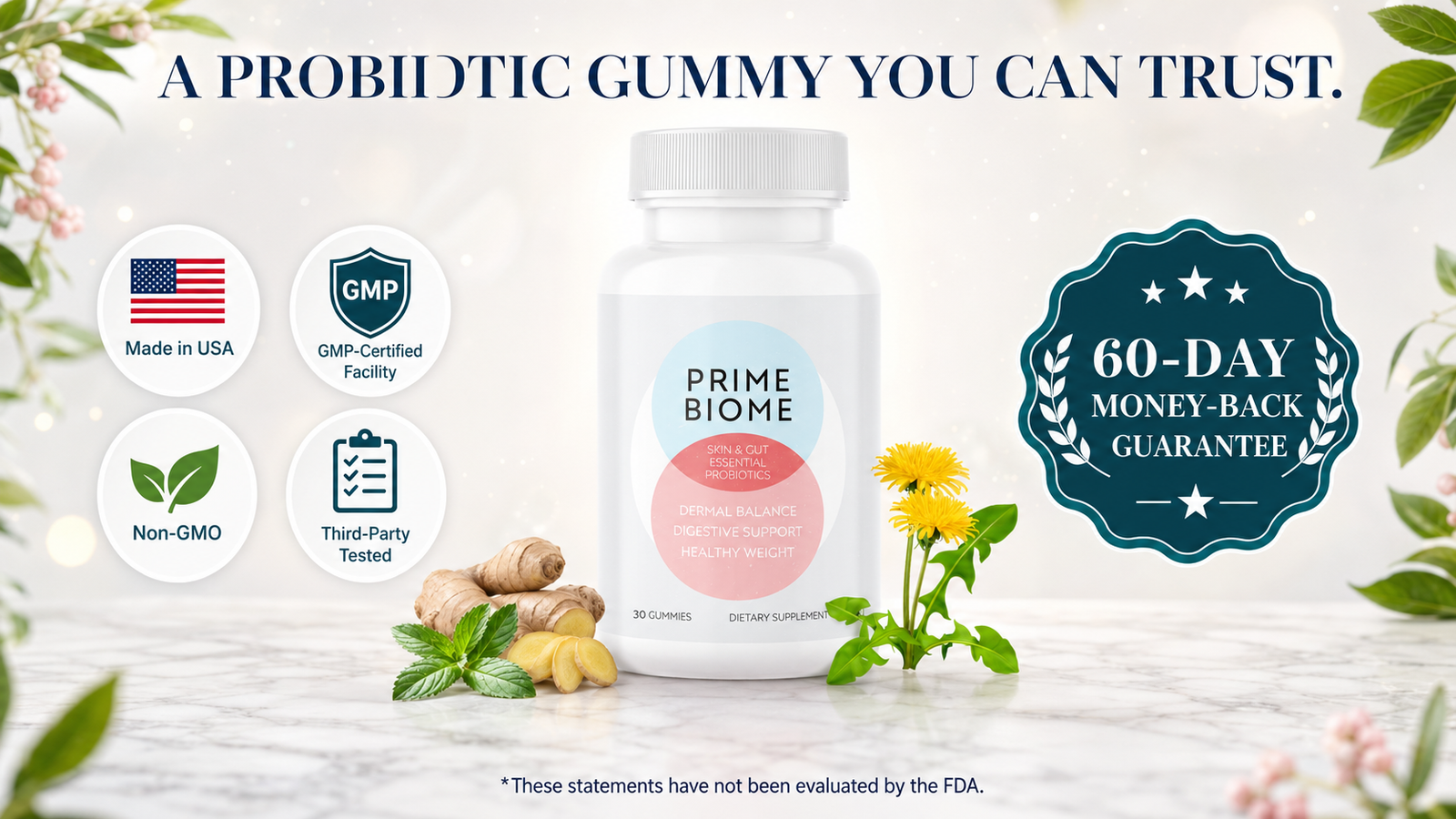
Prime Biome is a chewable probiotic-and-botanical gummy aimed at gut and skin health. For most healthy adults, the most common side effects are mild and short-lived: gas, bloating, loose stools, or minor stomach cramping during the first one to two weeks as your microbiome adjusts to the added Bacillus coagulans and the inulin prebiotic fiber. These typically fade on their own.
The more important cautions are less common but need honest attention: fenugreek can lower blood sugar in people on diabetes medication, slippery elm can delay absorption of other medications, and Babchi (Psoralea corylifolia) has isolated case reports of liver injury when used orally in concentrated preparations. Probiotic supplements also carry a rare but real infection risk for people who are severely immunocompromised. Pregnancy, breastfeeding, and use in children have not been established. If you have any of these situations, talk to your doctor first — and read the ingredient-by-ingredient section below before you start.
Product at a Glance
- Product
- Prime Biome probiotic gummy
- Category
- Gut + skin support
- Ingredients
- 10 (probiotic + botanical blend, amounts undisclosed)
- Common effects
- Mild gas/bloating (weeks 1–2)
- Rare effects
- Allergic reaction, hypoglycemia (with meds), infection (immunocompromised)
- Guarantee
- 60-day money-back through ClickBank
- Editorial rating
- 4.5 / 5 — Recommended with cautions
Check Current Availability & Guarantee
60-day money-back through ClickBank — official source only.
Read the Full Prime Biome Review →
Affiliate link. We may earn a commission at no extra cost to you.
← Back to the full Prime Biome review hub
2. Probiotic & Botanical Safety: Evidence, Concerns & Trends
Probiotic and botanical supplements are broadly popular and, for healthy adults, broadly well tolerated. But the safety literature is not uniform, and Prime Biome’s blend crosses two categories — live probiotics and multiple herbal actives — so we looked at where the strongest signals sit.
| Source | What it covers | Relevance to Prime Biome |
|---|---|---|
| NIH ODS — Probiotics | Reviews probiotic safety across healthy and clinical populations | Notes rare bacteremia/fungemia in severely immunocompromised patients — a clear contraindication. |
| NCCIH — Herbs at a Glance / Herb-Drug Interactions | Documents interactions and precautions for common botanicals | Fenugreek, dandelion, and ginger all have documented interaction profiles worth knowing. |
| FDA CFSAN Adverse Event Reporting (CAERS) | Voluntary and mandatory adverse-event reports for dietary supplements | Confirms that GI upset dominates supplement reports; serious events are rare but do occur. |
| LiverTox (NIH LiverTox database) | Case-report and mechanism data on drug- and supplement-related liver injury | Includes a Psoralea corylifolia (Babchi) entry with case reports of hepatotoxicity from oral use. |
Where Prime Biome fits
Prime Biome uses a small probiotic dose (Bacillus coagulans, which is spore-forming and unusually shelf-stable) plus botanical extracts at unspecified amounts. That undisclosed dosing is the biggest transparency gap. For the vast majority of healthy adults, the ingredients on the label have long histories of safe use at food-level exposures. The concerns are specific: severely immunocompromised users, people on diabetes drugs, people on time-sensitive oral medications, pregnant or breastfeeding people, and anyone with a history of liver issues who might be sensitive to concentrated Babchi. Prime Biome is not a high-risk formula — it just isn’t a zero-risk one, and no supplement should be sold as if it were.
3. What Real Users Report
Across reviews, forum threads, and returned-product feedback, the pattern is consistent: most people report either nothing at all or a short bloating/gas phase in the first week that resolves. A smaller group reports loose stools or mild cramping, again usually fading. Reports of anything serious — allergic reactions, persistent pain, unusual fatigue — are uncommon, but they exist, which is why we take the “who should not take this” section seriously.
Common (mild, self-resolving)
- Gas and bloating in the first 7–14 days
- Loose stools or slight change in bowel habits
- Mild abdominal cramping after the first dose or two
- Occasional mild headache in the first days (usually reported alongside dietary change)
Uncommon or rare (stop and reassess)
- Rash, hives, itching, or swelling — possible allergic response to a botanical or gummy base ingredient
- Persistent diarrhea or severe cramping beyond week 2
- Unusual fatigue, dark urine, yellowing of skin/eyes — stop immediately and contact a doctor (possible liver signal)
- Hypoglycemia symptoms (shakiness, sweating, confusion) in people on diabetes medication
4. Ingredient-by-Ingredient Safety Review
Prime Biome’s label lists ten ingredients. Amounts are undisclosed, which is common for proprietary blends but limits how precise any safety statement can be. Here is what the published safety literature says about each at typical supplement exposures.
| Ingredient | Common effects | Rare but important | Who should watch out |
|---|---|---|---|
| Bacillus coagulans Common | Mild gas, bloating first week | Rare bacteremia in severely immunocompromised | Anyone on chemotherapy, post-transplant, or with central venous catheters |
| Babchi (Psoralea corylifolia) Serious | Generally none at food levels | Case reports of hepatotoxicity from concentrated oral use (LiverTox) | Existing liver disease, other hepatotoxic meds, heavy alcohol use |
| Dandelion Common | Mild diuretic effect, upset stomach | Allergic reaction in ragweed-family sensitivity | Ragweed/daisy/marigold allergy; potassium-affecting meds |
| Fennel Common | Well tolerated; mild GI | Rare allergic reaction; estrogenic activity at high dose | Hormone-sensitive conditions if used long-term at high doses |
| Inulin Common | Gas, bloating, borborygmi first 1–2 weeks | Severe GI distress in IBS, SIBO, or FODMAP-sensitive people | IBS, SIBO, active gut inflammation |
| Fenugreek Uncommon | Maple-syrup body odor, mild GI | Hypoglycemia; uterine stimulation (pregnancy) | Diabetes medication, pregnancy, hormone-sensitive conditions |
| Lemon Balm Common | Mild drowsiness in sensitive people | Additive sedation with sleep meds; thyroid effects (theoretical) | Sleep-medication users, thyroid conditions |
| Ceylon Ginger Common | Mild heartburn possible | Mild blood-thinning at high doses | Blood thinners (warfarin), pre-surgery period |
| Lion’s Mane Common | Well tolerated | Rare mushroom allergy; itching/rash reported occasionally | Mushroom allergy history |
| Slippery Elm Bark Uncommon | Well tolerated | Coats the GI tract — can delay drug absorption | Anyone on time-sensitive oral medications; take 2+ hours apart |
5. Who Should NOT Take Prime Biome
Skip Prime Biome or consult a doctor first if any of these apply:
- Immunocompromised — active chemotherapy, post-organ-transplant, HIV with low CD4, severe untreated diabetes, or a central venous catheter. Live probiotics have documented (rare) infection risk in this group.
- On diabetes medication (insulin, sulfonylureas, metformin at tight control) — fenugreek can add to blood-sugar lowering.
- Pregnant or breastfeeding — safety not established for this formula. Fenugreek and Babchi are specifically flagged as not recommended.
- Known Babchi / psoralea sensitivity or prior photosensitivity reaction to psoralen-containing plants.
- Dairy, gelatin, pectin, or gummy-base allergies — check the current label for the gummy formulation before ordering.
- Ragweed-family allergies (ragweed, daisy, marigold, chrysanthemum) — dandelion is in the same botanical family.
- Taking medication that requires precise absorption timing (thyroid medication, some antibiotics, some cardiac drugs) — slippery elm can delay absorption.
- History of liver disease or currently taking hepatotoxic medications — the Babchi entry in LiverTox makes this a real consideration.
- Children under 18 — not studied in this population.
6. Drug Interactions to Know
Interactions with Prime Biome fall into four practical categories. None are a certainty; all are worth a pharmacist check if any apply to you.
| Combination | Concern | Mechanism & what to do |
|---|---|---|
| Fenugreek + diabetes medication (insulin, sulfonylureas) | Hypoglycemia risk | Fenugreek independently lowers blood glucose. Combined with medications that do the same, blood sugar can drop too far. Monitor closely; do not start without discussing with your prescriber. |
| Slippery Elm + any oral medication | Absorption delay | Slippery elm forms a mucilage that coats the GI lining. It can bind or slow absorption of other oral drugs. Take Prime Biome at least 2 hours away from prescription medications. |
| Probiotic (B. coagulans) + antibiotics | Timing issue | Antibiotics kill the probiotic bacteria you just took. Take the probiotic at least 2–3 hours away from the antibiotic dose. Continuing during a course of antibiotics is often reasonable but check with your prescriber. |
| Babchi + hepatotoxic drugs / alcohol | Additive liver strain | Case reports link concentrated Babchi to hepatotoxicity. Combined with acetaminophen at high doses, statins in some users, isoniazid, methotrexate, or heavy alcohol use, the liver has less margin. Talk to your doctor first. |
Try Prime Biome Backed by the 60-Day Guarantee
Reviewed on the official page, shipped through ClickBank — not resellers.
Read the Full Prime Biome Review →
Affiliate disclosure: link may earn us a commission. Your price does not change.
7. Results Timeline: When Side Effects Usually Appear (and Fade)
| Timeframe | What’s typical | What’s a red flag |
|---|---|---|
| Week 1 | Mild gas, bloating, occasional loose stool — your gut is adjusting to inulin prebiotic and the added probiotic. Usually manageable, sometimes not noticed at all. | Severe abdominal pain, rash, hives, vomiting, breathing difficulty — stop immediately. |
| Week 2 | Adjustment phase usually resolves. Bowel habits normalize; skin/gut benefits (if any) start to appear. | GI symptoms getting worse rather than better — stop and reassess. |
| Week 3–4 | Persistent effects are uncommon. Most users either feel a benefit or feel neutral. | Ongoing bloating, cramping, or discomfort beyond week 2 is not “normal adjustment” — reassess ingredients against your history. |
| Any time | Nothing dramatic should happen after week 2. | Yellowing of eyes/skin, dark urine, right-upper-quadrant pain, unexplained fatigue — stop, seek medical attention (possible liver signal). |
| When to stop entirely | — | Severe abdominal pain, allergic reaction (rash/hives/swelling), signs of liver issue, or hypoglycemia symptoms. |
8. What to Do If Side Effects Appear
A calm, ordered response beats guessing. Here is the five-step protocol we recommend.
- Stop the product. Don’t try to “push through” a reaction, especially anything skin-, breathing-, or liver-related. Stopping is free and it lets you tell whether the symptom actually tracks with Prime Biome.
- Note timing and severity. Write down when the dose was taken, when the symptom appeared, what you felt, and how long it lasted. This is what a pharmacist or doctor will ask you first.
- Take the label to a pharmacist for a medication check. Pharmacists are the best free resource for supplement-drug interactions. Bring the actual label, not a screenshot without the ingredient panel.
- See a doctor for anything beyond mild GI. Rash that spreads, breathing difficulty, jaundice, persistent pain, or hypoglycemia symptoms are all doctor visits, not internet searches.
- Use the 60-day guarantee. If you decide Prime Biome isn’t for you — for any reason, including side effects — you can request a refund through ClickBank within 60 days of purchase. Keep your order confirmation email; it’s what the refund process needs.
9. How Prime Biome’s Safety Profile Compares
| Product | Category | Common side effects | Notable safety flags |
|---|---|---|---|
| Prime Biome | Probiotic + botanical gummy (gut + skin) | Gas, bloating, mild GI (weeks 1–2) | Fenugreek/diabetes; Babchi/liver; slippery elm/absorption; immunocompromised caution |
| ProDentim | Oral probiotic lozenge | Very few; occasional mouth tingling | Gentler profile — oral cavity only, no gut fermentation load. Same immunocompromised caution applies. |
| Colon Broom | Psyllium fiber powder | Gas, bloating, cramping (fiber adjustment) | Fewer interaction concerns; simpler formula. Watch fluid intake; can bind medications if taken together. |
In short: Prime Biome has more botanical actives than either comparator, which means more potential upside but also more surface area for interactions. The right choice depends on what problem you’re actually trying to solve and what medications you take.
10. Frequently Asked Questions
Is Prime Biome safe to take daily?
For most healthy adults, yes — that’s how it’s designed to be used. The label direction is one to two gummies daily. If you have any of the conditions listed in Section 5, “daily” is not the right question — “at all” is, and that’s a doctor conversation first.
Can Prime Biome cause bloating?
Yes, temporarily. The inulin prebiotic fiber and the added Bacillus coagulans will change how gas is produced in your gut for the first one to two weeks. This almost always settles. If it does not settle by day 14, or gets worse, stop and reassess.
Can I take Prime Biome with medication?
Sometimes, with care. Take it at least two hours apart from any oral prescription (slippery elm can delay absorption). Do not combine with diabetes medication without prescriber guidance (fenugreek + insulin/sulfonylureas can drop blood sugar). Ask your pharmacist for a specific check based on your medication list — it’s a free 5-minute conversation and it’s what they’re trained to do.
Are there long-term risks?
The individual ingredients have long histories of food-level or supplement-level use. The main long-term concern is around concentrated Babchi and liver stress, particularly in people with existing liver issues or on hepatotoxic medications. There is no evidence of long-term harm at typical use, but there is also not multi-year randomized data on this specific blend.
What if I have a probiotic allergy?
True allergies to probiotic species are extremely rare, but sensitivities to the gummy base (gelatin, pectin, colorings, natural flavors) are not. If you have a history of reacting to gummy vitamins or to any of the botanicals on the label, don’t take Prime Biome. If you react and don’t know why, stop, take the label to your doctor, and request the 60-day refund.
How does the 60-day guarantee help with side effects?
The 60-day money-back guarantee through ClickBank gives you two months to try Prime Biome and decide. If you experience side effects that don’t resolve, or you simply decide it isn’t the right fit, you can request a refund. Keep your ClickBank order confirmation email — that’s what the refund process uses. Refunds go through ClickBank’s customer support, not the product website.
Ready to Try Prime Biome With the Full Guarantee?
Buy through the official page to keep the 60-day ClickBank refund policy in effect.
Read the Full Prime Biome Review →
Affiliate link · 60-day money-back · ships through ClickBank
Want the full breakdown, not just side effects?
Ingredients, results timeline, dosing, pricing, and our full 4.5/5 verdict live on the main review page.
Ingredients covered
Bacillus coagulansBabchi (Psoralea corylifolia)DandelionFennelInulinFenugreekLemon BalmCeylon GingerLion’s ManeSlippery Elm Bark
Best for
Gut balanceSkin supportDaily digestionProbiotic beginners
Format
Chewable gummyOnce-dailyNon-refrigerated
Research & Transparency
This article’s safety statements are grounded in the following authoritative sources. We link concepts, not affiliate links.
- NIH Office of Dietary Supplements — Probiotics Fact Sheet. Overview of probiotic safety, including rare infection risk in severely immunocompromised populations.
- NCCIH — Herb-Drug Interactions and Herbs at a Glance. Documented interactions for fenugreek, ginger, dandelion, and other common botanicals.
- FDA CFSAN Adverse Event Reporting System (CAERS). Public database of adverse-event reports for dietary supplements.
- LiverTox (NIH) — Psoralea corylifolia (Babchi / Bakuchi) entry. Case-report and mechanism data on hepatotoxicity associated with concentrated oral use.
- NCCIH — Fenugreek. Interaction and safety profile, including blood-sugar effects and pregnancy caution.