
Tongkat Ali: What the Science Actually Says (2026)
Tongkat Ali (Eurycoma longifolia) has gone from Southeast Asian traditional remedy to the most name-dropped botanical in men’s health podcasting — usually with claims inflating faster than the evidence. The plant is genuinely interesting: unlike most “T-booster” ingredients, it has real human trials showing real effects. It is also routinely oversold, underdosed, and adulterated in the marketplace.
This guide covers what the human research actually shows, the doses that produced it, who responds best, and the label details that separate legitimate extract from expensive sawdust.
What Tongkat Ali Is — and Why It Might Work
Tongkat Ali is a Malaysian and Indonesian root whose bioactive compounds (notably eurycomanone and related quassinoids) appear to work upstream of testosterone production: supporting luteinising-hormone signalling and reducing the binding of testosterone to SHBG, which raises the free, usable fraction. It also moderates cortisol — and since cortisol and testosterone sit on opposing ends of a metabolic see-saw, stress reduction alone accounts for part of its measured effect. That mechanism profile explains its trial pattern: strongest results in stressed, older, or low-baseline men; muted results in healthy 25-year-olds who had nothing to correct.
The Human Evidence, Honestly Graded
Across the published human trials: testosterone improvements in the modest-but-real range (commonly 10–15% in responsive groups, larger in some stressed cohorts), improved stress-hormone profiles and mood scores, and consistent libido effects. Sperm-quality parameters improved in fertility-focused studies. What the evidence does not show: TRT-scale changes, effects in a week (most trials run 4–12 weeks), or muscle gain without training. The research base is dozens of small trials rather than one landmark RCT — enough for “moderate evidence, honest expectations”, not enough for the messianic podcast version.
Dosing: What the Trials Used
The studied range is 200–400mg daily of standardised extract (commonly 100:1 root extract, with quality products standardised for eurycomanone content). Higher is not better — 600mg+ adds side-effect risk (restlessness, insomnia in sensitive users, mild irritability) without documented benefit. Timing: morning dosing suits most men given the mild stimulating quality some report. Cycling (e.g. 5 days on/2 off) is popular practice without strong trial backing either way.
Safety and Side Effects
Tongkat Ali tests well for tolerability in trials at studied doses. The practical cautions: it can amplify restlessness in anxious or stimulant-sensitive users, it interacts with the same hormonal terrain as prescription hormone therapy (doctor conversation if you are on TRT or hormone-sensitive treatment), and its bitter compounds are hard on some stomachs when taken fasted. The bigger real-world safety issue is adulteration — Tongkat Ali is expensive to grow and harvest, making it one of the most-faked botanicals in the supply chain. Third-party-tested, standardised extracts from established brands are not optional here.
How to Actually Buy It (Without Getting Burned)
The label checklist: named extract ratio (100:1 or 200:1), standardisation percentage for eurycomanone, disclosed milligrams (200–400mg), and third-party testing claims you can verify. Skip: proprietary blends, “wild-harvested” romance with no numbers, and anything bundling it with 15 dusted ingredients. The formulas worth considering use Tongkat Ali as the lead ingredient alongside zinc, maca and ginseng, which cover pathways it does not: sleep and stress first, energy and drive from week 3–4, consolidating through week 8 in men over 40.
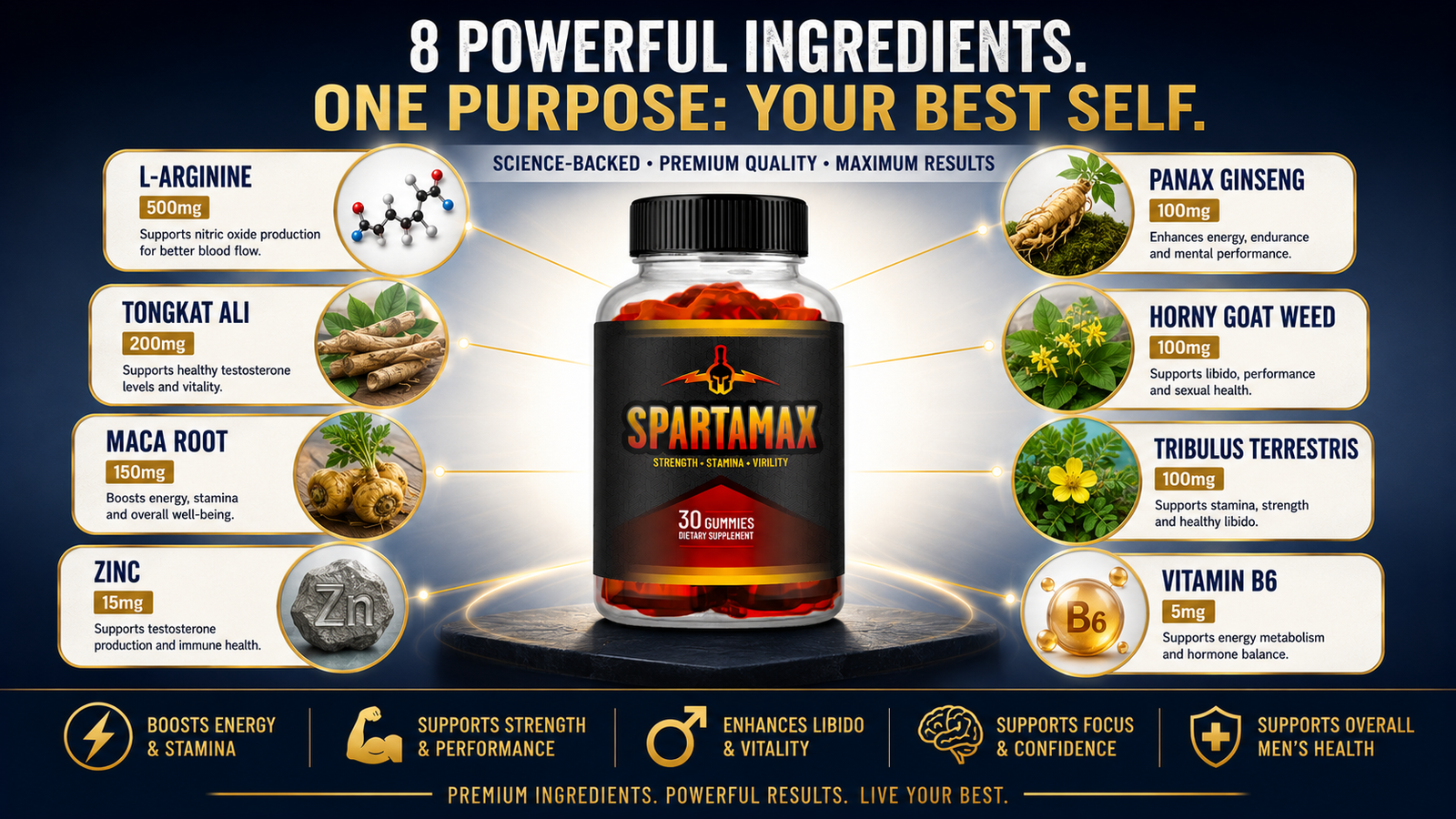
Our Tongkat-Led Pick: Spartamax
Tongkat Ali with the supporting cast the published research suggests, at doses printed on the label.
The Extract-Ratio Shell Game
The “200:1” on Tongkat labels deserves its own consumer-protection section, because the number has been marketed into meaninglessness. In principle the ratio describes concentration — kilograms of root per kilogram of extract. In practice, water-extraction ratios are trivially inflatable, the number says nothing about the compounds that matter, and marketplace testing has repeatedly found “200:1” products with negligible eurycomanone content — the bioactive that legitimate research standardises against. A high ratio of a poorly-made extract is concentrated nothing.
What actually predicts quality: standardisation percentage (legitimate products state eurycomanone content, typically 1–5%… or cite the specific patented extracts used in published trials), third-party certificates verifiable beyond a badge graphic, and country-of-origin transparency — genuine Eurycoma longifolia root from Malaysia/Indonesia has real cost, which is why $11 bottles are answering a question nobody asked. The heuristic that survives every market cycle: buy the standardisation, ignore the ratio. A disclosed 2% eurycomanone at 300mg tells you exactly what you are dosing; “500:1 MEGA EXTRACT” tells you the marketing budget.
Tongkat for Stress and Mood: The Underrated Second Act
The testosterone framing undersells what may be Tongkat’s most consistent trial result: the stress-axis effects. Human studies in stressed adults show meaningful reductions in cortisol alongside improvements in tension, anger and confusion scores — effects that arrive earlier than hormonal shifts and reach beyond the gym demographic. The mechanism connects both stories: chronic stress suppresses the hypothalamic signalling that orders testosterone production, so a botanical that moderates the stress response indirectly frees hormonal output. Tongkat is best understood as working this upstream position rather than acting like plant TRT.
Practically, this explains the response pattern reported in the trials: the stress and mood measures move earliest, with anything hormonal being slower, smaller and less consistent. It also identifies the strongest responder profile: the chronically stressed, under-slept over-40 man — precisely the person whose cortisol is taxing his testosterone hardest. A calm, well-rested 30-year-old has little for Tongkat to fix; a fried 48-year-old is the trial demographic where the literature’s best numbers were produced.
Stacking Tongkat: What Pairs and What Duplicates
Tongkat plays well with specific companions because they cover the pathways it does not. Zinc is the rational first pairing — deficiency is common in older men and directly caps testosterone synthesis; correcting it removes a floor problem Tongkat cannot touch. Maca adds the libido lane (its trials show drive improvements without moving testosterone — complementary, not redundant). Panax ginseng contributes energy and erectile-quality evidence via circulation mechanisms — the reason it shows up in both our testosterone and NO coverage. Ashwagandha overlaps most with Tongkat’s stress mechanism; stacking both is defensible for the severely fried, redundant for most.
What not to stack: multiple bitter-herb “T-formulas” simultaneously (dose stacking without evidence stacking), Tribulus (repeatedly trial-failed — its presence in a formula signals legacy marketing rather than literature reading), and anything alongside prescription hormone therapy without medical sign-off. The combined-formula logic our tested pick follows — Tongkat lead, zinc floor-fix, maca libido lane, ginseng circulation — is the version of stacking the evidence actually supports, in one serving instead of four bottles.
An 8-Week Tongkat Self-Trial, Properly Run
Week 0: baseline — seven days of 1–10 scores on morning energy, drive, stress reactivity and sleep quality; a morning blood test if you want the gold-standard version. Weeks 1–2: 200mg standardised extract, mornings; watch sleep and stress scores first — these moved earliest in the published trials. Weeks 3–5: the primary window; energy and drive scores trend now in responders, and dose can step to 400mg if effects are absent but tolerance is clean. Weeks 6–8: consolidation and verdict against baseline numbers. Non-responders by week 8 are true non-responders — individual variation is real, roughly a quarter of any cohort, and more weeks rarely convert them.
Log honestly, because Tongkat’s effects sit exactly at the magnitude where self-deception operates: real but subtle. The trap to avoid is the restlessness signal — if 400mg brings irritability or sleep disruption, drop back rather than pushing through; the studied range exists because more was not better. And run the trial inside a guarantee window, which converts the whole exercise from gamble to experiment.
Tongkat and Fertility: The Original Use Case
Before the podcast era adopted it, Tongkat’s research base grew substantially from fertility clinics — and that literature remains some of its strongest. Studies in men with idiopathic infertility reported improvements in sperm concentration, motility and morphology over multi-month protocols, consistent with the compound’s upstream support of the hormonal signalling that governs sperm production. For couples in the trying phase, this positions Tongkat differently than TRT — which suppresses fertility by shutting down natural signalling — and it is one of the few “T-adjacent” interventions a fertility-focused man can consider without working against his goal.
The realistic frame still applies: effect sizes are supplement-scale, protocols ran 3+ months (sperm production cycles take ~74 days, so nothing meaningful happens faster), and genuine fertility workups — semen analysis, varicocele screening, partner factors — precede any botanical experiment. But as a documented secondary benefit riding along with the energy and stress effects, it rounds out the honest picture of what this root actually does: broad, modest, upstream support of the male hormonal axis rather than any single dramatic lever.
Frequently Asked Questions
Can I take Tongkat Ali every day long term?
Human trials ran continuous daily use for up to several months with clean tolerability at 200–400mg. Long-term data beyond that is thin — a reasonable practice is quarterly break-weeks that double as effect-checks: if nothing changes off it, you learned something important.
What is the best form of Tongkat Ali to take?
Standardised root extract with disclosed eurycomanone content (or the specific extracts used in published trials), 200–400mg daily. Extract-ratio marketing (“200:1”) predicts nothing — standardisation percentage and third-party testing are the quality signals.
Does Tongkat Ali help with stress and mood?
Its most consistent trial results are exactly there — reduced cortisol and improved tension/mood scores in stressed adults, typically arriving before any hormonal effects. The stressed, under-slept over-40 man is the profile the research rewards most.
Does Tongkat Ali really increase testosterone?
Human trials show modest, real improvements — commonly 10–15% in responsive groups, strongest in stressed and older men with something to correct. It nudges the system upstream; it does not replace hormones.
How much Tongkat Ali should I take daily?
200–400mg of standardised extract daily matches the trial range. More adds side-effect risk without documented benefit.
What are Tongkat Ali side effects?
Generally well tolerated; sensitive users report restlessness or insomnia at higher doses. Men on hormone therapy need medical clearance. The bigger risk is buying adulterated extract — third-party testing matters.
What is the best Tongkat Ali supplement?
Our pick uses it as the lead of a combined formula — Spartamax — where zinc, maca and ginseng cover complementary pathways. In the trials, stress and mood measures moved earliest; treat anything beyond that as unproven for you personally.
This article is informational and not medical advice. Consult your doctor before starting any supplement, especially if you take medication.