
Written by: Malkiat Singh
Published: June 14, 2026 | Last Updated: June 14, 2026
⏱️ 8 min read | ✓ Editorially Reviewed | ⓘ Affiliate Disclosure
Home » Ingredients » Zinc
Zinc is an essential mineral your body needs to make testosterone — which is why correcting a deficiency can genuinely help, and why taking it when you’re already replete usually won’t. Here’s the honest, practical guide for men.
What Is Zinc?
Zinc is an essential trace mineral — “essential” meaning your body cannot make it, so you must get it from food or supplements. It is involved in hundreds of processes, including immune function, wound healing, sense of taste and smell, and, importantly for men, the production of testosterone and the health of sperm. Because the body has no large store of zinc, intake needs to be reasonably steady, and certain diets and conditions can leave men running low without realizing it.
That last point is the key to understanding zinc as a “men’s health” ingredient: its benefits are real but largely about correcting a shortfall rather than supercharging a system that already has enough.
How Zinc Works
Zinc acts as a cofactor in the enzymatic processes the body uses to produce testosterone, and it plays a direct role in the testes and in sperm production. When zinc is in short supply, testosterone production can drop; when a deficiency is corrected, levels can recover. It is also central to immune defense and to antioxidant systems. In other words, zinc is foundational plumbing — when it is missing, several systems including hormones run poorly, and restoring it lets them work as intended.
What the Research Actually Shows
The classic research is illuminating and worth understanding honestly. In a well-known study, restricting zinc in healthy men reduced their testosterone, and supplementing zinc in men who were marginally deficient — including older men — raised testosterone levels. [1] This is exactly why zinc is in so many testosterone formulas. But the same research framing reveals the catch: the benefit was tied to correcting a deficiency. In men who already have adequate zinc, adding more does not push testosterone higher and can cause problems at high doses. So zinc is genuinely effective — for the right man. The right man is one who is low, which is more common than many assume, particularly among older men, vegetarians and vegans, heavy sweaters and athletes, and those with digestive conditions.
Potential Benefits
- Supports testosterone production, especially when correcting a deficiency.
- Supports sperm health and fertility, where zinc plays a direct role.
- Supports immune function and antioxidant defenses.
- A sensible nutritional foundation for men whose diets are low in zinc-rich foods.
How Much to Take (Dosage)
The recommended daily intake for adult men is around 11 mg. Supplements commonly provide 15 to 30 mg, which is reasonable for filling a dietary gap. It is important not to overdo it: the long-term upper limit for adults is generally considered to be about 40 mg per day from all sources, and chronic high doses can backfire by interfering with copper absorption and even impairing immune function. More is not better with zinc — enough is better. Taking it with food reduces the chance of nausea, and if you supplement zinc long-term at the higher end, pairing it with a small amount of copper is a common precaution.
Food Sources of Zinc
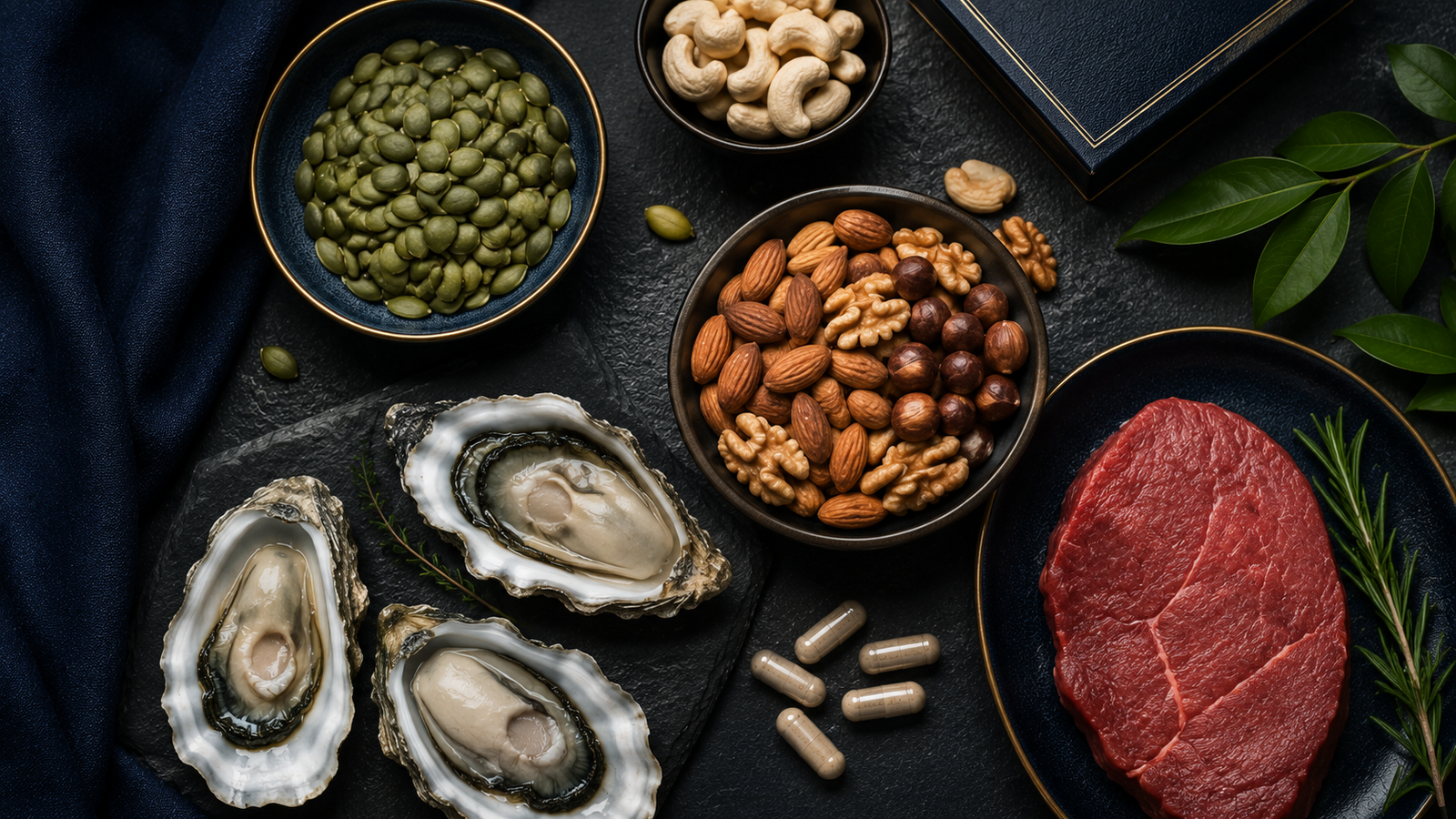
You can get a lot of zinc from food, and a food-first approach reduces the risk of overdoing it. Oysters are by far the richest source — exceptionally high per serving. Other strong sources include red meat, poultry, crab and other shellfish, pork, and dairy. Plant sources such as beans, lentils, chickpeas, pumpkin and other seeds, nuts, and whole grains contribute too, though the zinc in plants is less readily absorbed because of compounds called phytates — which is part of why vegetarians and vegans are more prone to running low and may benefit more from a modest supplement.
Safety and Side Effects
At sensible doses zinc is very safe. The most common short-term side effect is nausea, especially on an empty stomach. The real risks come from chronic high intake: too much zinc over time can cause a copper deficiency (which can lead to its own problems, including anemia and neurological issues) and can suppress immune function — the opposite of what people often take it for. This is why staying at or below the upper limit, unless a doctor directs otherwise, matters.
Who Should Be Careful
Zinc can interfere with the absorption of certain antibiotics (such as tetracyclines and quinolones) and with some other medications, so separate doses by a couple of hours and check with your pharmacist. Men who already eat plenty of zinc-rich food are unlikely to gain anything from supplementing and should avoid stacking high doses. If you suspect a deficiency or are taking zinc to address low testosterone, a simple conversation with your doctor — and, where appropriate, testing — beats guessing, because correcting a true shortfall is helpful while piling zinc onto an adequate intake is not.
How to Choose a Quality Zinc Supplement
- Choose a well-absorbed form such as zinc picolinate, citrate, or glycinate over cheaper zinc oxide.
- Pick a sensible dose — around 15–30 mg is plenty for filling a gap; avoid mega-doses.
- Consider a little copper if you supplement long-term, to maintain balance.
- Take it with food to avoid nausea, and away from antibiotics.
Signs You Might Be Low in Zinc
Since zinc mostly helps when you are short on it, it is worth knowing who tends to run low and what that can look like. Men at higher risk include vegetarians and vegans (plant zinc is less absorbable), older men (intake and absorption both tend to decline with age), athletes and heavy sweaters (zinc is lost in sweat), heavy drinkers, and men with digestive conditions such as Crohn’s or celiac disease that impair absorption. Certain medications and very high-fiber or high-phytate diets can also reduce how much zinc you actually absorb.
Possible signs of low zinc are broad and non-specific, which is part of why deficiency is often missed: a weakened immune response and frequent illness, slow wound healing, a reduced sense of taste or smell, hair thinning, skin issues, low appetite, and — relevant here — reduced libido or low testosterone. Because these symptoms overlap with many other conditions, they are suggestive rather than diagnostic. If you suspect you are low, the sensible path is a conversation with your doctor, who can assess your diet and, where appropriate, test, rather than guessing and potentially over-supplementing. Correcting a genuine deficiency is worthwhile; chasing symptoms with high-dose zinc you do not need is not.
What to Realistically Expect
Be honest with yourself about your starting point. If your diet is low in zinc-rich foods, correcting that gap can genuinely support testosterone, immunity, and overall function. If you already eat plenty of oysters, meat, and seeds, a zinc supplement is unlikely to do much for your hormones and could cause harm at high doses. Zinc is best seen as a foundation to get right, not a lever to crank — fix a shortfall, then put your energy toward the things that move testosterone most: sleep, training, weight, and stress.
Frequently Asked Questions
Does zinc boost testosterone?
It supports testosterone mainly by correcting a deficiency. In men who are low, supplementing can raise levels; in men who already have enough, extra zinc does not push testosterone higher and can cause problems at high doses.
How much zinc is too much?
The general adult upper limit is around 40 mg per day from all sources. Chronic intake above that can deplete copper and impair immune function, so more is not better.
When is the best time to take zinc?
Take it with food to avoid nausea, and keep it a couple of hours apart from antibiotics or high-dose iron or calcium, which can compete with absorption.
Related Reading
Sources
- Prasad AS, Mantzoros CS, Beck FW, et al. (1996). Zinc status and serum testosterone levels of healthy adults. Nutrition, 12(5):344-348. PubMed