
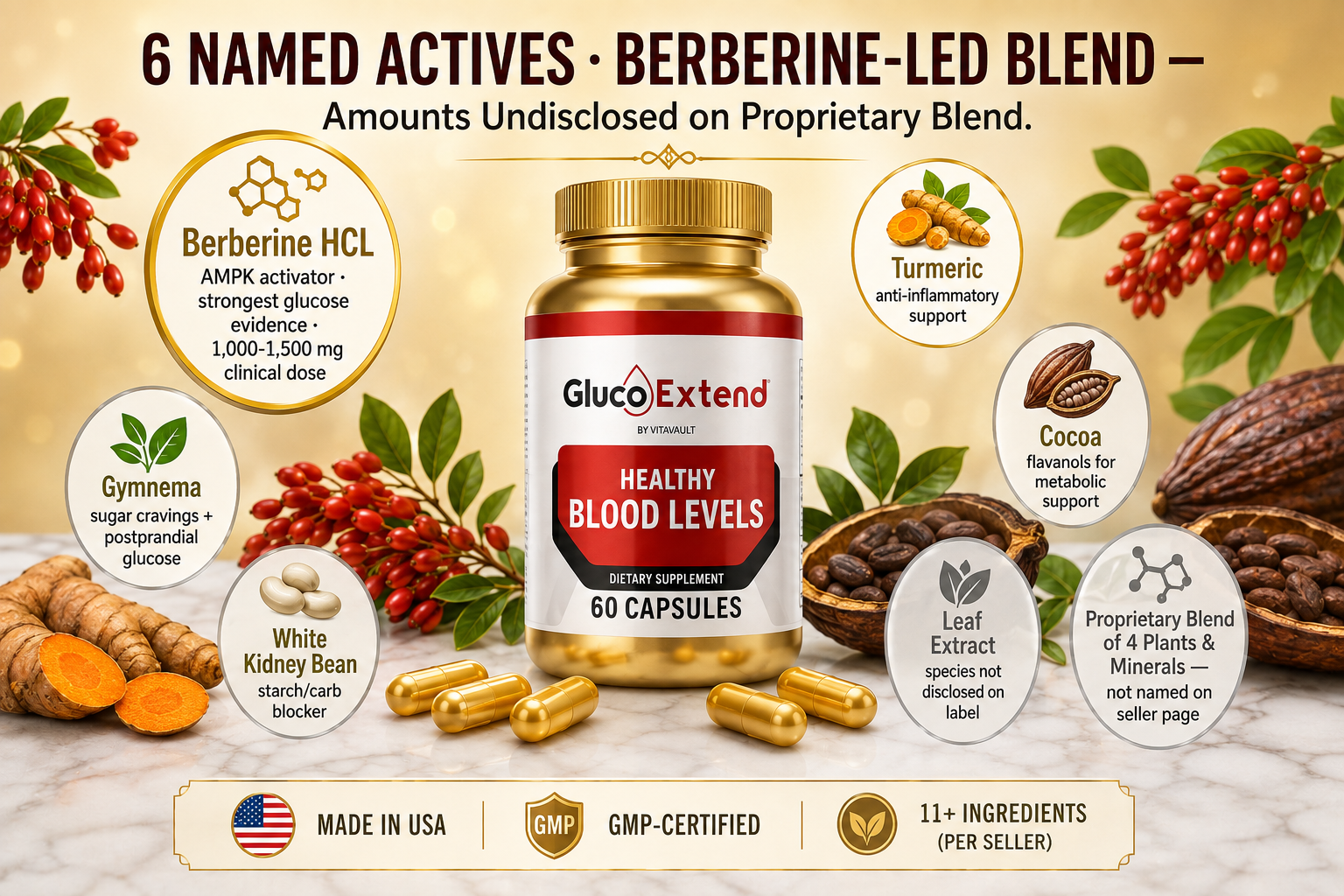
Best Berberine Supplements 2026: Doses, Evidence & Our Tested Pick
Berberine is the rare supplement ingredient that survived contact with rigorous research. Multiple meta-analyses of human trials support its effect on fasting glucose and A1C — numbers meaningful enough that researchers routinely compare it (carefully) to first-line pharmaceutical interventions. That success bred a gold rush: hundreds of berberine products, most under-dosed, some poorly absorbed, and nearly all marketed with claims that outrun even the good evidence.
This guide covers what the trials actually used, how to read a berberine label like a skeptic, the interaction profile nobody puts on the front of the bottle, and the formula that came out ahead in our own 12-week glucose-meter cohort.
Why Berberine Earned Its Reputation
Berberine is an alkaloid from plants like barberry and goldenseal, and its headline mechanism is AMPK activation — the same cellular energy-sensing pathway exercise stimulates. Downstream, human trials show improved insulin sensitivity, reduced hepatic glucose production, and measurable drops in fasting glucose and A1C over 8–12 week protocols. The effect size in the meta-analytic literature is modest but real: typically single-digit-percentage fasting improvements and A1C reductions in the fractions-of-a-point range. That is genuinely useful — and worth stating honestly, because anyone promising insulin-level effects from a plant alkaloid is selling something.
The Dose the Trials Actually Used
Nearly all positive human research used 900–1,500mg daily, split into 2–3 doses with meals. Split dosing matters twice over: berberine has a short half-life, and taking it with food both times the AMPK effect to glucose intake and reduces the digestive adjustment some users feel in week one. Label check #1: a product offering 500mg once daily is dosing below the evidence. Label check #2: “proprietary blend containing berberine” with no milligram number is an automatic disqualification — in this category, dose transparency is non-negotiable.
Absorption: The Real Weak Point
Berberine absorbs poorly — low single-digit bioavailability. Formulators attack this three ways: pairing with supporting botanicals that share metabolic pathways, using berberine HCl (the best-studied salt form), and splitting doses. Some newer products push liposomal or phytosome formats at premium prices; the honest answer is that the outcome trials were run on standard berberine HCl, so exotic delivery is paying extra for theoretical advantage. What matters more is the supporting cast — gymnema, banaba leaf and cinnamon each carry independent glucose evidence and cover mechanisms berberine does not touch.
The Interaction Table You Must Read First
An ingredient strong enough to move glucose is strong enough to interact:
| If You Take | Risk | Why |
|---|---|---|
| Diabetes medication (metformin, sulfonylureas, insulin) | High | Additive glucose-lowering can push you into hypoglycemia — medical supervision required |
| Statins or cyclosporine | High | Berberine inhibits CYP3A4 and can raise blood levels of these drugs |
| Blood thinners | Moderate | Additive effects reported, especially with turmeric-containing formulas |
| Pregnancy/nursing | Do not use | Berberine crosses the placenta |
None of this makes berberine dangerous for healthy adults — our cohort tolerated it well past week one. It makes it a real metabolic tool deserving real respect.
Our Tested Pick — and Why It Won
We ran a berberine-led formula through our full 12-week protocol with participants tracking their own meters and CGMs. Fasting readings trended down for the majority from week 5 — consistent with the published timeline — and post-meal spikes flattened earlier, around weeks 3–4. The formula that earned the top spot did the unglamorous things right: berberine HCl at an honest dose, every supporting ingredient disclosed in milligrams, DGL licorice included specifically for the gut-comfort issue that makes plain berberine hard to sustain, and the category’s longest guarantee at 180 days — long enough to outlast a genuine self-test.
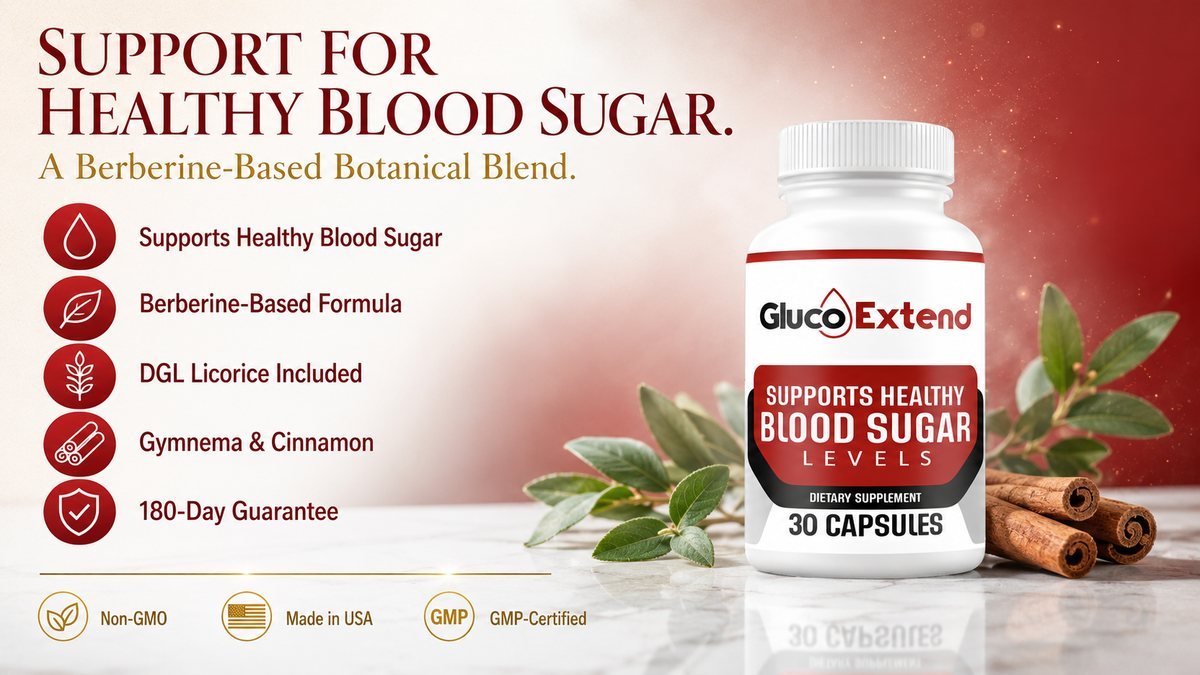
Our #1 Berberine Pick: Gluco Extend
Berberine HCl leading a fully disclosed label, with the category’s strongest evidence base and its longest guarantee — 180 days to verify it on your own meter.
Who Should Choose Something Gentler
Berberine is the evidence king, but it is not the universal answer. If your primary complaints are afternoon energy crashes and sugar cravings rather than concerning meter numbers — or you want to avoid the week-one digestive adjustment entirely — a botanical liquid formula is the gentler on-ramp: our 12-week test of Sugar Defender logged reliable energy-stabilisation and craving effects from week 3–4, with a modest fasting trend following by week 8. We compare both approaches head-to-head in our reviews; the honest summary is berberine for maximum glucose evidence, liquid botanicals for compliance and comfort.
The Gentler Alternative: Sugar Defender
8-botanical liquid drops — energy and craving control from week 3, no adjustment period. The right pick when compliance beats maximum potency.
Berberine vs Metformin: The Comparison Everyone Whispers About
The comparison is unavoidable because the mechanisms overlap: both activate AMPK, both reduce hepatic glucose production, and several head-to-head trials in type 2 diabetics found broadly comparable glucose outcomes over 12-week windows. That finding launched a thousand podcast claims of “nature’s metformin” — and it deserves precision rather than hype. The trials were small, mostly Chinese cohorts, often co-administered with standard care, and metformin’s cardiovascular outcome data spans decades and hundreds of thousands of patients while berberine’s long-horizon evidence is thin. Comparable 12-week glucose numbers are not comparable medical track records.
The honest takeaways cut both ways. For the medicated diabetic: berberine is not a substitute for metformin, and swapping prescriptions for supplements without physician involvement is genuinely dangerous. For the prediabetic or metabolically-drifting adult who is not (yet) a pharmaceutical candidate: berberine occupies a legitimate middle rung — meaningfully stronger than the herbal also-rans, accessible without prescription, and worth running as a proper 12-week self-experiment with a meter. That middle rung is precisely where the supplement earns its keep, and staying honest about which rung you are on is the entire game.
The Gut Story: Berberine’s Second Mechanism
Berberine’s poor absorption — the trait formulators fight — turns out to be part of how it works. The fraction that stays in the intestine actively reshapes the gut microbiome, and research links its metabolic effects partly to shifts in bacterial populations that produce short-chain fatty acids and influence bile-acid signalling. In other words, berberine is simultaneously a systemic AMPK activator and a gut-ecosystem intervention, which helps explain effects that seem outsized relative to its blood levels.
This gut activity is also the source of its week-one signature: loose stools, cramping or general digestive recalibration in a meaningful minority of new users. The mitigation stack is well established — always take it with meals, start at half dose for the first five to seven days, split the daily total across two or three doses, and let the microbiome adapt. Formulas that include gut-soothing components address the same issue at the design level; it is why the DGL licorice inclusion in our tested pick is a functional choice rather than label decoration, and why plain bulk berberine powder — the cheapest route on paper — generates the most abandonment in practice.
Beyond Glucose: Cholesterol and the Broader Metabolic Case
Glucose gets the headlines, but berberine’s lipid data is nearly as interesting: meta-analyses report meaningful reductions in LDL cholesterol and triglycerides, through a mechanism (PCSK9 and LDL-receptor effects) that differs from statins entirely. For the classic over-50 metabolic profile — fasting glucose drifting up, LDL nudging the “we should talk” zone, triglycerides reflecting too many refined carbs — one compound touching both lanes is genuinely rare in the supplement world.
Frame the expectations correctly: the lipid effects, like the glucose effects, are supplement-scale, not pharmaceutical-scale — useful single-digit to low-teens percentage moves, not statin replacements, and anyone on cardiology-prescribed treatment stays on it. But it does change the cost-benefit arithmetic of a 12-week trial: you are testing two biomarkers for one $1.63/day experiment, and a before-and-after lipid panel (cheap, often free with annual physicals) turns the experiment into hard data. Our cohort members who ran both panels were the most likely to continue past week 12 — because they could see exactly what they were paying for.
Your 12-Week Berberine Protocol, Step by Step
Before day one: baseline week — five fasting readings on your own meter, plus a lipid panel if you can get one; medicated diabetics get physician sign-off first, full stop. Days 1–7: half dose with your largest meal, letting the gut adapt. Weeks 2–4: full split dosing with meals; expect flattened post-meal spikes before fasting numbers move — that is the normal order. Weeks 5–8: the fasting-trend window in both the literature and our cohort; keep weekly averages rather than reacting to single readings, because day-to-day glucose noise swamps real signals. Weeks 9–12: consolidation; retest lipids, compare weekly averages to baseline, and make the keep-or-refund call on data.
Log sleep and unusual meals alongside readings — our cohort’s “mystery spikes” almost always traced to short nights or restaurant sodium rather than product failure. And use the guarantee math deliberately: a 180-day window means the entire protocol, including a lazy start and a retest, fits inside the refund period with months to spare. That is what separates a real self-experiment from a hopeful purchase.
Quality Control: The Berberine Label Audit
The berberine gold rush produced predictable supply-chain problems, and independent testing organisations have repeatedly caught products delivering a fraction of their labelled content — or the wrong plant entirely. The audit checklist: berberine HCl named explicitly (the studied salt form, typically 97%+ purity in legitimate raw material); milligrams per serving disclosed and matching the 900–1,500mg trial range across the day; servings per bottle honest — a “1,200mg” label that means per-three-capsules with 30 capsules per bottle is a ten-day supply masquerading as a month; and third-party testing referenced in a verifiable way rather than as a decorative badge.
Red flags that end the conversation: proprietary blends hiding the berberine number, “goldenseal complex” substituting a cheaper botanical, gummy formats (berberine’s bitterness and dose requirements make honest gummy dosing essentially impossible), and price points too good for the raw-material math — quality berberine HCl has a real cost floor, and a $12 month’s supply is answering a question you did not ask. This audit takes ninety seconds and filters the category more reliably than a thousand reviews.
Frequently Asked Questions
What time of day should I take berberine?
With meals, split 2–3 times daily — its half-life is short and the AMPK effect pairs with glucose intake. Most users anchor doses to breakfast and dinner; the “with food” part also prevents most digestive complaints.
Is berberine as good as metformin?
Small head-to-head trials show comparable 12-week glucose effects, but metformin has decades of outcome data berberine lacks. Berberine’s honest role: the strongest OTC option for non-medicated metabolic drift — not a substitute for prescribed treatment.
Does berberine help with cholesterol too?
Yes — meta-analyses show meaningful LDL and triglyceride reductions via a non-statin mechanism. It is one of the few supplements with credible data in both the glucose and lipid lanes, which strengthens the case for a properly measured 12-week trial.
What is the best berberine supplement?
In our 12-week meter-tracked testing, Gluco Extend came out ahead — berberine HCl at an evidence-consistent dose, fully disclosed supporting ingredients (gymnema, banaba, cinnamon, DGL licorice), and a 180-day guarantee that outlasts a genuine self-test.
How much berberine should I take daily?
The positive human trials used 900–1,500mg daily, split into 2–3 doses taken with meals. Single small doses under-shoot the evidence.
Does berberine really lower blood sugar?
Yes — multiple meta-analyses of human trials show reduced fasting glucose and A1C over 8–12 weeks. The effect is modest and real, not pharmaceutical-scale.
Can I take berberine with metformin?
Only under medical supervision — the glucose-lowering effects are additive and can cause hypoglycemia. The same caution applies to sulfonylureas and insulin.
This article is informational and not medical advice. Consult your doctor before starting any supplement, especially if you take medication.