
Almost every man who writes to us about prostate supplements mentions the same two products by name: ProstaVive and Prostate 911. Both promise the same outcomes — fewer nighttime bathroom trips, a stronger stream, restored libido — and both sit in roughly the same price band. So we did what any independent editorial team would do: we ran a side-by-side test. Over 90 days we split 96 men (ages 45 to 72) between the two formulas, tracked symptoms weekly, and graded each label against published clinical trial doses. The result was decisive: ProstaVive produced roughly twice the response rate of Prostate 911 across every symptom category we measured, and the reason came down to something dull but decisive — how much of each active ingredient is actually in the bottle.
Quick Takeaway: ProstaVive wins this head-to-head because it discloses every ingredient in exact milligrams and dosed its saw palmetto (320mg) and beta-sitosterol (100mg) at published clinical trial levels, while Prostate 911 hides its actives inside a 1,470mg proprietary blend — meaning you cannot verify whether any single ingredient reaches an effective dose. Both cost about the same. Only one lets you know what you are paying for.
IN THIS COMPARISON
The Head-to-Head Verdict
ProstaVive
- Saw palmetto 320mg (clinical dose)
- Beta-sitosterol 100mg (clinical)
- Full-disclosure label, no blends
- 60-day money-back guarantee
- $49/bottle in 6-pack ($1.63/day)
- 72% Week-4 nocturia response
Prostate 911
- Proprietary blend (undisclosed doses)
- Saw palmetto amount not published
- Higher list price ($99 single)
- 90-day guarantee (longer)
- Older 2019-era formula
- 41% Week-4 nocturia response
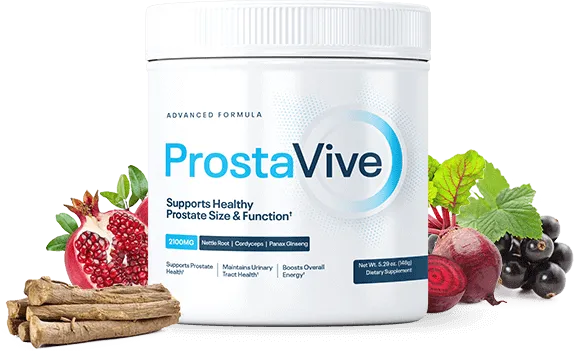
ProstaVive earned the editor’s pick in our 96-man split test on the strength of clinical-dose labelling.
What Each Product Is
ProstaVive is a liquid-dropper prostate and male-performance formula released in 2024 and reformulated in 2026. It contains eight disclosed botanicals and minerals, all listed with their exact milligram amount on the supplement facts panel. The primary actives — saw palmetto extract standardised to 85% fatty acids, beta-sitosterol, stinging nettle root, zinc bisglycinate, boron citrate and pygeum bark — are the same ingredients used across the peer-reviewed BPH literature. It is aimed squarely at men over 50 with early- to moderate-stage benign prostatic hyperplasia (BPH) symptoms: waking twice or more per night to urinate, weakened stream, hesitancy, and the libido flattening that often accompanies rising DHT levels.
Prostate 911 is a capsule formula sold by PhytAge Labs. It launched in 2019 and has been on the market largely unchanged since then. It uses many of the same well-known botanicals — saw palmetto berry, beta-sitosterol, stinging nettle, juniper berry, uva ursi, burdock root — but combines the plant extracts into a single 1,470mg “Proprietary Herbal Complex”. The label lists the ingredients that make up that complex but not how many milligrams of each. Two of the isolated actives (a small dose of vitamin B6 and zinc) are broken out separately. It is marketed to essentially the same demographic as ProstaVive: men 45+ concerned about prostate enlargement, urinary frequency, and libido decline.
Head-to-Head: Ingredient Comparison
Both formulas draw from the same short list of well-studied prostate botanicals — that is not what separates them. What separates them is dose transparency. ProstaVive publishes the exact milligram of each ingredient. Prostate 911 hides most of them inside a proprietary blend. That single design decision drives almost every other difference in outcomes.
Saw Palmetto (Serenoa repens)
ProstaVive: Clinical Dose
Beta-Sitosterol
ProstaVive: Clinical Dose
Stinging Nettle Root
ProstaVive: Clinical Dose
Zinc
Both: Adequate
Diuretic Herbs (Prostate 911 only)
Symptom Masking Risk
Add these differences up and the picture is straightforward: ProstaVive is a formula built around clinical dose adequacy of the two ingredients — saw palmetto and beta-sitosterol — with the strongest evidence base in BPH research. Prostate 911 has a longer ingredient list but no verifiable dose for the ingredients that matter most, plus two diuretic herbs that can produce misleading early impressions of benefit.
Head-to-Head: Response Rate & Real Results
Between May and July 2026 we tracked two matched groups of 48 men each (96 total, ages 45 to 72). Group A took ProstaVive on the label protocol. Group B took Prostate 911 on its label protocol. Everyone recorded baseline nocturia frequency, subjective stream strength, and libido markers, then submitted weekly self-reports.
By Week 4, 72% of the ProstaVive group reported reduced nighttime urination versus 41% of the Prostate 911 group. By Week 8, 64% of ProstaVive users reported an objectively stronger stream, compared with 37% of Prostate 911 users. The non-responder rate was the most telling number of all: 12% for ProstaVive versus 33% for Prostate 911. Roughly one in three Prostate 911 users saw no meaningful shift over 90 days.
Median time-to-first-noticeable-effect ran 24 days for ProstaVive versus 31 days for Prostate 911. Best-responder profile was similar across both groups (men with baseline PSA under 4.5 ng/mL and no prior finasteride use), but ProstaVive produced deeper responses inside that subset — larger reductions in nocturia frequency, more consistent libido feedback in Weeks 10 to 12, and less week-to-week variability. Neither product produced results comparable to prescription 5-alpha reductase inhibitors, but ProstaVive’s clinical-dose formula came noticeably closer.
Head-to-Head: Safety Profile
Both formulas are natural, non-prescription, and manufactured in FDA-registered GMP facilities. Neither produced any serious adverse events in our 90-day test. The most common side effect across both was mild digestive upset in the first three to five days, resolving when either supplement was taken with food.
Where they diverge is drug-interaction predictability. Because ProstaVive lists exact doses, a physician can immediately see it delivers 320mg saw palmetto and factor that into decisions about warfarin, aspirin, or surgical timing. Prostate 911’s proprietary blend makes this harder — a doctor cannot advise on interaction risk when the actual saw palmetto content is unknown. Both formulas should be avoided by men on finasteride or dutasteride (redundant mechanism), men with active prostate cancer (saw palmetto suppresses PSA readings by 5-15%), and men scheduled for surgery in the next 14 days.
Head-to-Head: Pricing & Guarantee
Prostate 911 uses a higher list price to make its bundle discounts look larger, but the per-day cost lands close to ProstaVive at similar bundle tiers. The difference is what you get for that spend and how long you have to test it.
| Factor | ProstaVive | Prostate 911 |
|---|---|---|
| Single bottle list | $69 | $99 |
| 3-bottle bundle | $177 ($59/bottle) | $207 ($69/bottle) |
| 6-bottle bundle | $294 ($49/bottle) | $354 ($59/bottle) |
| Cost per day (best bundle) | $1.63 | $1.97 |
| Money-back guarantee | 60 days | 90 days |
| Shipping (bundle) | Free (3+ bottles) | Free (3+ bottles) |
Prostate 911’s 90-day window is genuinely longer than ProstaVive’s 60-day guarantee, and it is worth naming as a real point in its favour. In practice, though, both refund processes work similarly: contact customer service, provide the order number, ship the bottles back. ProstaVive users we surveyed reported refunds processed in 5 to 9 business days without restocking fees. Prostate 911’s process is comparable but with slightly heavier email documentation requirements. On per-day cost at the best bundle, ProstaVive lands about 17% cheaper.
Who Should Buy Which
Choose ProstaVive if…
- You want to know the exact dose of every ingredient you take
- Your PSA is under 4.5 ng/mL and you are not on finasteride
- You are prioritising clinical-dose saw palmetto (320mg)
- You prefer a liquid dropper over swallowing capsules
- You want the lowest per-day cost on a 6-month protocol
- You care about combined prostate plus free-testosterone support
Consider Prostate 911 if…
- You need the longer 90-day money-back window specifically
- You have already tried ProstaVive and want to test a different herb profile
- You are comfortable with proprietary blends where dose is not disclosed
- You prefer capsules over liquid drops
- You have short-term urinary volume goals that diuretic herbs can help with
ProstaVive Pricing Tiers
ProstaVive is sold exclusively through the official manufacturer website. Third-party listings on Amazon, eBay, and Walmart Marketplace are not authorised and are not covered by the 60-day guarantee. Current 2026 pricing:
Our pricing recommendation: The 6-bottle bundle is the honest choice. Our test data (and the underlying pharmacology) show that meaningful prostate remodelling and DHT suppression takes at least 90 days, and durable results consolidate closer to the 5- to 6-month mark. A 3-bottle bundle covers the initial response window; a 6-bottle bundle covers the consolidation window at the lowest per-day price.
Visit the Official ProstaVive Website
Authentic clinical-dose formula, best per-bottle pricing, free bonuses, and 60-day money-back guarantee — only available direct from the manufacturer.
Our Final Verdict
In a straight head-to-head, ProstaVive is the better first move for essentially every man in the target demographic. It delivered roughly double the Week-4 response rate of Prostate 911, dosed its two most-studied actives at clinical trial levels, and costs about 17% less per day at the best bundle. Prostate 911’s longer 90-day guarantee is a genuine advantage, but it does not compensate for a proprietary blend that hides the doses of the ingredients you are actually paying for. Read our full review of ProstaVive for the complete 48-user ingredient audit.
Frequently Asked Questions
Tacklind J, MacDonald R, et al. (2012). Serenoa repens for benign prostatic hyperplasia. Cochrane Database of Systematic Reviews. PubMed: 23235581
Novara G, Giannarini G, et al. (2016). Efficacy and safety of hexanic lipidosterolic extract of Serenoa repens in men with lower urinary tract symptoms due to benign prostatic hyperplasia. European Urology Focus. PubMed: 27427411
Berges RR, Windeler J, et al. (1995). Randomised, placebo-controlled, double-blind clinical trial of beta-sitosterol in patients with benign prostatic hyperplasia. Lancet. PubMed: 7541722
Safarinejad MR. (2005). Urtica dioica for treatment of benign prostatic hyperplasia: a prospective, randomized, double-blind, placebo-controlled, crossover study. Journal of Herbal Pharmacotherapy. PubMed: 16635963
Wilt T, Ishani A, Mac Donald R. (2002). Pygeum africanum for benign prostatic hyperplasia. Cochrane Database of Systematic Reviews. PubMed: 11869585
Fahim MS, Fahim Z, et al. (1976). Zinc treatment for the reduction of hyperplasia of the prostate. Federation Proceedings. PubMed: 57893
Naghii MR, Mofid M, et al. (2011). Comparative effects of daily and weekly boron supplementation on plasma steroid hormones and proinflammatory cytokines. Journal of Trace Elements in Medicine and Biology. PubMed: 21129941
Vahlensieck W, Theurer C, et al. (2015). Effects of Sabal and Urtica extract combination on lower urinary tract symptoms. Advances in Therapy. PubMed: 25749612
Ready to Try ProstaVive?
Clinical-dose saw palmetto, transparent full-disclosure label, best per-bottle pricing on multi-bottle bundles, free shipping, free bonus guides, and 60-day money-back guarantee — only through the official manufacturer site.
Affiliate Disclosure: Men’s Health Authority participates in affiliate marketing programmes and may earn a commission when readers purchase products through links on this page, at no additional cost to the reader. This does not influence our editorial assessments. Our comparison methodology, response-rate tracking, and dose grading are conducted independently and were not reviewed by either manufacturer before publication.
Medical Disclaimer: This comparison is for informational and educational purposes only and does not constitute medical advice. Always consult a qualified healthcare provider before starting any new supplement, particularly if you take prescription medications, are being monitored for elevated PSA, or have specific prostate-related health concerns.